
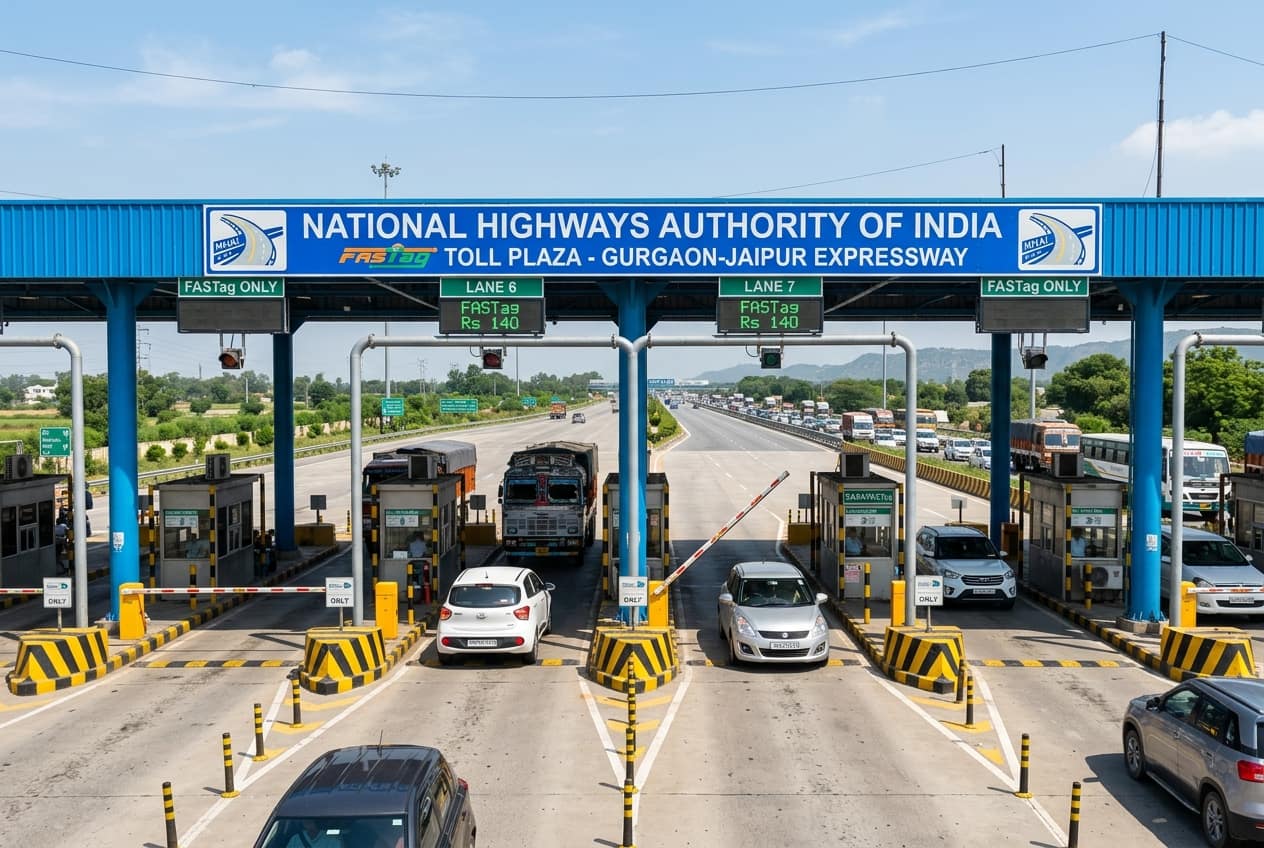
Toll plaza O&M and AMC is a maintenance contract covering lane equipment, TMS servers, readers, sensors and surveillance, with preventive visits, fault response, spare management and uptime reporting. Service levels, such as response and restoration times, are agreed per site in the contract. Good contracts define what counts as downtime, who supplies spares and how penalties are calculated.
At a glance
- Contract basis
- Annual or multi year, on site or on call, set per plaza.
- Coverage
- Lane equipment, readers, sensors, servers, network, cameras and power.
- What you receive
- Preventive schedule, fault log, spare register and monthly uptime report.
- Service levels
- Response and restoration targets agreed in the contract for each site.
- Best suited for
- Toll concessionaires and plaza operators.
- Our scope
- Round the clock support, preventive maintenance, spares, uptime and incident reports.
Toll Plaza O&M and AMC Overview
A toll plaza does not close at night, and neither can its maintenance. Every hour that a lane is down is an hour of lost or manually handled revenue, and the loss compounds in peak periods. Our toll plaza O&M and AMC work keeps lane equipment, servers, readers, sensors and surveillance in working order through preventive work, quick fault recovery and honest reporting.
A plaza AMC differs from an office AMC in three ways. The duty is heavy, with thousands of barrier cycles and constant exposure to weather. The cost of downtime is direct and measurable, so uptime matters in rupees. And the equipment comes from several suppliers, so someone has to own the whole lane instead of a single device. We take that ownership.
Contracts come in two forms. On site support places engineers at the plaza in shifts, which suits large or high volume plazas where faults must be fixed in minutes. On call support relies on a central team and local response, which suits smaller plazas or those with in house technicians. Many operators use a mix: on site presence for peak shifts and on call cover at other times.
Operation and maintenance is also a knowledge job. The technician who knows that lane 5's loop fails after heavy rain, or that the plaza link drops when the generator changes over, saves hours. We keep a fault history for each plaza and use it to plan preventive work, so repeat faults get fixed at the root.
Ideal for: Toll concessionaires and plaza operators.
What Our Toll Plaza O&M and AMC Includes
Our plaza AMC scope covers round the clock support, preventive work, spares and the reports that prove performance.
24x7 on-site or on-call technical support
We staff the plaza on site in shifts or provide on call cover, depending on traffic and agreement. Faults are logged, tracked and escalated. Practical tip: define restoration time, not only response time, in the contract.
Preventive maintenance of lane equipment
We service barriers, loops, readers, displays, cabinets, UPS and cameras to a written checklist with measured values recorded. Practical tip: schedule the most thorough round before the monsoon, when water ingress and earthing problems appear.
Spare-part management
We maintain a spare register with stock levels, reorder triggers and owners, and keep critical items on site. Practical tip: base stock on past failures and supplier lead time, and review the list every quarter.
Uptime and incident reporting
We issue monthly reports with fault times, causes, uptime per lane and repeat faults, and review them with you. Practical tip: agree the downtime calculation method before signing, including how planned maintenance and partial failures count.
Why plaza maintenance contracts fail operators
The usual failure is a contract written around visits, not outcomes. A vendor attends monthly, ticks a checklist and leaves, while a lane runs down for days between visits. Operators then discover that the contract defined response time but not restoration time, or counted only some faults, and the uptime figure in the report bears no relation to what the collectors experienced.
Spare management is the second failure. Contracts that put spares on the vendor without defining stock levels end with a technician waiting for a part from another city. Contracts that leave spares to the operator end with parts bought late, in a hurry, at a premium. Neither describes a plan.
The third failure is the lack of root cause work. Faults are fixed and logged, but the same loop, the same cable or the same reader returns three months later. Without a fault history review, the contract rewards fast repeats and not lasting fixes.
What You Gain
Fewer lane outages
Scheduled checks of barriers, loops, readers, cabinets and booth equipment find wear, water ingress and loose connections before they take a lane out of service.
Faster restoration
Engineers who know your plaza, with standard spares in reach, restore faults faster than a vendor travelling from a distant office to find out what was installed.
Managed spare stock
A spare register with agreed stock levels, reorder triggers and owner for each item ensures that common failures are fixed from stock on the same shift.
Uptime you can audit
Monthly reports list each fault with start time, restoration time and cause, so uptime is calculated from a visible log and not argued from memory.
Root cause follow up
Repeat faults are reviewed and fixed at the cause, such as drainage, cable routing or earthing, which lowers the number of faults over the contract term.
One accountable contact
A single support lead owns lane equipment, network and surveillance faults, which spares your plaza manager from managing several vendors during a failure.
How the Work Is Delivered
A good AMC starts with knowing what you have. These steps set the base, run the routine and keep the contract honest.
- 1
Asset survey and baseline audit
We list every device by lane and location, record its condition, settings and firmware, and test each lane. This gives a baseline against which uptime and fault trends are measured, and it exposes existing problems before the contract starts.
- 2
Service level and scope definition
We agree coverage hours, response and restoration targets, fault categories, exclusions and how downtime is calculated. Targets are set per site in the contract, based on traffic and the cost of downtime.
- 3
Spare stock and tools setup
We define the spare list from failure history and distance, agree who holds and replenishes stock, and set up tools, test equipment and access to remote monitoring where available.
- 4
Preventive maintenance schedule
We schedule checks by device type: barrier mechanics and balance, loop resistance, reader and antenna alignment, cabinet cleaning, UPS battery tests, surge protector status and camera housing cleaning.
- 5
Fault response and escalation
Faults are logged on arrival, assigned and tracked to closure, with escalation steps if restoration exceeds target. Collectors and supervisors know whom to call and what information to give.
- 6
Reporting and review meetings
We issue monthly uptime, fault and spare reports, then meet with the plaza management to review repeat faults, upcoming works and any changes to scope. Disputed downtime is settled from the log.
- 7
Annual review and renewal
At the end of each year we review fault trends, equipment age and spare usage, propose replacement of failing items and revise service levels with the operator before renewal.
How plaza maintenance is planned and measured
Plaza maintenance is organised by device class and failure mode. Mechanical items such as barriers need balance, lubrication, fastener and arm checks. Sensing items such as loops, axle detectors and readers need electrical measurement: loop resistance and insulation, antenna return loss where tools allow, and read tests with a known tag. Electronics and servers need temperature, fan, disk health and backup checks. Power systems need UPS battery tests and generator changeover tests, because a plaza that loses lane power during changeover loses transactions. Surveillance needs housing cleaning, focus checks and recording verification.
Measurement matters as much as work. Each fault record carries a start time, detection source, restoration time and cause category. Uptime for a lane is calculated from these records over the contract period, and the contract should state whether planned maintenance counts as downtime and how partial failures, such as a lane running without ETC reading, are treated. Remote monitoring of lane status, server health and network links shortens detection, though it does not replace on site presence for mechanical faults. We recommend starting with a simple, visible log and adding tools once the process is stable.
Service level definitions
Define response, restoration and uptime separately, state what stops the clock and set the calculation method. Vague terms such as quick response lead to disputes at renewal.
Preventive maintenance checklists
Each device class has a written checklist with measured values to record, such as loop resistance and battery condition, so completion is evidenced and trends can be tracked.
Spare parts policy
The contract lists critical spares, stock levels, owner, replenishment time and rules for who pays for consumables and for damage caused by vehicle impact.
Earthing and surge protection checks
Earth resistance and surge protector status are checked at defined intervals following IS 3043 practice, since lightning and surges are a leading cause of reader and controller failures.
Incident and uptime reporting
Reports list each incident with timestamps and cause, and the monthly summary shows uptime per lane and system, with open items and repeat faults highlighted.
Worked example: AMC for a ten lane plaza with mixed equipment
Imagine a ten lane plaza with equipment from three suppliers, a TMS server pair, ANPR cameras and a monitoring room. The operator currently calls each supplier separately, and faults often sit for days while suppliers disagree over whose device failed. Peak traffic arrives on weekends and festival periods.
We would begin with an asset survey and baseline test, then agree a service level by fault category: lane down, lane degraded and non lane faults such as camera or reporting issues. An engineer would be present on peak shifts, with on call cover at other times. A spare register would be agreed, with critical spares on site. Preventive visits would follow a monthly and quarterly schedule, and a monthly report would list every fault and its cause.
What the operator typically sees over the first months is a reduction in faults that sit unowned, quicker restoration because the first call goes to one team, and a clearer view of repeat problems. Common root causes found in the first quarter include water ingress in junction boxes, loop failures at pavement cracks and battery ageing in lane UPS units, each of which is fixed at source.
- One accountable contact for lane, network and surveillance faults
- Monthly uptime report built from a visible fault log
- Critical spares held on site with agreed reorder rules
- Repeat faults reviewed and fixed at the root cause
This is an illustrative scenario built from typical site conditions. Actual quantities, timelines and results depend on your site survey.
Toll Plaza O&M and AMC Across Four States
We are based in Nashik and deliver across Maharashtra, Gujarat, Madhya Pradesh and Rajasthan. Each state has its own utilities, approvals and site conditions, and these are the points that matter most for this service.
Maharashtra
Our Nashik base sits close to many Maharashtra plazas, which suits preventive rounds before the monsoon. Common faults here are water ingress in junction boxes, loop failures at cracked pavement and lane UPS battery ageing in summer heat. We schedule the thorough round in May.
Gujarat
For Gujarat plazas we plan visit clusters along corridors such as NH 48. Coastal salt air makes corrosion a recurring fault class, so checklists add terminal and bracket inspection. High freight volume raises barrier wear, so we track cycle counts and plan arm and gearbox replacement before failure.
Madhya Pradesh
Plazas on long inter-city stretches are far apart, so visits are planned by route and critical spares are held on site. Monsoon storms bring surge damage to readers and controllers, so earthing and surge protector checks come before the rains. Distance makes the spare register especially important.
Rajasthan
Plazas on the Delhi to Mumbai Expressway and desert roads are widely spaced, so route planning and on site spares decide uptime. Summer heat and dust accelerate wear on cooling, filters and barrier mechanisms. We schedule cleaning and cooling checks before summer and agree restoration terms that reflect distance.
Where This Work Is Most Often Needed
Why Teams Work With Us on This
We maintain what we install
Lane equipment, readers, sensors, networks, CCTV and power are within our scope, so we maintain across device boundaries and avoid the supplier blame cycle that slows restoration.
Fault history that improves the plaza
We keep a fault record for each plaza and use it to plan preventive work, so the same fault does not return every quarter.
Nashik base, route planned visits
We are based in Nashik and serve plazas across Maharashtra, Gujarat, Madhya Pradesh and Rajasthan, with teams mobilised from Nashik and AMC visits planned by route and site cluster. Service levels are written into the contract for each plaza, not promised in advance.
Clear contract terms
We help define response, restoration, downtime counting and spare responsibilities in plain language, and report against them monthly, so renewal talks are based on records.
Guides and Projects Related to This Service
Frequently Asked Questions
01What does a toll plaza AMC cover?
A plaza AMC covers lane equipment such as barriers, detectors and displays, readers and antennas, servers and network, cameras and power backup. It includes preventive maintenance, fault response, spare management and reporting. The exact scope, exclusions and service levels are written per plaza in the contract.
02What is the difference between on-site and on-call support?
On site support places engineers at the plaza in shifts, so faults are handled in minutes, which suits busy plazas. On call support uses a central team with local response, which costs less but restores slower. Many operators combine them, with on site cover for peak hours and on call cover otherwise.
03How is toll plaza uptime calculated?
Uptime is calculated from the fault log, as the share of operating time a lane or system was available. The contract must state what counts as downtime, whether planned maintenance is excluded and how partial failures are treated. Without those definitions, two parties can calculate different figures from the same log.
04How much does a toll plaza AMC cost?
Price depends on lane count, equipment mix and age, whether engineers are on site, coverage hours, spare stock arrangements and service level targets. A sensible approach is to price after a baseline audit, because old equipment and past neglect change the effort. We give a firm quote once we have surveyed the plaza.
05Who pays for spare parts under the AMC?
It depends on the contract. Common models are a comprehensive AMC where the vendor supplies spares, a labour only AMC where the operator pays for parts, or a hybrid with vendor held critical spares and operator paid consumables. Damage from vehicle impact is usually treated separately, so state this clearly.
06What reports should I get from an AMC vendor?
Ask for a monthly report listing each fault with start and restoration times, cause category, lane affected and action taken, plus uptime per lane, preventive visit completion, spare stock status and repeat faults. A quarterly review meeting helps convert the reports into planned improvements.