
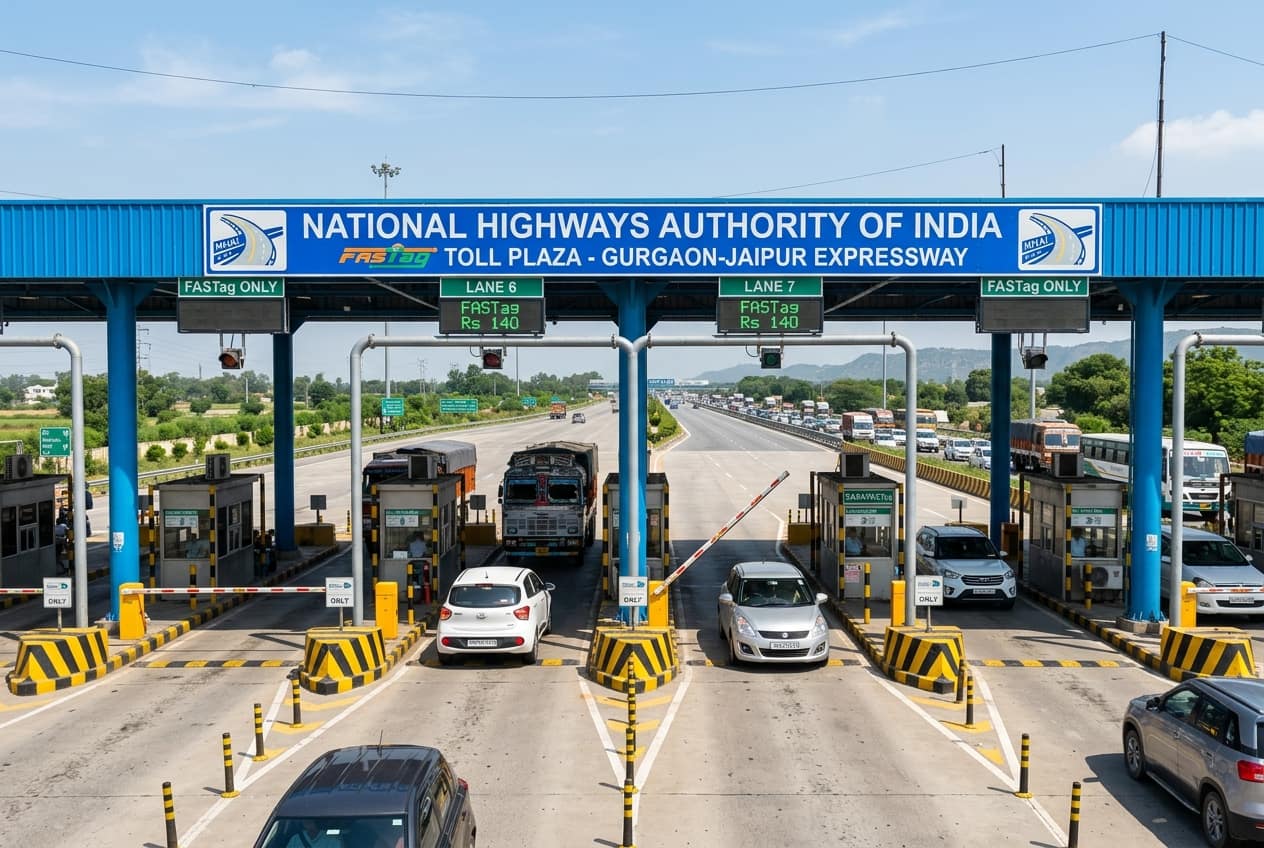
Toll lane equipment is the physical set of devices in each lane: boom barrier, vehicle detectors, fare display, traffic signal, booth terminal, receipt printer and intercom. They are wired to a lane controller that sequences them. A reliable lane depends on correct detector placement, a barrier rated for the duty cycle, protected cabling and a tested sequence for every fault condition.
At a glance
- Typical timeline
- 2 to 4 weeks per lane group after civil work, depending on delivery of equipment.
- Main devices
- Boom barrier, loop detectors, fare display, lane signal, booth terminal, printer, intercom.
- What you receive
- Installed lane, wiring schedule, sequence test record and spare parts list.
- Key design rule
- Detector and barrier logic must prevent the arm from striking a vehicle.
- Best suited for
- New plazas, lane additions and equipment replacement.
- Our scope
- Barriers, displays, signals, booth terminals, intercoms, loops and sensors.
Toll Lane Equipment & Boom Barriers Overview
A toll lane is a small machine made of many parts, and it is only as good as the weakest one. A fast barrier with a poorly placed loop will hit vehicles. A bright display that nobody can read in afternoon glare will cause confusion. Our toll lane equipment work covers supply, installation and integration of every physical device in the lane, and the testing that proves they behave as one system.
Highway lanes are different from the boom barriers you see at an office gate. Toll duty means thousands of cycles a day, vehicles of every height and width, drivers who do not stop where the markings say and a roadside environment of dust, diesel, heat and monsoon. Equipment must be rated for this duty, not for occasional use, and the mounting must tolerate impact because someone will eventually clip an island.
We work on new plazas, lane additions at existing plazas and replacement of ageing equipment. Replacement jobs are the trickiest because the lane cannot stay closed for long. We plan them lane by lane, with temporary arrangements for traffic, and bring the lane back with the same or better behaviour before moving to the next.
This page covers highway toll lanes. Boom barriers for corporate campuses, malls and parking are a different design problem with different duty and different buyers, and they are covered under access control. If your site is a plant gate or a parking facility, that page is the better starting point.
Ideal for: New plazas, lane additions and equipment replacement.
What Our Toll Lane Equipment & Boom Barriers Includes
Our lane equipment scope covers every physical device in the lane and the wiring and logic that make them work as a single lane.
High-speed boom barriers
We supply and install toll duty barriers with the right arm length, foundation and safety interlocks, and balance and test them under live traffic. You receive settings and a service guide. Practical tip: ask for the rated daily cycles in writing, not just the lift time.
Fare displays, traffic lights and lane signals
Displays and signals are placed for the driver's line of sight, sized for approach speed and programmed for the lane's states. Practical tip: check readability at the hour of strongest sun glare, since that is when most displays fail the driver.
Booth terminals, receipt printers and intercoms
Booth equipment is mounted with ventilation, surge protection and strain relief, and tested with the lane controller. Practical tip: fix booth cooling first, because heat is a leading cause of terminal and printer failure in summer.
Loop detectors and lane sensors
We cut and seal loops, install detector electronics and add radar or above ground sensors where pavement is poor. Loop resistance and insulation are tested and recorded. Practical tip: keep one spare detector card per lane group for quick swap.
What goes wrong with toll lane equipment in daily use
Most lane failures are mechanical or electrical, not software. Barrier arms are struck and bent. Gearbox and motor wear shows up as slow lifting. Loop detectors fail where pavement cracks and cut the wire. Water enters junction boxes and corrodes terminals. Booth terminals overheat in summer, when a booth with a broken air conditioner reaches temperatures that shorten electronics life.
Poor sequencing is the second problem. If the barrier closes when the vehicle's rear is still inside the loop zone, the arm hits the tail. If the lane signal turns green before the transaction completes, drivers pull out early and the toll is lost. These are logic faults that cost money and safety, and they are usually traced to detector placement or loop sensitivity rather than the barrier itself.
Spare parts are the third problem. A plaza that ordered ten barriers and no spare arm or controller board is a plaza that waits weeks for one broken part. A lane down for a week during peak season is a revenue loss that dwarfs the cost of the spares that would have prevented it.
What You Gain
Barriers rated for toll duty
We specify barriers by duty cycle and arm length for your lane width, not by brochure speed, so they hold up under thousands of cycles a day without early wear.
Safer lane sequencing
Loop and sensor logic keeps the arm up while any part of a vehicle is in the zone, which reduces strikes and the damage claims that follow them.
Clear driver information
Fare displays and lane signals are placed and sized for readability at approach speed, in glare and at night, so drivers know what to do without the collector shouting.
Comfortable and working booths
Booth terminals, printers and intercoms are installed with ventilation and surge protection in mind, so staff can work through summer and equipment lasts longer.
Faster fault recovery
Standard parts across lanes, labelled cabling and a spare parts list let a technician swap a device in minutes instead of tracing wires for an hour.
Lane records you can reuse
Wiring schedules, parameter settings and test records are handed over, so later replacement or extension work starts from documented facts.
How the Work Is Delivered
Lane equipment work is done in a fixed order so that every device is tested alone before it is tested with the rest.
- 1
Survey and lane design
We measure lane width, island length, canopy height and booth layout, check existing ducts and power, and decide device positions. Detector zones, barrier position and display height are drawn per lane.
- 2
Equipment specification and BOQ
We specify barrier class, arm length, display type, signals, terminals and printers from the duty and the environment, and prepare a bill of quantities with spares. You see what is included before you commit.
- 3
Civil and cable preparation
We check foundations, conduits, junction boxes, earthing and power points, and cut loops after confirming pavement condition. Cables are labelled and tested for continuity before any device is connected.
- 4
Device installation
Barriers are fixed on proper foundations with correct arm balance, displays and signals are aligned for the driver's line of sight and booth equipment is mounted with surge protection and cable strain relief.
- 5
Lane controller wiring and logic
Each device is wired to the lane controller and tested alone. We then program the sequence: vehicle detected, transaction, barrier lift, vehicle clear, barrier close, with timers and fault behaviours.
- 6
Testing under traffic
We run test vehicles of every height and length, then live traffic. We try the failure cases: power loss, loop failure, emergency stop and manual override, and record how the lane behaves.
- 7
Handover and spares
Collectors and technicians are trained on daily checks. We hand over wiring schedules, settings, test records and a spares list sized to your lane count and repair time.
Barriers, loops and the lane sequence
Toll barriers use a motor and gearbox or a spring balanced mechanism to lift an arm in about one to three seconds, depending on arm length and model. Shorter arms lift faster, which is why narrow lanes can run faster barriers. Safety features matter more than speed: a loop under the arm that stops closing while a vehicle is present, a reversing function if the arm meets resistance and a manual release for power failure. Arm design with a break away or flexible section reduces damage if a vehicle strikes it.
Loop detectors are wire loops cut into the pavement, driven by detector electronics that sense metal mass. They need correct size, number of turns, spacing from steel in the pavement and a sealed slot. Two loops are common: one at the entry to detect a vehicle presence and one past the barrier to confirm the vehicle has cleared. Where pavement is poor, above ground sensors or radar can supplement loops. The lane controller runs the sequence from these inputs and from the transaction result, with timers as a safety net.
Barrier duty and arm length selection
We match the barrier's rated cycles per day and arm length to the lane width and traffic volume. A barrier chosen for gate duty will wear out quickly in a toll lane.
Ingress protection of outdoor equipment
Outdoor devices should carry an IP rating suited to dust and heavy rain, commonly IP54 or higher for enclosures and IP65 for exposed devices, with sealed cable glands and drain points.
Earthing and surge protection
Lane cabinets and booth equipment are earthed to IS 3043 practice, and power and signal lines carry surge protection suited to lightning prone highways.
Wiring practice
Cabling follows IS 732 wiring practice, with separation of power and signal runs, labelled cores and proper conduit sealing to keep water out of junction boxes.
Road safety signage and markings
Lane signals, displays and markings follow the authority's requirements and relevant road signage practice from the Indian Roads Congress, so drivers receive consistent messages.
Worked example: replacing barriers and displays in four lanes of a busy plaza
Consider a plaza where four lanes of ten year old barriers have been failing every few weeks. The booth terminals work but the fare displays are faded and drivers often misread them. The plaza cannot close more than one lane at a time without queue problems.
We would plan the work in four stages, one lane each. In a stage, the lane is closed, the old barrier and displays are removed, cabling and loops are tested and replaced where damaged, and the new devices are installed and tested with the lane controller. Traffic is diverted to adjacent lanes with temporary signage. After each lane returns to service, it runs under observation before the next one is closed.
What the client typically sees is a drop in barrier related faults, clearer driver information and a shorter list of daily exceptions. The spare parts kit, sized for the four lanes plus a margin, usually changes the repair story, because a failed arm or detector card is swapped on site the same day instead of waiting for a courier.
- Barrier faults reduced after worn units and damaged loops are replaced
- Lane displays readable from approach distance in glare and at night
- Spares kept on site so most failures are fixed the same shift
- Wiring schedule and settings recorded for each lane
This is an illustrative scenario built from typical site conditions. Actual quantities, timelines and results depend on your site survey.
Toll Lane Equipment & Boom Barriers Across Four States
We are based in Nashik and deliver across Maharashtra, Gujarat, Madhya Pradesh and Rajasthan. Each state has its own utilities, approvals and site conditions, and these are the points that matter most for this service.
Maharashtra
Barrier motors and booth terminals face hot summers and heavy monsoon, so IP rating, drainage at junction boxes and booth cooling decide equipment life. Samruddhi Mahamarg and other high speed corridors carry fast traffic, which raises the importance of loop interlocks and clear signalling.
Gujarat
Coastal plazas and those near industrial belts have salt and chemical laden air that corrodes barrier gearboxes, brackets and terminals. We specify coated or stainless fittings, sealed glands and regular inspection. High freight volume on NH 48 means barrier duty cycles are at the top of the range.
Madhya Pradesh
Plazas here take the full monsoon followed by hot summers. Junction boxes without drainage fill with water, and cracked pavement cuts loops. We check drainage, seal slots carefully and stock spare detector cards because supplier delivery to remote plazas can take days.
Rajasthan
Fine dust enters barrier mechanisms and booth equipment, and extreme summer heat shortens electronics life in uncooled booths. We specify dust sealed enclosures, shaded or cooled booths and lubricants suited to heat. Remote plazas on the Delhi to Mumbai Expressway need a larger on site spares kit.
Where This Work Is Most Often Needed
Why Teams Work With Us on This
Lane equipment and network in one scope
We install the barrier, the controller link, the cabling and the plaza network together, so a lane fault is diagnosed by one team, not argued between mechanical and IT vendors.
Phased replacement without full closure
We have the planning discipline for lane by lane work, with temporary arrangements and tested return to service, so the plaza keeps collecting while equipment changes.
Spares guidance based on repair time
We size the spares kit from lane count, failure history and how long a courier takes to reach your site, instead of a generic percentage.
Nashik based installation and repair team
We mobilise teams from Nashik to install and repair lane equipment across Maharashtra, Gujarat, Madhya Pradesh and Rajasthan, with visits planned by route and site cluster. Monsoon damage and impact repairs are handled under terms agreed in the contract for each plaza.
Need AMC for an existing system?
We maintain installations done by other vendors too, after a short audit of what is already on site.
Guides and Projects Related to This Service
Frequently Asked Questions
01What equipment does a toll lane need?
A typical lane has a boom barrier, entry and exit loop detectors, a lane controller, a fare display, a traffic signal, a booth terminal, a receipt printer and an intercom. Electronic lanes add a reader and antenna. All are wired to the lane controller, which sequences them and records each transaction.
02How fast should a toll boom barrier be?
Toll barriers typically lift in about one to three seconds, depending on arm length and model. Speed matters less than safety features and duty rating. A barrier that is fast but lacks proper loop interlock and reversing protection will damage vehicles. We select by duty cycle, arm length and safety logic together.
03What is the difference between toll lane barriers and parking boom barriers?
Toll barriers are rated for very high daily cycles and impact exposure, and tied into transaction logic. Parking and campus barriers have lower duty and different integration, such as card readers and ticket machines. Choosing a gate barrier for a toll lane usually leads to early failure.
04How long does it take to replace lane equipment?
Plan on 2 to 4 weeks per lane group, depending on equipment delivery and civil condition. We work lane by lane so the plaza stays open. Pavement repair for loops and the curing time of any concrete can extend the schedule, which is why we survey these before fixing dates.
05Why do loop detectors keep failing?
Usually because of pavement cracking that cuts the wire, poor sealing that lets water in, or a slot cut too close to steel reinforcement. Good installation uses the correct wire, slot depth and sealant, and the detector is tuned after the pavement settles. We also test loop resistance and insulation at handover.
06What spare parts should a plaza keep?
Keep at least one spare arm, a drive or controller board, a detector card, a power supply, a display module and a printer per group of lanes, adjusted for how far your site is from the supplier. We provide a spares list with quantities after reviewing your lane count and failure history.