
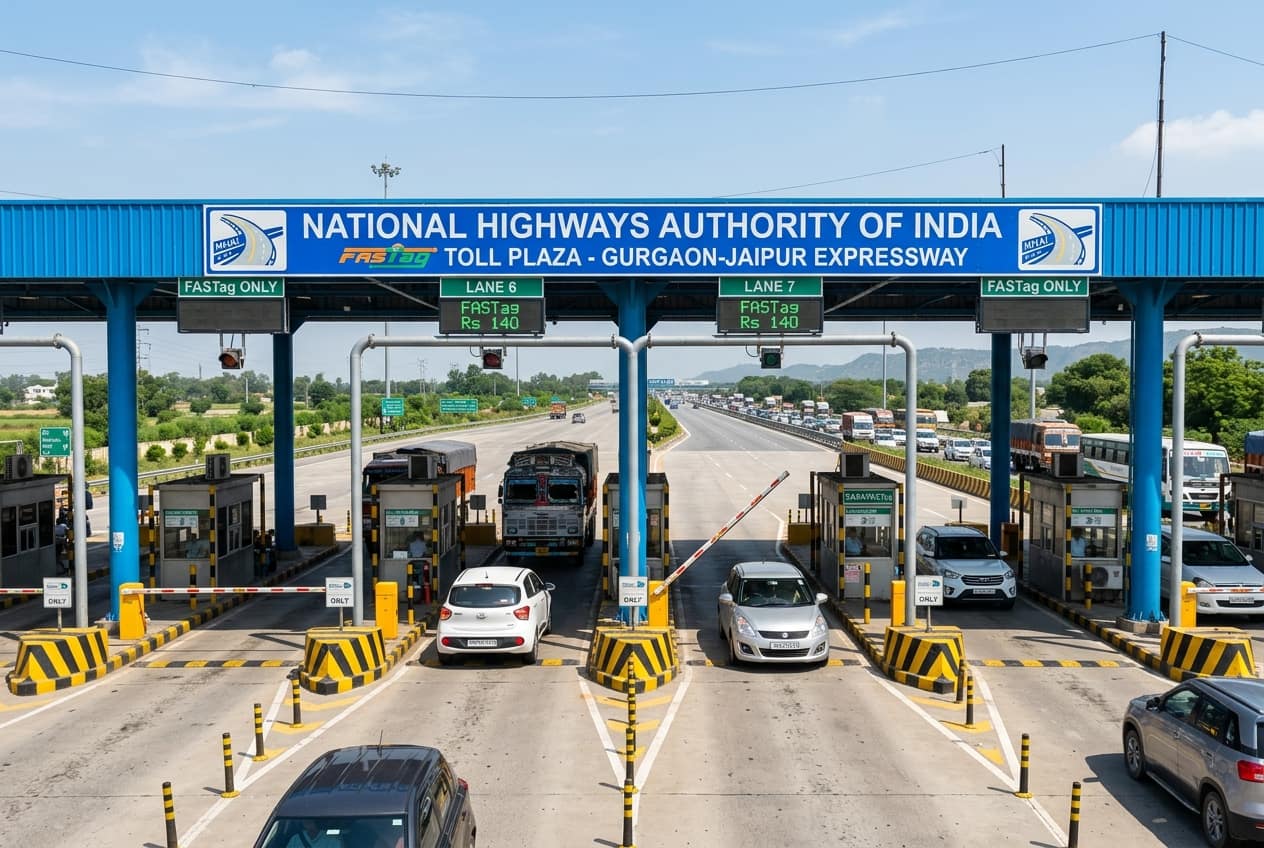
Toll plaza automation combines lane equipment, a toll management system, FASTag or ETC readers, vehicle classification, optional weigh-in-motion, surveillance and maintenance into one working plaza. The parts must be designed together, because a fault or mismatch at any link affects revenue. We deliver the full chain, from survey and installation to AMC, for concessionaires, authorities and EPC contractors.
At a glance
- Typical timeline
- 3 to 6 months for a new plaza, depending on lane count and civil readiness.
- Systems covered
- TMS, ETC, classification, lane equipment, WIM, surveillance and AMC.
- What you receive
- Commissioned lanes, interface documents, test records, training and support plan.
- Key rules
- Concession agreement, NPCI NETC specifications and IHMCL operating framework.
- Best suited for
- Concessionaires, highway authorities, road EPC contractors and toll operators.
- Our approach
- Single window delivery with documented interfaces and phased commissioning.
Toll Plaza Automation Overview
Toll plaza automation is the work of making a plaza collect the right amount from the right vehicle, record it correctly and keep doing so through monsoon, power cuts and festival traffic. It covers lane equipment, toll management software, electronic toll collection through FASTag, vehicle classification, weigh-in-motion where required, surveillance and the maintenance that keeps it all running. Shruti IT Service delivers these as a connected set.
The seven services in this category are layers of one system. The toll management system is the brain that records every transaction. FASTag and ETC integration is how most vehicles pay. Lane equipment is the barriers, displays, signals and sensors that physically control the lane. Classification checks that the charged class is right. Weigh-in-motion screens for overloaded vehicles. Surveillance makes the whole plaza auditable. The AMC keeps all of it working after handover.
Buyers in this category are usually concessionaires, state road development corporations, highway authorities and road EPC contractors. Their concerns are revenue assurance, contractual reporting, uptime during peak traffic and handover at the end of a construction period. We write our scope and documents with those concerns in mind, and we are honest about what depends on others, such as the acquirer bank and the TMS vendor.
We are based in Nashik and serve plazas across Maharashtra, Gujarat, Madhya Pradesh and Rajasthan, with teams mobilised from Nashik for survey, installation and commissioning. The conditions that shape plaza equipment are familiar: summer heat in booths and cabinets, monsoon rain on sensors and junction boxes, desert dust, coastal salt air and lightning exposure on open highway stretches. Our team of more than 50 people handles survey, installation, integration and maintenance, so the same engineers who commission your plaza can support it later.
Toll Plaza Automation Services We Deliver
Toll Management System (TMS)
The software and server layer that records every transaction, manages exemptions and passes and produces shift and revenue reports. We set up lane, plaza and central tiers with offline lane operation, audit trails and reconciliation views, and test failure cases before go live.
FASTag & ETC Lane Integration
UHF reader and antenna installation, lane controller integration with the acquirer bank interface and hybrid or dedicated ETC lane setup. We map read zones with real vehicles, tune for first pass reads and certify against bank test cases before the lane opens.
Automatic Vehicle Classification (AVCC)
Axle detectors, profile sensors and cameras that classify each vehicle and compare it with the class being charged. Mismatch alerts reach the booth with an image, and we prove accuracy against manual counts in a written report you can show an auditor.
Toll Lane Equipment & Boom Barriers
Boom barriers rated for toll duty, fare displays, lane signals, booth terminals, printers, intercoms and loop detectors, installed and sequenced so the lane behaves safely. We include wiring schedules and a spare parts list sized to your repair time.
Weigh-in-Motion (WIM) Systems
Pavement sensors that weigh vehicles at traffic speed and flag suspected overloads with image evidence. We assess the road first, calibrate with known trucks, link to a static weighbridge and pass data to the TMS, treating WIM as a screening tool.
Toll Plaza CCTV & ANPR Surveillance
Lane, booth, cash room and overview cameras with ANPR tied to each transaction, so any toll record opens with its vehicle image, plate and clip. We tune for night and rain, set up the monitoring room and size storage to your retention period.
Toll Plaza O&M and AMC
Round the clock on site or on call support, preventive maintenance of lane equipment, spare management and monthly uptime reports. Service levels are agreed per plaza, with downtime defined clearly and repeat faults traced to their root cause.
Why toll plaza projects go wrong across the whole chain
Most plaza trouble comes from gaps between suppliers. The lane equipment vendor, the software vendor, the RFID supplier, the camera contractor and the network installer each deliver to their own scope, and the faults live in the spaces between. A barrier that closes early, a read that is not tied to a vehicle detector or a clip that cannot be found from a transaction are all interface problems, and nobody owns them.
A second problem is sequencing. Plazas are often opened in a hurry, with documents arriving late, civil work incomplete and testing squeezed. Teams skip failure drills, run no parallel period and discover weaknesses during the first heavy weekend. The cost of one failed peak day is usually larger than the cost of the time it would have taken to test properly.
The third is maintenance treated as an afterthought. Equipment that is well installed but never serviced, with no spare stock and no fault history, declines steadily. Operators then replace devices that only needed a seal, a loop repair or a battery, and repeat faults go on for years because nobody investigates the cause.
What You Gain
One owner for the lane chain
Lane equipment, readers, software links, cameras and network are delivered by one team, so interface faults have an owner from day one and do not bounce between vendors.
Revenue you can reconcile
Transactions, classification, images and bank settlements are designed to line up, so differences are traced to a lane and a time window instead of staying unexplained.
Peak day resilience
Offline lane operation, tested failure drills and spare stock mean a server fault or a link cut does not stop collection during the busiest hours.
Audit ready documentation
Interface documents, calibration records, test results and fault logs are handed over, giving the authority and the concessionaire the records they ask for.
Phased commissioning
Lanes are commissioned and tested one at a time, with parallel running where an older system exists, which limits risk and keeps the plaza open.
Continuity after handover
The engineers who commissioned your plaza can remain under an AMC with service levels agreed per site, preserving knowledge of your lane configuration.
How the Work Is Delivered
A plaza project runs best when the sequence is fixed early. This is the order we follow, adapted to whether the plaza is new, upgraded or being taken over.
- 1
Survey and requirement capture
We study the concession agreement extract, authority formats, bank interface documents and the plaza layout, then record lanes, booths, cable routes, power and network. The output is a signed requirement sheet and a list of dependencies owned by others.
- 2
System design and BOQ
We design the lane, plaza and central tiers, select equipment classes, plan cabling, storage and power, and issue a bill of quantities with spares. Every interface between systems is listed with an owner.
- 3
Civil and cable readiness
Foundations, ducts, loops, earthing, cabinets and booth services are checked or built. We insist on tested cabling before devices are connected, because most commissioning delays begin with unverified civil work.
- 4
Supply and installation
Lane equipment, readers, sensors, cameras and servers are installed lane by lane, with labelling, surge protection and photographs recorded. Installation order follows traffic, so the plaza stays in service.
- 5
Integration and testing
Each device is tested alone, then the lane, then the plaza and the central system. Failure drills include link cuts, server restarts, power failures and loop failures, and results are recorded.
- 6
Cut over and stabilisation
We run parallel systems where needed, cut over in a low traffic window with a rollback plan, and keep engineers on site through the first week and the first peak period.
- 7
Handover, training and AMC
Collectors, supervisors and technicians are trained by role. We hand over documents and test records, then set up operation and maintenance with agreed service levels and a spare plan.
How the plaza systems fit together
A plaza has three tiers. At the lane, a controller connects to the reader, barrier, displays, signals, detectors, booth terminal and sensors, and it makes real time decisions. At the plaza, a server holds master data, collects transactions, runs reports and manages users. At the centre, a server consolidates one or many plazas and exposes data to the authority and head office. Each tier must keep working when the tier above fails, which means local storage, acknowledged messages and tested recovery.
Around that core sit the sensing and evidence layers. UHF readers handle electronic tags under the NPCI NETC framework. Axle detectors, profile sensors and cameras classify vehicles. WIM sensors in the pavement screen for overload. Cameras record lanes, booths, the cash room and the overview, linked to transactions through synchronised clocks. Power backup, earthing and surge protection support everything, and a network built with redundancy carries the traffic. Designing these together, with documented interfaces and one time source, is what separates a plaza that works from one that merely has equipment.
Concession agreement and authority formats
The agreement defines classes, fees, reports and retention. We build the system to it, so the plaza's reports match what the authority and the concessionaire must submit.
NPCI NETC and IHMCL framework
Electronic toll collection follows the NETC specifications published by NPCI, with the operating framework involving IHMCL. Lane integration follows the current version supplied by the acquirer bank.
IS 3043 earthing and surge protection
Lane cabinets, reader lines and camera poles are earthed and protected against surges, which matters on exposed highway stretches with frequent lightning.
IS 732 wiring and cable practice
Power and signal cabling follows recognised wiring practice with separation, labelling and sealed conduits, reducing water ingress and noise faults.
ONVIF, BIS CRS and IEC 62676 for surveillance
Cameras should support ONVIF, carry BIS CRS registration and be sized using IEC 62676 pixel density targets, so evidence is usable and equipment is replaceable.
Worked example: commissioning a new eight lane plaza on a state highway
Picture a new eight lane plaza on a state highway, with a plaza building, a cash room and a head office link. The concessionaire wants electronic lanes on most lanes, a hybrid arrangement on two, classification with mismatch alerts, a weigh-in-motion screening point on the heavy vehicle lanes and full surveillance. Civil work is finishing in phases.
We would survey and fix interfaces first, including the acquirer bank, the TMS vendor and the authority's report formats. Installation would follow civil handover lane by lane, with cabling tested before devices. Integration would proceed from device to lane to plaza to head office, with failure drills at each level. Cut over would be in a low traffic window, with engineers on site for the first week and a first month review of mismatches and faults.
In the typical outcome, the plaza opens with documented interfaces, lane records and test results, a short list of known open items and a maintenance plan in place. The first weeks usually reveal master data issues, antenna tuning needs and one or two sensor positions to adjust, all handled through the stabilisation period rather than after complaints.
- Lanes commissioned one at a time with recorded failure drills
- Interface documents and test records handed over for every system
- First peak period supported by engineers on site
- Maintenance plan, spares list and reporting agreed before go live
This is an illustrative scenario built from typical site conditions. Actual quantities, timelines and results depend on your site survey.
Toll Plaza Automation Across Four States
We are based in Nashik and deliver across Maharashtra, Gujarat, Madhya Pradesh and Rajasthan. Each state has its own utilities, approvals and site conditions, and these are the points that matter most for this service.
Maharashtra
Plazas here sit on national and state highways, including high speed corridors such as Samruddhi Mahamarg. Reporting formats differ between authorities and the state road development corporation, so we confirm them early. Monsoon and summer heat both shape enclosure, drainage and cooling choices.
Gujarat
NH 48 carries heavy freight between Mumbai and Gujarat, and coastal sections bring salt air that corrodes lane equipment. We plan coated fittings and corrosion checks, and expect barrier duty cycles at the top of the range. Concessionaire reporting formats are confirmed before design.
Madhya Pradesh
Plazas on long inter-city stretches see mixed traffic and sometimes weak network links, so offline lane operation and local storage matter most. Strong monsoon and hot summers affect power quality and enclosures. We design failover and spares around the distance between sites.
Rajasthan
The Delhi to Mumbai Expressway and desert roads bring extreme heat, fine dust and long distances between plazas. Cooling, filtered enclosures, a second network link and a larger on site spares kit decide whether lanes stay open. Remote commissioning is planned around mobilisation from Nashik.
Where This Work Is Most Often Needed
Why Teams Work With Us on This
Single window for the whole plaza
Lane equipment, readers, sensors, cameras, network, power and maintenance come from one team, so faults have an owner and interfaces are designed once.
Documents that outlast the project
We hand over interface documents, wiring schedules, calibration and test records. A future engineer or vendor can start from facts, and an auditor can see how the plaza was proven.
Nashik based engineers, four state coverage
Our Nashik team knows conditions such as monsoon, heat, dust, salt air and lightning exposure, and travels to plazas in Maharashtra, Gujarat, Madhya Pradesh and Rajasthan. AMC visits are planned by route and site cluster.
Honest about dependencies
We tell you plainly what depends on the acquirer bank, the TMS vendor or the authority, and plan around those items, instead of promising dates that others control.
Toll Plaza Automation Across Our Four States
We are based in Nashik and deliver across Maharashtra, Gujarat, Madhya Pradesh and Rajasthan. Each local page covers the power utility, climate, approvals and site types that change how this work is designed in that place.
Major cities in Maharashtra
Guides and Projects Related to This Service
Frequently Asked Questions
01What does toll plaza automation include?
It includes lane equipment, a toll management system, FASTag or ETC integration, vehicle classification, optional weigh-in-motion, surveillance and maintenance. These parts work as one system, and the design must treat the interfaces between them as carefully as the devices. We deliver the full chain or individual layers, depending on your scope.
02How long does it take to automate a toll plaza?
A new plaza typically takes 3 to 6 months from survey to stable operation, depending on lane count, civil readiness and bank and authority approvals. Upgrades of existing plazas can be faster, because lanes are changed one at a time. The longest delays usually come from documents and approvals that others control.
03Which systems should I install first?
Start with the lane equipment and the toll management system, then add electronic collection, since lanes and software are the base. Classification, WIM and surveillance can follow in phases, although cabling and ducts for all of them should be provided at the start to avoid rework. We help plan this sequence at the survey stage.
04How much does toll plaza automation cost?
Cost depends on lane count, electronic lane share, software licensing, classification and WIM scope, camera count, network redundancy and maintenance arrangements. Prices per lane can differ widely between a basic and a full specification. We give a firm number only after a survey and a review of the agreement and interface documents.
05Can you work with our existing toll software or equipment?
Yes, where the software or equipment supplier provides interface documents and test support. We review what exists, test it and recommend what to keep, repair or replace. Where documentation is missing, we suggest a short study first, because integration based on guesswork is the main source of later faults.
06What happens after the plaza is handed over?
You receive documents, test records and trained staff, and we can continue under an AMC with preventive maintenance, spares and reporting. Service levels are agreed per plaza in the contract. Many operators choose on site cover for peak hours and on call cover at other times.