
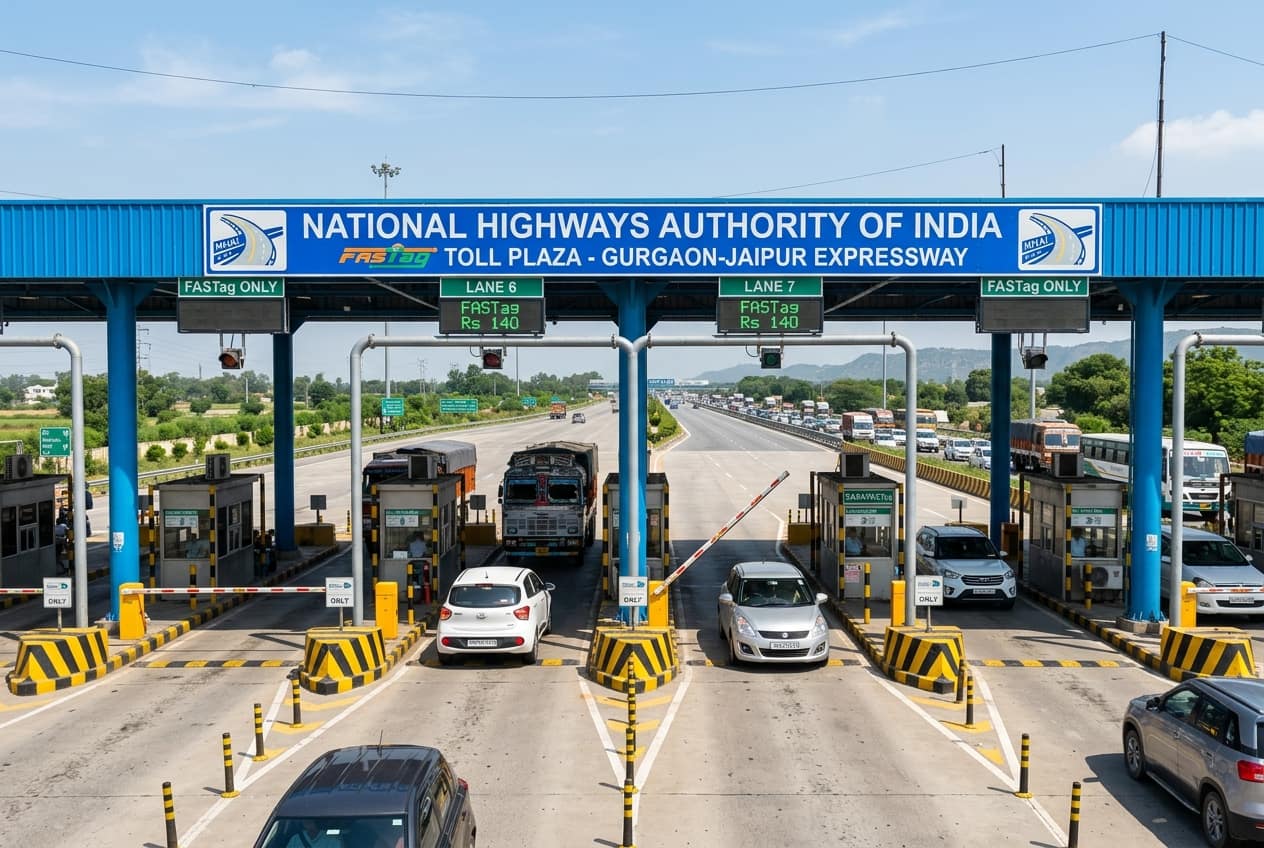
Automatic vehicle classification (AVCC) identifies the class of each vehicle at a toll lane using axle detectors, profile sensors and cameras, then compares it with the class being charged. A mismatch raises an alert to the collector or supervisor. Accuracy is proven by comparing system output against manual counts over a sample, and recording the result in a classification accuracy report.
At a glance
- Typical timeline
- 4 to 8 weeks per plaza including calibration, depending on lane count and road works.
- Detection methods
- Axle detectors, laser or light curtain profiling, loops and camera images.
- What you receive
- Installed sensors, calibration record, mismatch alert setup and accuracy report.
- Key outputs
- Class per vehicle, axle count, images and mismatch log.
- Best suited for
- Toll plazas and traffic survey projects.
- Our scope
- Sensors, cameras, axle and profile detection, alerts and accuracy reporting.
Automatic Vehicle Classification (AVCC) Overview
Automatic vehicle classification decides whether the fee charged matches the vehicle that actually passed. At a toll plaza the class drives the amount, and the amount drives the revenue. A truck charged as a light vehicle, or a car charged as a bus, is a loss to the concessionaire in the first case and a dispute with the driver in the second. Our automatic vehicle classification work builds the sensing and the checking that stops both.
The system works by combining several measurements. Axle detectors count axles and, with the right arrangement, spacing. Profile sensors, either laser scanners or light curtains, measure length and height of the vehicle. Cameras take images that are stored against the transaction. Loops confirm presence and direction. The classification logic fuses these into a class and compares it with the class entered by the collector or read from the tag record.
The term AVCC is used widely in tender documents. Some tenders specify only counting and classification for traffic survey. Others specify classification with real time mismatch alerts at the lane. These are different systems with different accuracy needs and different failure modes, and we begin every project by writing down which one the client actually needs.
Classification accuracy is never perfect and anyone who promises it is not describing the road we work on. Closely spaced vehicles, trailers, tractors with implements, vehicles that change lane inside the sensor zone and vehicles with lifted axles all produce hard cases. A good design reduces these, measures the rest honestly and gives the supervisor an easy way to review the doubtful ones.
Ideal for: Toll plazas and traffic survey projects.
What Our Automatic Vehicle Classification (AVCC) Includes
Our classification scope covers the sensing, the logic, the alerts and the measured proof that the system performs on your lanes.
Sensor and camera based classification systems
We design and install the mix of axle detectors, profile sensors, loops and cameras suited to your lane geometry and accuracy target. You receive a layout drawing and sensor list. Practical tip: ask the vendor how the system behaves in heavy rain and with a muddy lens, before you buy.
Axle and profile detection
Axle count, spacing, length and height are measured and combined into a class with a confidence level. Thresholds are set from your test vehicles. Practical tip: include a tractor trailer and a lifted axle truck in the test set, because these are the vehicles that expose weak logic.
Mismatch alerts to toll collectors
Alerts show the detected class, the charged class and an image to the collector and supervisor, with a review log. We tune sensitivity over the first weeks. Practical tip: start in silent mode to avoid alert fatigue, then enable alerts lane by lane.
Classification accuracy reports
We compare system output with manual counts and issue a report with sample size, duration and class by class accuracy. This becomes your acceptance record. Practical tip: agree the sampling plan with the authority before the test, not after it.
Why wrong classification quietly drains toll revenue
Misclassification is invisible until someone looks for it. A collector under queue pressure picks a class quickly, and over a shift the errors lean in one direction. Where there is no independent check, the plaza has no way to know how much is lost. Some plazas discover the gap only when an audit samples vehicles by hand and finds that a measurable share of heavy vehicles were charged as lighter classes.
The second problem is sensors installed without calibration. An axle detector that miscounts on joint gaps, a profile scanner blocked by a splashed mud layer or a loop cut too close to a steel plate will each produce confident wrong answers. The system then raises false alerts, collectors learn to ignore them and the whole point is lost.
A third problem is evidence. When a driver disputes a class, the plaza needs an image of the vehicle, the axle count and the time, linked to the transaction. Without that, the collector's word stands against the driver's, and the dispute ends in a concession that nobody records.
What You Gain
Independent check on every class
The system classifies each vehicle without relying on the collector, so the charged class can be compared against a second opinion and differences can be reviewed the same day.
Mismatch alerts at the booth
When the detected class and the charged class disagree, the collector and supervisor see an alert with an image, which allows correction before the vehicle leaves the lane.
Evidence for disputes
Each transaction carries images, axle count and a time stamp, so a driver's dispute can be settled by looking at the record instead of arguing.
Measured accuracy
We compare system output with manual counts over a defined sample and write the result into an accuracy report, which gives the authority and the operator a shared basis for acceptance.
Traffic count data as a by product
Classified counts by hour, lane and direction are available for planning, traffic surveys and capacity studies without a separate survey crew.
Better supervisor focus
Supervisors review the short list of flagged vehicles instead of watching every lane, which uses their time on the cases that matter.
How the Work Is Delivered
We treat classification as a measurement problem. That means calibration, comparison with manual counts and an honest report of where the system is weak.
- 1
Requirement and class definition
We confirm the vehicle class table from the agreement, the accuracy expectation, the alert behaviour and the evidence the authority wants stored. Ambiguous classes, such as tractors with trailers, are discussed and decided in writing.
- 2
Lane survey and sensor layout
We inspect pavement condition, joints, drainage, loop history and cable ducts, then draw the sensor layout per lane. Pavement cutting is planned around traffic and, where possible, coordinated with the civil team.
- 3
Sensor and camera installation
Axle detectors, profile sensors, loops and cameras are installed with proper sealing, drainage and cable protection. Mounting structures are rigid and placed away from vehicle impact zones, and every sensor cable is labelled and tested.
- 4
Classification logic configuration
Rules combine axle count, spacing, length, height and direction into a class. We set thresholds from measured test vehicles on your lane, not from a generic template, and configure how mismatches are shown and logged.
- 5
Calibration and accuracy testing
Known test vehicles pass through at several speeds and lane positions. Then a manual observer counts and classifies traffic for an agreed period while the system runs, and the two are compared class by class.
- 6
Alert tuning and TMS integration
Alert sensitivity is set so supervisors receive a manageable number of real mismatches. Classification output is passed to the toll management system with images, and the message format is tested end to end.
- 7
Handover and periodic recalibration
Staff are trained on reviewing alerts. We hand over the calibration record, accuracy report and a recalibration schedule, and propose periodic checks under an AMC because sensors drift with pavement wear.
Axle, profile and image sensing working together
No single sensor classifies every vehicle well. Axle detectors, such as treadles or piezo based strips, count axles reliably but say little about body shape. Laser scanners and light curtains measure length and height, which separates a bus from a two axle truck of similar axle count. Cameras supply images for evidence and, where analytics are used, support visual checks. Loops confirm that a vehicle is present and which way it is moving. The classification logic combines these inputs and assigns a confidence level, so uncertain vehicles can be flagged for review instead of forced into a class.
Placement decides performance. Sensors must sit where vehicles travel in a predictable line, away from joints and patches that make axle detectors bounce, and away from spots where water pools. Lane discipline helps, and in open road designs it can be improved with channelising features. Environmental limits matter too. Dust, fog and mud affect optical sensors, and heavy monsoon rain affects both cameras and drainage around buried sensors. We state these limits in the design, along with cleaning and inspection intervals, so expectations match reality.
Vehicle class table from the agreement
The agreement lists classes and the fee for each. The classification logic is built to that table, and any edge case such as a tractor trailer combination is settled with the authority in writing.
Sensor placement design rule
Sensors are placed on sound pavement away from joints, patches and ponding. Loops follow manufacturer cutting depth and spacing, and axle detectors sit flush as per the installation instructions.
Accuracy test method
The test plan states sample size, duration, vehicle mix, speed range and acceptance threshold, and records both overall accuracy and class by class results, since an average can hide a poor class.
Evidence retention rule
Images and classification records are kept for the period set by the agreement and the audit cycle, with storage sized accordingly and access limited by role.
Data protection note
Images that show number plates or faces are personal data in practice. We configure access and retention with the client's data protection obligations under the Digital Personal Data Protection Act 2023 in mind.
Worked example: adding AVCC to a six lane plaza with a known leakage concern
Picture a plaza where supervisors suspect that heavier vehicles are sometimes charged at a lower class in peak hours, but nobody can measure it. The lanes are concrete, with some joint damage near the entry, and the plaza has an existing TMS that can accept classification messages.
We would begin with a manual count over several days to establish a baseline, since that gives both a benchmark and a way to design the sensor layout around the real traffic mix. Axle detectors are placed on sound sections after the joint damage, profile sensors are mounted on a rigid gantry and cameras are positioned for images that show both the vehicle front and its axle configuration. Calibration vehicles are run, thresholds are set and the system runs in a silent mode first, logging mismatches without alerting collectors.
In the typical outcome, the silent period gives the operator its first honest measurement of how often charged and detected classes differ. Alerts are then switched on in stages, with supervisors reviewing flagged vehicles. The client usually finds that most mismatches are genuine, some are sensor edge cases that are tuned out over a few weeks, and a small group remains a judgment call for the supervisor.
- A measured baseline of classification mismatches before alerts go live
- Evidence images and axle data stored against each flagged transaction
- Alert volume tuned to a level supervisors can review each shift
- Accuracy report accepted as a shared reference with the authority
This is an illustrative scenario built from typical site conditions. Actual quantities, timelines and results depend on your site survey.
Automatic Vehicle Classification (AVCC) Across Four States
We are based in Nashik and deliver across Maharashtra, Gujarat, Madhya Pradesh and Rajasthan. Each state has its own utilities, approvals and site conditions, and these are the points that matter most for this service.
Maharashtra
Traffic mix includes sugarcane tractor trailers in season, loaded trucks and buses. These trailers confuse axle counting, so we include them in the calibration set. Monsoon rain pools on poor pavement, which damages buried sensors, so we check drainage around loop and axle detector slots before installation.
Gujarat
Container and tanker traffic on NH 48 brings long multi axle vehicles that stress profile sensor range and axle spacing logic. Coastal humidity and salt affect optical sensor lenses and connectors, so we plan lens cleaning and corrosion resistant fittings for plazas near the coast.
Madhya Pradesh
Plazas here see a wide mix of agricultural and goods vehicles, with lane discipline that varies by site. We assess lane markings and channelising before placing sensors. Heavy monsoon followed by hot summers cracks pavement, so we check joints and patches before fixing axle detectors.
Rajasthan
Fine dust and glare affect optical profile sensors and camera lenses at desert plazas, so we plan frequent lens cleaning. Extreme pavement temperatures affect some axle sensor types, and we pick sensors with temperature compensation. Camel carts and tractors appear on some roads, so edge cases need explicit rules.
Where This Work Is Most Often Needed
Why Teams Work With Us on This
Calibration on your own lanes
We tune thresholds with test vehicles and manual counts at your plaza. Generic factory thresholds fail on local traffic mixes that include tractors, loaded trucks and multi axle trailers.
Civil and electrical work in one scope
Loop cutting, duct work, power for gantries and surge protection are handled by the same team that installs the sensors, so there is no gap between the pavement work and the electronics.
Honest accuracy reporting
We report accuracy class by class, including where the system is weaker, because your acceptance decision should rest on measured results rather than a single headline figure.
Recalibration support after handover
Sensors drift as pavements wear. Our Nashik based team can return for scheduled checks under an AMC, planned by route and site cluster across the states we serve, with service levels agreed in the contract per plaza.
Need AMC for an existing system?
We maintain installations done by other vendors too, after a short audit of what is already on site.
Guides and Projects Related to This Service
Frequently Asked Questions
01What is automatic vehicle classification at a toll plaza?
It is a system that detects the class of each vehicle using axle detectors, profile sensors, loops and cameras, then compares it with the class being charged. If they differ, it alerts the collector or supervisor. It also stores images and counts, which helps with disputes, audits and traffic surveys.
02How accurate is automatic vehicle classification?
Accuracy depends on sensor layout, lane discipline, pavement condition and vehicle mix, so we do not quote a fixed percentage up front. We agree a test method and acceptance threshold with you, measure the system against manual counts and report accuracy overall and class by class.
03What is the difference between AVCC and weigh-in-motion?
AVCC identifies the class of a vehicle by its axles and shape, to charge the right toll. Weigh-in-motion measures vehicle and axle weight to find overloading. They use different sensors and serve different purposes, though both can feed the same TMS and are often installed together on enforcement lanes.
04How long does installation take and does it disturb traffic?
Plan on 4 to 8 weeks per plaza including calibration. Pavement cutting for loops and detectors needs lane closures, which we schedule lane by lane in low traffic windows so the plaza stays open. Calibration and the accuracy test run in normal traffic afterwards.
05Can cameras alone classify vehicles?
Camera based analytics can classify many vehicles, but cameras alone struggle with axle counting, heavy rain, glare and dirt. Most tender specifications for toll lanes combine cameras with axle detectors or profile sensors. We choose the mix based on the accuracy you need and the conditions at your plaza.
06What maintenance do classification sensors need?
Optical sensors need regular cleaning, axle detectors need periodic inspection of the seal and surface, and loops need resistance and insulation checks. We recommend a recalibration check at least once a year and after any resurfacing, and we list these in the AMC schedule.