
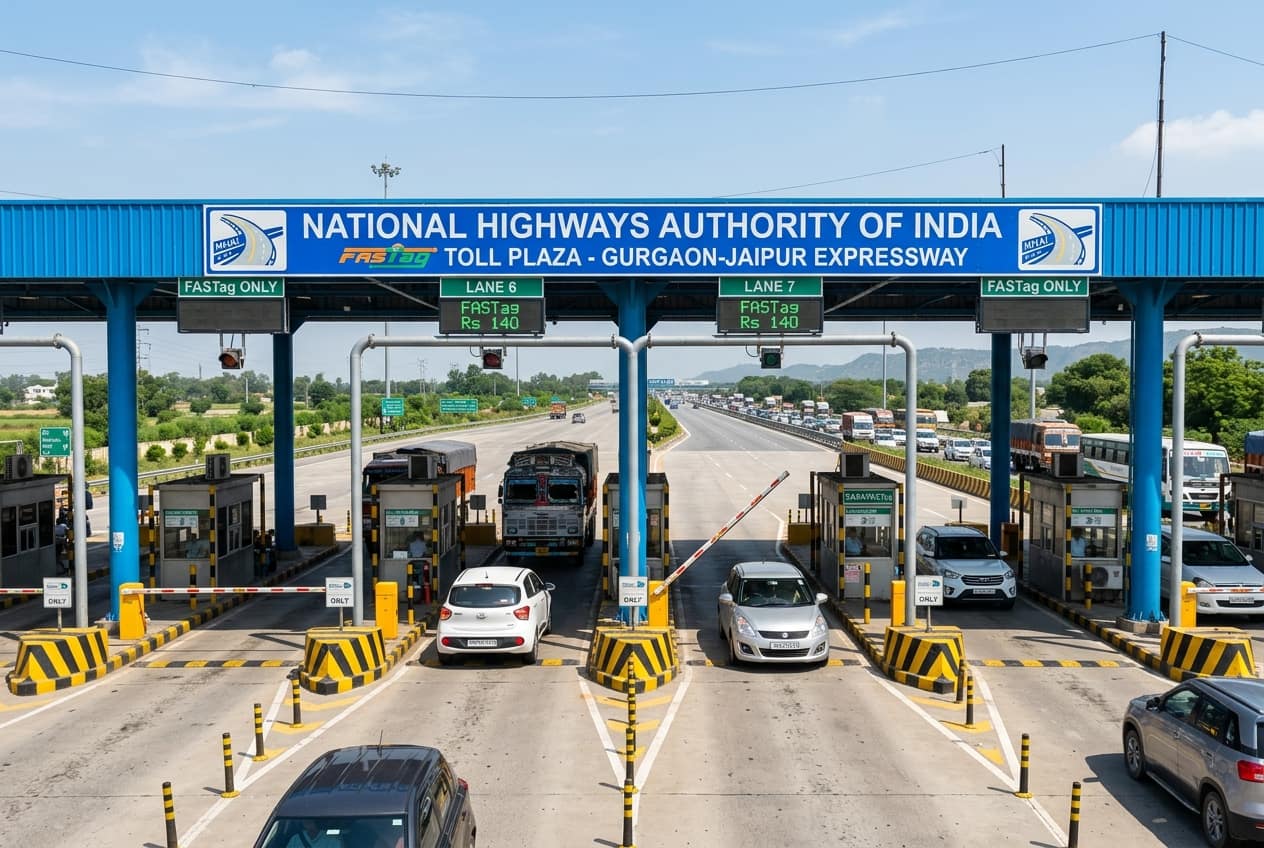
FASTag and ETC lane integration connects UHF RFID readers and antennas to the lane controller so a vehicle's tag is read, validated and charged without stopping. The lane controller then exchanges transaction messages with the acquirer bank under NPCI NETC rules. Quality is judged by read rate, response time and clean settlement, and all three must be tested lane by lane.
At a glance
- Typical timeline
- 3 to 6 weeks per plaza for integration and tuning, after civil and power are ready.
- Radio band
- UHF RFID in the 865 to 867 MHz band used in India.
- What you receive
- Installed readers, antenna layout drawing, interface test record and read-rate report.
- Key rules
- NPCI NETC specifications and acquirer bank requirements.
- Best suited for
- Toll plazas, parking operators and controlled access facilities.
- Our scope
- Readers, antennas, controller integration, hybrid lane setup and tuning.
FASTag & ETC Lane Integration Overview
FASTag and ETC lane integration looks simple from the car window. The tag is read, the barrier lifts, the toll is deducted. Behind that moment sit a UHF reader, a tuned antenna, a lane controller, a network link to the acquirer bank, a response budget measured in fractions of a second, and a settlement process that has to balance later. Our FASTag integration work covers the whole chain on the lane side.
India's electronic toll collection runs on passive UHF tags attached to the windscreen, read by fixed readers at the lane. The ecosystem is defined by NPCI through the National Electronic Toll Collection programme, with IHMCL involved in the national framework. Each plaza connects through an acquirer bank, which validates the tag against the issuer side and returns the result. As integrators, we do not run the bank side. We build and tune the lane side so that it behaves correctly against the bank's interface.
A lot of the trouble in the field comes from physical details: an antenna mounted at the wrong angle, a reader tuned to read the next lane's vehicles, a metal canopy that reflects the signal, or a mounting bracket that drifts after a truck knocks it. Software teams rarely see these. Site engineers do, and we spend the first days of any integration on the lane with a tag in hand, measuring where reads succeed and where they fail.
Whether you are converting a dedicated ETC lane, configuring a hybrid lane that accepts both tag and other payment modes, or adding electronic collection at a parking or campus gate, the method is the same: define the read zone, fit the antenna to it, integrate the controller and measure the result over real traffic.
Ideal for: Toll plazas, parking operators and controlled-access facilities.
What Our FASTag & ETC Lane Integration Includes
Our FASTag and ETC scope covers the radio hardware, the controller link and the measured tuning that proves the lane works.
RFID reader and antenna installation
We mount readers and antennas on rigid brackets, route and label cables, add surge protection on RF and data lines and record every angle. You receive an antenna layout drawing. Practical tip: ask for bracket stiffness to be checked, because a bracket that flexes drifts the read zone.
Lane controller integration with acquirer systems
We connect the controller to the reader, detectors, barrier and displays, and to the acquirer interface, then test every outcome such as invalid tag, low balance and timeout. Practical tip: request a timing record from read to barrier command under peak load.
Hybrid and dedicated ETC lane configuration
Lane mode logic, signals, displays and collector screens are configured for dedicated or hybrid operation, including reversible lanes. Mode changes are logged. Practical tip: write down who may change a lane's mode and under what conditions before commissioning.
Read-rate testing and tuning
We test with vehicles of every class at different speeds, adjust power, angle and filters, then watch live traffic and tune again. You receive a read-rate report with method and sample size. Practical tip: repeat the test after the first monsoon, when brackets and cables show their weaknesses.
Why FASTag lanes miss reads and slow down traffic
A missed read costs money twice. The vehicle either stops while the collector intervenes, which builds a queue, or passes with a manual entry that may not match what the bank later settles. Typical causes are a read zone that does not cover where windscreen tags actually are, antennas aimed too low for high cabin trucks, and readers set to a power level that either misses weak tags or bleeds into neighbouring lanes.
Cross lane reads are the other classic problem. A tag read in lane 3 is charged to a vehicle that is physically in lane 4, then the real vehicle in lane 4 is charged again or flagged. This is solved by antenna pattern control, correct spacing, absorber or shielding where needed and by correlating the read with a vehicle detector signal, not by turning power down until nothing is read.
The third problem is response time. The lane controller has a limited budget between the read and the barrier decision. If the network link to the acquirer is slow, or the controller retries badly, the barrier hesitates. Plazas that skip load testing find this out during the first holiday weekend, when traffic is highest and the link is busiest.
What You Gain
Higher first pass read rate
Antenna position, tilt and reader power are tuned against real vehicle types, including high cabin trucks and tinted or metallised screens, so fewer vehicles need manual intervention.
Fewer cross lane charges
Read zones are shaped and checked lane by lane, and reads are tied to the vehicle detector, which reduces wrong vehicle charges and the disputes that follow.
Predictable barrier response
We measure time from read to barrier command under normal and loaded network conditions, and fix the slow link or controller setting before traffic does it for you.
Clean settlement with the bank
Transaction messages, retries and reversals are tested against the acquirer interface, so the plaza total and the bank settlement agree with explainable differences only.
Flexible lane modes
Dedicated ETC lanes and hybrid lanes are configured from the same controller design, and lane mode changes are controlled actions that are logged.
Documented tuning record
You receive the reader settings, antenna positions, test vehicle log and read-rate results, so the next engineer can restore the lane after any repair.
How the Work Is Delivered
Our integration steps follow the physical lane first and the data link second, because a lane that cannot read reliably cannot be fixed in software.
- 1
Lane survey and read zone planning
We measure lane width, canopy height, island layout and metal structures, then plan antenna positions and the intended read zone. We note neighbouring lanes, reversible lane arrangements and the vehicle mix expected at your plaza.
- 2
Interface review with the acquirer
We obtain the current interface specification, test environment access and certification steps from the acquirer bank. We confirm message formats, timeouts, retry rules and the test sequence the bank requires before a lane goes live.
- 3
Reader and antenna installation
Readers and antennas are mounted on rigid brackets with proper cable routing, weather sealing and surge protection on the RF and data lines. We label every cable and record antenna angles so they can be restored after a knock.
- 4
Controller integration
The lane controller is connected to the reader, vehicle detectors, barrier and displays. We set the logic for tag found, tag invalid, low balance, blacklist and no tag, and check each outcome on the lane.
- 5
Read-rate testing and tuning
We pass test vehicles of every class through the lane at different speeds and offsets, record read results and adjust power, angle and filters. Then we observe live traffic for a few days and tune again with real data.
- 6
Bank certification and go live
We run the acquirer's test cases, fix any failures and support the certification steps. Go live is planned for a low traffic window with fallback to the existing mode if a problem appears.
- 7
Handover and monitoring
Staff are trained on reader status, lane mode change and basic fault checks. We deliver the tuning record and agree a monitoring and AMC approach, including who checks read rate and how often.
UHF RFID, antennas and the lane controller link
FASTag uses passive UHF tags that follow the EPC Gen2 air interface family, read in the 865 to 867 MHz band allocated for RFID in India. Passive tags have no battery. They answer when the reader's field powers them, which is why geometry matters so much. A windscreen tag sits behind glass at a fixed height range, and the antenna must illuminate that zone evenly as the vehicle moves through it at lane speed. We prefer circularly polarised antennas aimed to cover the tag zone, with the reader's power and session settings chosen after on site measurement, not copied from a datasheet.
The lane controller receives the tag identity from the reader, checks it against locally cached lists where the rules allow, and sends the validation request to the acquirer. It must handle timeouts without freezing the lane. A well designed controller shows a clear state to the collector, decides within a defined budget, writes the transaction locally first and reconciles with the bank afterwards. Surge protection and good earthing on reader lines are not optional extras. Lightning prone highway stretches across western and central India take regular hits, and an unprotected reader is usually the first thing to fail.
NPCI NETC specifications
The National Electronic Toll Collection framework defines message formats, vehicle class codes and settlement flow. Lane integration follows the version currently in force, supplied by the acquirer bank.
UHF RFID band in India
Readers must operate in the licence exempt 865 to 867 MHz band at the permitted power. We confirm the reader model's configuration against the permitted limits before commissioning.
EPC Gen2 air interface
Tags and readers communicate under this family of standards. It influences how many tags can be read in a lane, which is why we test with multiple vehicles close together.
Read-rate acceptance criteria
We write the acceptance target into the test plan before testing: the number of passes, speeds, vehicle classes and the minimum successful read percentage. The number is agreed with you, not invented after the fact.
Surge and earthing rule
RF and data cables entering the lane cabinet carry surge protection, and the cabinet earth is tested and recorded, following IS 3043 earthing practice.
Worked example: converting two cash lanes to ETC at a plaza
Imagine a six lane plaza where two lanes still operate in mixed mode and the operator wants them converted to dedicated electronic lanes. The lanes have a steel canopy at about 5.5 metres and a gantry that reflects RF energy. The earlier reader mounting was done in a hurry and the read rate is uneven.
We would start by spending half a day on the lane with test tags at different heights and trucks of different cabin heights, mapping where reads succeed. The canopy reflections usually explain the dead spots. Antennas are moved and tilted, reader power is reduced slightly to protect neighbouring lanes, and a vehicle detector is added to bind the read to a physical vehicle. The controller is integrated, the acquirer's test cases are run, and the lane runs under observation for a week.
What the client typically sees is a stable read rate across car and truck classes, fewer manual interventions and a smoother queue in peak hours. The first week often shows a small group of tags that are damaged or poorly fixed, which is a driver and issuer matter, and we report these separately so they are not blamed on the lane.
- Stable read rate across cars, light vehicles and high cabin trucks
- Cross lane reads removed through antenna shaping and detector binding
- Barrier response time measured and recorded under peak network load
- Bank test cases passed with a record kept for future audits
This is an illustrative scenario built from typical site conditions. Actual quantities, timelines and results depend on your site survey.
FASTag & ETC Lane Integration Across Four States
We are based in Nashik and deliver across Maharashtra, Gujarat, Madhya Pradesh and Rajasthan. Each state has its own utilities, approvals and site conditions, and these are the points that matter most for this service.
Maharashtra
Many plazas here have steel canopies and gantries that reflect UHF energy, so we map read zones with test tags before fixing antennas. Monsoon storms and lightning on exposed stretches make surge protection on reader lines essential, and loose brackets after heavy rain are a common cause of drifting read rates.
Gujarat
Heavy freight on NH 48 means a large share of high cabin trucks and container vehicles, which changes antenna height and tilt. Coastal air corrodes connectors and brackets, so we use sealed, coated fittings and check RF connectors during tuning visits near the coast.
Madhya Pradesh
Plazas on long highway stretches see mixed traffic, including tractors and older trucks with damaged or poorly fixed tags. We report tag quality separately from lane read rate. Hot summers and monsoon rain both affect reader enclosures, so we check sealing and ventilation.
Rajasthan
Extreme summer heat and fine desert dust reach reader and antenna enclosures. Dust on radomes and heat in cabinets can degrade read rates over time. We specify sealed housings, plan cleaning intervals and check read rate again after the first summer.
Where This Work Is Most Often Needed
Why Teams Work With Us on This
We test on the lane, not on the bench
Read zones are mapped with real vehicles, tags and trucks at your plaza. Bench results rarely survive a steel canopy and a heavy vehicle mix, so we do not rely on them.
One team for RF, power and network
Reader surge protection, earthing, cable routes and the plaza network are within our scope, which removes the usual hand off gaps between the RFID supplier and the electrical contractor.
Records for the next engineer
Antenna angles, reader settings, test vehicle logs and bank test results are handed over, so any later repair can restore the lane to the tested state quickly.
Nashik based tuning team
Our team is based in Nashik and travels to plazas across Maharashtra, Gujarat, Madhya Pradesh and Rajasthan for installation and tuning. Return visits after peak traffic or storm damage are planned by route, and service terms are agreed in the contract per plaza.
Need AMC for an existing system?
We maintain installations done by other vendors too, after a short audit of what is already on site.
Guides and Projects Related to This Service
Frequently Asked Questions
01How does FASTag lane integration work?
A UHF reader and antenna read the passive tag on the windscreen, and the lane controller sends the tag identity to the acquirer bank for validation under NPCI NETC rules. The bank responds, the controller lifts the barrier and records the transaction. Our work is the reader, antenna, controller integration and testing on the lane side.
02What is the difference between a dedicated ETC lane and a hybrid lane?
A dedicated ETC lane accepts only electronic payment, which allows higher throughput. A hybrid lane accepts electronic payment and also allows other handling at the booth, which gives flexibility but slows the lane. The choice depends on your traffic mix, agreement terms and how many lanes you can afford to dedicate.
03What read rate should I expect from a FASTag lane?
A well tuned lane reads the great majority of valid tags on the first pass, but the exact figure depends on tag condition, vehicle mix and lane geometry. We do not promise a single number. We agree the acceptance target, test method and sample size before testing, then report measured results.
04How long does FASTag integration take for a plaza?
Allow about 3 to 6 weeks per plaza for installation, integration and tuning once civil work and power are ready. Bank test and certification steps can add time because they depend on the acquirer's schedule. Planning that dependency early prevents most delays.
05Why does the wrong vehicle sometimes get charged?
Usually because the reader picked up a tag from an adjacent lane or a vehicle queued behind. The fix is antenna shaping, correct spacing, shielding where needed and binding each read to a vehicle detector. Lowering reader power alone often trades one fault for another, so we test before and after each change.
06What do I need to provide before integration starts?
You need the acquirer bank's current interface specification and test access, the lane layout drawings, power and network readiness at each lane cabinet, and a named contact at the bank and at the TMS vendor. Missing documents are the most common cause of a late start.