
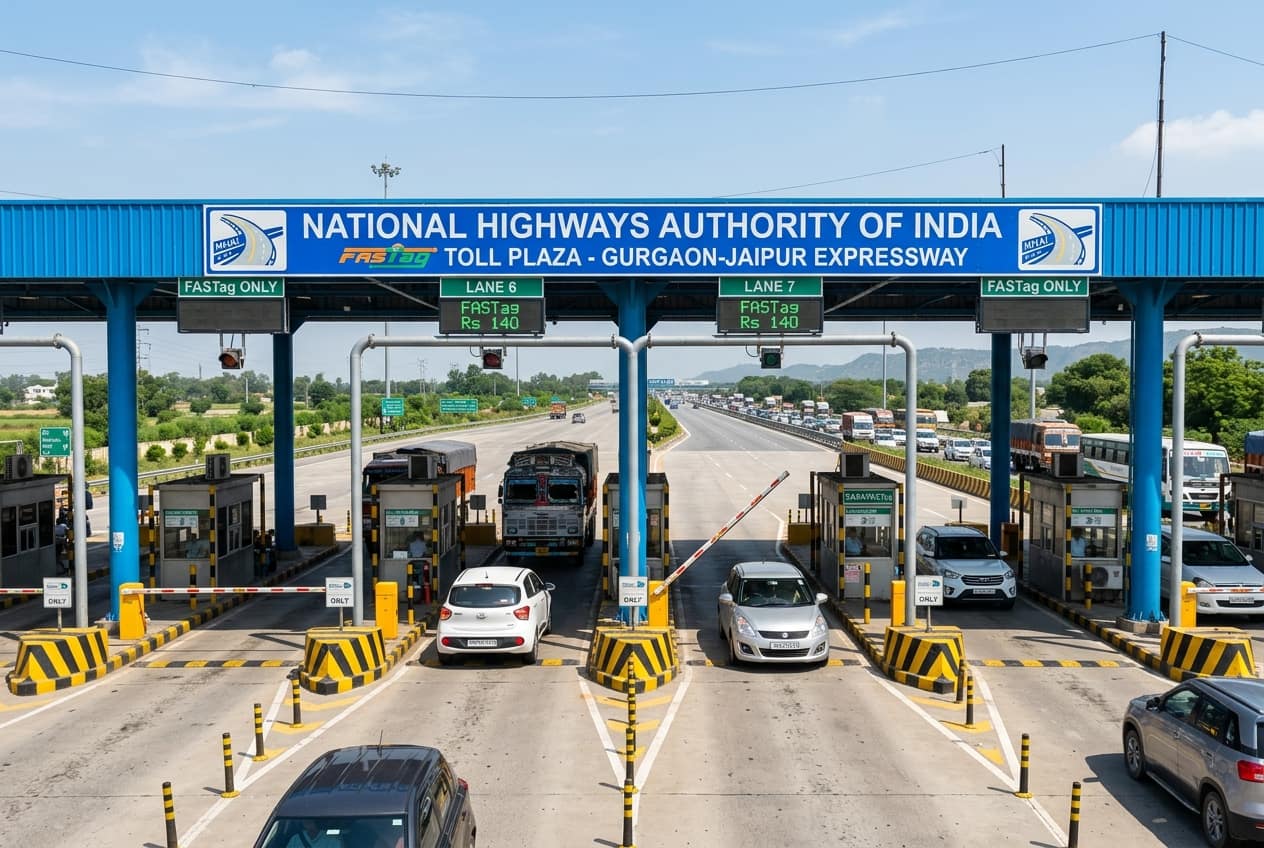
Toll plaza CCTV and ANPR surveillance covers lane, booth, cash room and overview cameras, with number plate recognition tied to each toll transaction. The goal is an auditable record: for any transaction you can pull the vehicle image, plate, time, lane, collector and booth video. It differs from general ANPR, which targets gates, parking and enforcement.
At a glance
- Typical timeline
- 4 to 8 weeks per plaza, depending on lane count and network readiness.
- Camera groups
- Lane, booth, cash room, admin block and plaza overview.
- What you receive
- Camera layout, ANPR setup, TMS link, monitoring room and storage design.
- Key output
- Transaction linked image and video clip on demand.
- Best suited for
- All toll plazas requiring transparent, auditable operations.
- Our scope
- Lane and booth cameras, ANPR, cash-room cameras, centralised monitoring.
Toll Plaza CCTV & ANPR Surveillance Overview
A toll plaza handles money in public, at volume, around the clock. That makes surveillance a financial control as much as a security measure. Our toll plaza surveillance work builds a camera system whose first job is to answer questions: which vehicle passed, what was charged, who was in the booth and what happened in the cash room. Security comes with it, but the audit trail is the point.
The system has five camera groups. Lane cameras capture the vehicle and its number plate as it crosses the transaction point. Booth cameras show the collector, the screen and the cash drawer, in line with the plaza's privacy rules. Cash room and admin block cameras cover counting, storage and movement. Overview cameras cover queues, incidents and the plaza as a whole. A monitoring room brings these together for supervisors.
ANPR at a toll plaza is used differently from ANPR at a factory gate. At the gate the question is whether a vehicle is permitted. At a toll lane the question is whether the plate matches the tag, whether the class matches the image and whether a transaction exists for every vehicle that crossed. The plate read is stored with the transaction, and the match or mismatch is reported to the supervisor.
We design this as part of the plaza's total system, with the TMS, the lane equipment and the network. Cameras installed in isolation produce hours of video that nobody can search. Cameras linked to the transaction record produce a one click answer.
Ideal for: All toll plazas requiring transparent, auditable operations.
What Our Toll Plaza CCTV & ANPR Surveillance Includes
Our plaza surveillance scope covers every camera group and the link that turns video into transaction evidence.
Lane, booth and overview cameras
We position cameras for vehicle capture, collector view and plaza overview, with illumination and rigid mounts. You receive a camera schedule showing the purpose of each. Practical tip: aim lane cameras after a night visit, since daytime alignment often fails after dark.
ANPR with transaction-linked images
Plate reads and vehicle images are stored against each transaction through the TMS link, with synchronised clocks. Practical tip: test with known plates in rain and at night before acceptance.
Cash-room and admin-block surveillance
Cameras cover counting, safe and doors with protected recording and logged access. Practical tip: set a longer retention for cash room footage than for lane video, since cash queries surface late.
Centralised plaza monitoring room
We set up monitors, workstations and alert views with role based access, designed around how supervisors work. Practical tip: limit the monitoring wall to the views supervisors really use, so incidents are not lost in a screen of thumbnails.
Why plaza video often fails to settle a dispute
Many plazas have cameras and still cannot resolve a dispute. The video exists, but nobody can find the right clip because it is not tied to the transaction. A supervisor scrubs through hours of footage to find one vehicle at one time, and often the clock on the camera differs from the clock on the TMS by minutes.
Image quality is the next problem. A camera aimed at a lane from the wrong angle, or without adequate illumination at night, gives images where the plate is unreadable and the vehicle class is guesswork. Headlight glare, dust on the housing and monsoon spray add to this. A plate read that works at noon and fails at night will not support an audit.
The last problem is access control on the footage itself. Cash room video must be protected from deletion and tampering, and retention must match the audit cycle. Systems where any operator can delete a clip, or where the recorder overwrites in a week, fail the test the first time a serious question comes up.
What You Gain
Transaction linked evidence
Each toll transaction carries its image, plate and a video clip reference, so a supervisor can open the exact moment in seconds instead of searching a timeline.
Plate and tag cross check
ANPR reads are compared with the plate registered to the tag, which highlights tag swaps and mismatched vehicles for review.
Cash handling accountability
Booth and cash room cameras provide a view of counting, bag movement and drawer access, which supports both the honest collector and the investigation of a shortage.
Better incident response
Overview cameras and the monitoring room let supervisors see a stalled vehicle, a fight or a queue forming and send help before it escalates.
Reliable night images
Camera placement, illumination and shutter settings are tuned for night plate capture and headlight glare, which keeps evidence usable around the clock.
Retention and tamper control
Storage is sized to the retention period, recordings are protected from deletion by normal users and access is logged, so the footage stands up in an audit.
How the Work Is Delivered
We design surveillance from the question backwards: what must you be able to prove, and from which camera, at which angle, for how long.
- 1
Audit questions and risk survey
We list what the operator, the authority and the auditor must be able to show, then survey lanes, booths, the cash room and the admin block. Camera positions are drawn against those questions, not against empty wall space.
- 2
Design, storage and BOQ
We select camera classes, lenses and illumination per position, size storage from camera count, bitrate and retention, and plan the network and power. The BOQ shows what each camera is for.
- 3
Mounting, cabling and power
Cameras are fixed on rigid poles or gantries away from impact zones, with outdoor rated cabling, sealed joints and surge protection. Lane cameras are aligned on site with live image checks.
- 4
ANPR and TMS integration
Plate reads are linked to transaction records through the TMS interface, with time synchronisation across cameras, recorders and servers. We test that each test vehicle's image appears against its own transaction.
- 5
Monitoring room setup
We set up the video wall or monitors, operator workstations and alarm views, with layout based on how supervisors work. Access rights are defined for supervisors, auditors and administrators.
- 6
Night, rain and glare testing
We test image quality at night, in rain and against headlight glare, and tune shutter, gain and illumination. Plate read rates are measured and recorded for the acceptance record.
- 7
Handover, training and AMC
Staff are trained on searching, exporting evidence and checking camera health. We hand over drawings, settings and test records, and propose an AMC with housing cleaning and focus checks.
Cameras, illumination and transaction linking
Lane cameras for ANPR are chosen for a fast shutter and a narrow field of view aimed at the plate zone, supported by infrared or white light illumination, because ordinary overview cameras cannot freeze a plate at lane speed. A separate colour camera captures the vehicle for class and condition. Booth and cash room cameras are typically fixed cameras with wide dynamic range, and overview cameras are fixed or PTZ depending on the area. Cameras should be IP66 rated outdoors and use ONVIF compatible interfaces so the recorder and the TMS can talk to them, and BIS CRS registration applies to CCTV cameras sold in India.
Transaction linking depends on a single clock. All cameras, recorders, lane controllers and servers take time from one source, so a clip can be found from a transaction time with a margin of a few seconds. The TMS stores the camera and clip reference, or the surveillance system searches by timestamp and lane. Storage design follows the simple rule that bitrate multiplied by hours multiplied by camera count gives bytes. For example, a 4 MP camera at a modest H.265 profile needs roughly 2 to 4 Mbps, so a plaza with 40 such cameras recording continuously for 30 days needs on the order of 30 to 60 terabytes before redundancy.
ONVIF interoperability
Cameras and recorders should support ONVIF profiles so equipment from different suppliers can be mixed and replaced without a rebuild of the system.
BIS CRS registration
CCTV cameras sold in India need BIS CRS registration. We check registration for cameras we propose and keep the documents in the handover pack.
IEC 62676 pixel density targets
For identification, aim for about 250 pixels per metre at the plate or face zone. We use this to select lens and resolution for lane cameras.
Time synchronisation rule
All devices share one time source so transactions and video match to within seconds, which makes evidence search and dispute resolution practical.
Data protection and access logging
Video and number plate data are personal data in practice. Access is role based and logged, and retention is set to the client's policy under the Digital Personal Data Protection Act 2023.
Worked example: surveillance for an eight lane plaza with a cash room
Consider an eight lane plaza with a booth tunnel, an admin building and a cash room. The operator faces repeated claims about vehicles charged at the wrong class and occasional cash shortages. The existing cameras are overview types, recorded on a single recorder with a seven day retention.
We would add one ANPR and one vehicle camera per lane, a booth camera per booth, cash room cameras covering the counting table, safe and door, and a few overview cameras covering queues and approach. Recorders would be sized for a retention period agreed with the operator, with redundancy so that a disk failure does not remove evidence. A monitoring room in the admin building would show lane status and alerts, and the TMS would store a link from each transaction to its clip.
The client typically sees disputes resolved by showing the driver the image of the vehicle and the class charged, supervisors resolving queries in minutes, and cash investigations that start from the video instead of from suspicion. The first weeks often reveal poorly lit lanes and dirty housings, which are fixed under tuning rather than treated as failures.
- Any transaction can be opened with its vehicle image, plate and clip in seconds
- Night plate read quality measured and recorded at acceptance
- Cash room events reviewable from recorded video with a protected retention period
- Supervisors see lane health and alerts from one monitoring room
This is an illustrative scenario built from typical site conditions. Actual quantities, timelines and results depend on your site survey.
Toll Plaza CCTV & ANPR Surveillance Across Four States
We are based in Nashik and deliver across Maharashtra, Gujarat, Madhya Pradesh and Rajasthan. Each state has its own utilities, approvals and site conditions, and these are the points that matter most for this service.
Maharashtra
Monsoon spray and dirt on lane camera housings reduce plate reads, so cleaning and focus checks matter. Summer heat in booth cabinets and monitoring rooms shortens recorder life. We specify ventilated enclosures and check illumination after the first monsoon, since vegetation and glare change with the season.
Gujarat
Coastal sections bring salt air that corrodes camera brackets and connectors, so we use corrosion resistant mounts and sealed glands. NH 48 traffic is heavy and fast at night, so lane illumination and shutter settings are tuned for plate capture on busy approaches.
Madhya Pradesh
Plazas on long, lightly lit highway stretches depend on their own illumination for night plate capture. Power dips during monsoon can corrupt recordings, so we size UPS for recorders and cameras. Remote plazas may rely on a single network link, so local storage is sized to hold footage through outages.
Rajasthan
Fine dust coats lenses and illuminators quickly, and extreme summer heat stresses cameras and recorders. We plan frequent lens cleaning, specify cameras with a wide operating temperature range and design cooled monitoring rooms. Remote desert plazas need local recording that survives long link failures.
Where This Work Is Most Often Needed
Why Teams Work With Us on This
Surveillance built with the TMS
We integrate cameras with the toll management system and the lane equipment, so the evidence is tied to the transaction and the work is not left for a later vendor to connect.
Evidence quality tested at night
We measure plate read rates at night and in rain at your plaza and keep the results in the acceptance record, rather than quoting daytime figures.
Network, power and cameras in one scope
Fibre or copper links, surge protection, power backup and camera work come from one team, so a camera outage is traced to a cause quickly.
Nashik based mobilisation
We mobilise a team from Nashik for camera installation, alignment checks, housing cleaning and storm damage repairs across Maharashtra, Gujarat, Madhya Pradesh and Rajasthan. Visits are planned by route and site cluster, and terms for each plaza are agreed in the contract.
Need AMC for an existing system?
We maintain installations done by other vendors too, after a short audit of what is already on site.
Guides and Projects Related to This Service
Frequently Asked Questions
01What cameras does a toll plaza need?
A plaza typically needs ANPR and vehicle cameras per lane, a camera per booth, cameras in the cash room and admin block, and overview cameras for queues and approaches. The exact number depends on lane count and layout. We design positions from the questions you must be able to answer, such as dispute and cash handling.
02How is toll plaza ANPR different from gate ANPR?
Gate ANPR checks whether a vehicle is allowed in. Toll ANPR stores the plate with each transaction and checks it against the tag, class and charge for audit. The cameras, illumination and software linking differ, which is why we treat toll ANPR as part of the plaza system, not a general gate system.
03How long should toll plaza video be stored?
Retention is set by your agreement, audit cycle and internal policy, so there is no single answer. Many operators choose a few weeks for lane video and longer for cash room footage. We size storage from camera count and bitrate, and show you the cost of each retention option before you decide.
04How accurate is number plate recognition at night?
Accuracy depends on illumination, camera angle, shutter speed, plate condition and speed, so we do not promise a fixed percentage. We measure read rate on your lanes in day, night and rain, and tune the camera settings and lighting until the result meets the target agreed with you.
05Can the system find a vehicle from a transaction record?
Yes, if the TMS and cameras are time synchronised and linked. A supervisor selects the transaction, and the system shows the vehicle image, plate and a clip around that time. Without synchronised clocks the search drifts by minutes, so we treat time sync as a core part of the design.
06How long does installation take for a plaza?
Plan on 4 to 8 weeks per plaza, depending on lane count, availability of poles and gantries, and network readiness. Night testing is done at the end and may need a few evenings. Installation can proceed lane by lane so the plaza keeps running.