
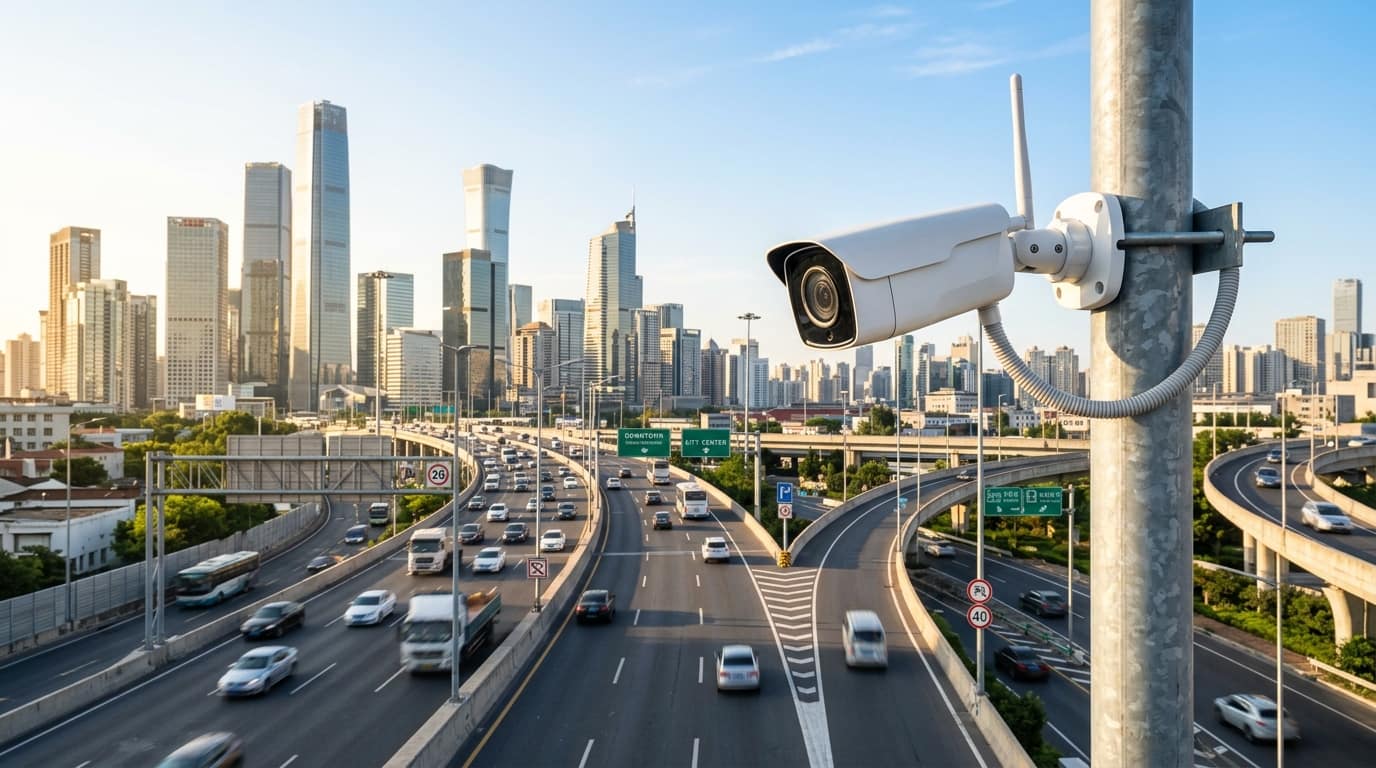
AI CCTV and video analytics add software that detects defined events in camera video, such as a plate, a face, a boundary crossing, a missing helmet, a crowd or a traffic offence, and send an alert with evidence. Results depend on camera placement, lighting and tuning. Analytics supplements guards and code-required systems, and works best when scoped to a few clear use cases.
At a glance
- Typical timeline
- Four to twelve weeks per use case, depending on site readiness and approvals.
- Key standards
- IEC 62676, ONVIF, BIS CRS camera registration, DPDP Act 2023 for personal data.
- What you receive
- Survey report, rule sheets, calibrated analytics, alert routing, test records and training.
- Best suited for
- Smart-city agencies, traffic police, plants, logistics parks, retail and corporate campuses.
- Our scope
- Six analytics services, from survey to AMC, linked with our CCTV, network and access teams.
- Delivery
- Single window from Nashik, serving sites across Maharashtra, Gujarat, Madhya Pradesh and Rajasthan.
AI CCTV & Video Analytics Overview
AI CCTV and video analytics is the layer of software that makes a camera system do more than record. Instead of waiting for someone to review footage after an incident, analytics watches the video as it arrives and looks for events you have defined. When it finds one, it sends an alert with an image or clip, and stores a record you can search later. The camera becomes a sensor that answers a question.
The six services in this category answer six different questions. ANPR asks which vehicle this is. Face recognition asks who this person is. Perimeter intrusion detection asks whether someone crossed the boundary. People counting and crowd analytics ask how many people are here and where. Industrial safety analytics asks whether a rule is being followed. Traffic violation detection asks whether a road offence has occurred.
Each service has its own camera needs, its own accuracy limits and its own legal questions. A camera that suits ANPR at a gate is the wrong camera for face recognition in a lobby. Treating them as one product leads to disappointing results, which is why we scope them separately, then link them under one project plan and one maintenance contract where a site needs several.
Analytics also needs a sound base. Cameras must be correctly placed, the network must carry the streams, recorders or servers must have the capacity, and power must be protected. Our CCTV, fibre, networking and electrical teams, all mobilised from Nashik, work on the same sites, so the base and the analytics are designed together rather than bolted on later.
AI CCTV & Video Analytics Services We Deliver
ANPR: Automatic Number Plate Recognition
ANPR reads vehicle number plates at gates, parking areas and enforcement points, logs every movement with images and opens barriers for approved vehicles. We design the lane around speed, light and plate type so reads stay dependable, and we link the system to your barrier, parking or toll software.
Face Recognition System
Face recognition identifies enrolled people for hands-free access and attendance, and flags unknown or barred persons. We plan camera height, lighting, enrolment and privacy controls together, set thresholds per door and connect the results to HR exports and door controllers.
Perimeter Intrusion Detection
Virtual fencing detects people and vehicles crossing a boundary, using thermal and long-range cameras for dark or large perimeters. We tune against animals and weather, connect sirens and lights for deterrence, and route verified alerts to the control room and mobile phones.
People Counting & Crowd Analytics
Counting cameras measure entries, exits and live occupancy, while crowd analytics map density, dwell time and queues. We calibrate each entrance against manual counts, set safe alert limits and deliver dashboards and reports that operations teams can act on.
Industrial Safety Analytics (PPE, Fire & Smoke)
Safety analytics checks helmets and vests, watches restricted and machine zones, and gives a visual early cue for flame and smoke. It supports your EHS team with data and snapshots, and always sits alongside, never in place of, code-required fire detection.
Traffic Monitoring & Violation Detection
Traffic analytics detects red-light, speed, wrong-way, helmet and seat-belt offences and counts vehicles by class. We build the roadside civil and power work, produce evidence packages and connect to your e-challan platform with an officer review step.
Why large camera systems still miss events that matter
A site with hundreds of cameras can have the least real surveillance. Operators watch a wall of screens, and attention drops within minutes. Research and experience on control rooms agree that a person cannot reliably watch more than a handful of feeds. The rest of the video is recorded and rarely looked at, until after something has gone wrong.
Buyers often respond by asking for analytics on every camera. That produces floods of alerts, high licence costs and low trust. Analytics need cameras installed for the task, with the right height, angle and light. Old cameras installed years ago for general views often cannot support analytics at all, and a vendor who says otherwise without a site test is guessing.
There are also legal and ethical limits. Face data is personal data under the Digital Personal Data Protection Act 2023, and plate data can be linked to a person. Safety analytics used for discipline needs a clear policy. Traffic enforcement needs approved devices and procedure that belong to the authority. A project without these decisions made early stalls at the time of go-live.
What You Gain
Alerts instead of endless viewing
Operators respond to verified events rather than scanning screens. Control room staff handle more sites with less fatigue, and critical events are not lost in a wall of video.
Searchable video and data
Plates, faces, counts and events become searchable records. An investigation that took a day of scrolling takes minutes, and managers get reports instead of anecdotes.
Earlier warning at boundaries and hazards
Detection at a fence line or around a hazardous machine gives minutes of warning. That time decides whether a response prevents an incident or only records it.
Operational data for managers
Dwell time, footfall, vehicle turnaround and compliance rates come from the same cameras. Operations, logistics and safety teams use them for staffing and layout decisions.
Automation of gates and doors
ANPR and face recognition can open barriers and doors for approved vehicles and people, with logs. This speeds movement and reduces the load on guards.
Evidence with context
Each event is stored with image, time, camera and rule. Police, insurers, auditors and clients receive clear, ordered material that stands up to review.
How the Work Is Delivered
A multi-service analytics project works best in phases. This is the sequence we recommend, and the decisions you will need to make along the way.
- 1
Use-case selection and priority
We list your risks and pain points, then choose the two or three analytics that address them best. Starting with one or two use cases gives a measurable win and a clear picture of effort before the system grows.
- 2
Camera and infrastructure audit
We check existing cameras, recorders, network, power and storage against what each analytic needs. The audit says which cameras can be reused, which must move and which need replacing, with a cost for each choice.
- 3
Design and phased BOQ
We design each use case with camera positions, server sizing and licences, then split the BOQ into phases. Pilot zones come first, and the later phases use what the pilot taught.
- 4
Installation and integration
We install cameras, servers and links, then integrate with gates, barriers, door controllers, alarm panels, HR tools and challan platforms. Interfaces are tested with real signals before analytics rules go live.
- 5
Tuning and trial period
Every analytic goes through a trial with measured detection and false alert rates on your site. You see the numbers and agree when each rule is ready for operational use.
- 6
Training and operating procedures
We train operators and managers, and help write the response procedure for each alert type. An alert nobody has been told how to handle is wasted.
- 7
AMC and periodic review
Lens cleaning, alignment, software updates and seasonal re-tuning are covered in an AMC agreed per site. We review detection results with you at set intervals and adjust rules as your site changes.
How the analytics stack fits together: cameras, edge, server and rules
Analytics can run in the camera, on an edge box near the camera group, or on a central server. Camera-based analytics suits simple rules at scattered points and keeps working if the network drops. Servers with GPUs suit heavy tasks such as face search across many cameras. The choice affects licences, power, cooling and upgrade paths, and we compare these for your site rather than defaulting to one model.
Image quality is the common limit. Each analytic needs a certain number of pixels on the target: a plate about 130 pixels wide for ANPR, a face with roughly 80 to 100 pixels between the eyes for recognition, and a person tall enough in the frame for intrusion rules. IEC 62676 gives the design approach, and ONVIF keeps cameras, recorders and analytics from locking you to one maker. Everything we propose comes with a stated assumption on lighting, angle and distance.
IEC 62676 for video surveillance systems
This series sets out requirements and test approaches for video systems. We use its pixel density thinking to specify what each camera must resolve and to test it on site.
ONVIF for open integration
ONVIF conformant cameras and recorders let analytics and VMS products work together. We confirm profile and event support before purchase, to avoid being stuck with one vendor.
BIS CRS registration for cameras
CCTV cameras sold in India must be registered under the Compulsory Registration Scheme. We supply registered models, and the references are part of the handover documents.
Digital Personal Data Protection Act 2023
Face and linked data are personal data. You need notice, consent where required, defined retention and security. We configure the technical controls, and legal responsibility stays with you as the data fiduciary.
IS 2189 and NBC 2016 for fire detection
Video flame and smoke cues never replace the code-required detection and alarm system. We keep the two clearly separate in design and in documents.
A typical project: phasing analytics across a large manufacturing campus
Consider a manufacturing campus near Nashik with a main gate, a stores yard, a long boundary, a corporate block and an assembly shop. Management has a mixed set of older cameras and wants better control of vehicles, protection of the boundary and fewer safety lapses. Budget is available in stages across the year.
We would start with the vehicle gate, where ANPR gives a quick and measurable result. The second phase would add perimeter detection on the most exposed boundary segments, using new cameras with thermal where needed. The third phase would bring PPE and zone analytics to the assembly shop and loading bay. Face recognition for the corporate block and server room would come last, after the privacy notice and consent process are ready.
The client typically sees each phase deliver data that informs the next. Gate logs show where extra lanes are needed, boundary alarms show which segments attract attempts, and safety reports show where training should focus. Old cameras are reused where a survey shows they can support the task, and replaced where they cannot.
- Phase one gate control working before the next budget approval.
- Boundary alarms verified on video, with response drills done.
- Safety compliance data used for targeted training.
- One AMC contract covering cameras, servers and analytics.
This is an illustrative scenario built from typical site conditions. Actual quantities, timelines and results depend on your site survey.
AI CCTV & Video Analytics Across Four States
We are based in Nashik and deliver across Maharashtra, Gujarat, Madhya Pradesh and Rajasthan. Each state has its own utilities, approvals and site conditions, and these are the points that matter most for this service.
Maharashtra
Maharashtra demand comes from plants, city agencies and highways. Projects work best when analytics are scoped for a few clear use cases first, such as gate ANPR or perimeter alerts, and then extended after the team trusts the alert quality.
Gujarat
Gujarat industrial and port sites use analytics for safety and perimeter control. PPE detection, restricted zone alerts and vehicle logging are common, and many buyers want analytics tied to existing access systems and safety reporting. We also tie analytics events to existing access and safety workflows so alerts reach the right supervisor.
Madhya Pradesh
In Madhya Pradesh, analytics projects often come through government and campus tenders. Defining accuracy targets, test scenes and the acceptance method in the BOQ prevents disputes later, and edge devices reduce the bandwidth needed for remote sites. We also keep a short pilot phase in scope, so the authority sees real results before wider rollout.
Rajasthan
Rajasthan projects cover remote perimeters, solar parks, mines and highways. Thermal cameras with intrusion analytics suit large dark perimeters, and heat, dust and wildlife movement all affect false alarm rates, so seasonal tuning is part of the plan. Cleaning and re-tuning visits before peak summer and after the monsoon keep alert quality steady.
Where This Work Is Most Often Needed
Why Teams Work With Us on This
Analytics designed on a proper base
We install CCTV, fibre, networks, power and access control. The cameras, links and power under your analytics are built by the same team, so faults are traced fast.
Measured results, not brochure claims
Every rule goes through a trial with detection and false alert counts on your site. You get the numbers in writing before the rule is used for action.
Honest about limits and legal duties
We say when analytics will not work, when an approval is yours to obtain and when a simple sensor is the better answer. This saves cost and avoids disputes.
Local teams and continuous support
Our crews, mobilised from Nashik, handle installation and AMC across Maharashtra, Gujarat, Madhya Pradesh and Rajasthan. Seasonal re-tuning and lens care are scheduled, with service terms agreed per site.
AI CCTV & Video Analytics Across Our Four States
We are based in Nashik and deliver across Maharashtra, Gujarat, Madhya Pradesh and Rajasthan. Each local page covers the power utility, climate, approvals and site types that change how this work is designed in that place.
Major cities in Maharashtra
Guides and Projects Related to This Service
Frequently Asked Questions
01What is AI CCTV and how is it different from normal CCTV?
AI CCTV is a camera system with analytics software that detects defined events in the video, while normal CCTV mainly records for later review. Analytics can raise alerts for a plate, a face, a boundary crossing or a missing helmet. It needs cameras installed for the task and tuned on site.
02Can we add analytics to our existing cameras?
Sometimes, depending on resolution, angle, lighting and stream support. Many older cameras are placed for general views and cannot give the pixel detail analytics need. We audit existing cameras first and tell you which can be reused, which should be repositioned and which should be replaced.
03Which analytics should we start with?
Start with the use case that has a clear measurable problem and the easiest conditions, often ANPR at a gate or perimeter detection on a high-risk segment. A pilot gives real detection numbers and shows the effort involved. Add further use cases in phases, based on what the pilot teaches.
04How much does AI video analytics cost?
Cost depends on the use case, number of cameras, whether analytics runs in cameras or on servers, licence model per camera or per rule, camera replacement, network and power work and integration. We give a phased, line-item BOQ after a survey so licences and recurring costs are visible next to hardware.
05How accurate is video analytics?
Accuracy varies by use case and site, and a single percentage is not meaningful. Plate and face reading can perform very well in good conditions, while crowd density and flame cues are estimates. Ask for detection and false alert rates measured on your site during a trial, and agree acceptance on those numbers.
06Are there privacy rules we must follow?
Yes. Face data is personal data under the Digital Personal Data Protection Act 2023, and plate and video data can be linked to individuals. You need notice, consent where required, retention limits and security. We set the technical controls, and you should take legal advice on policy and notices.