
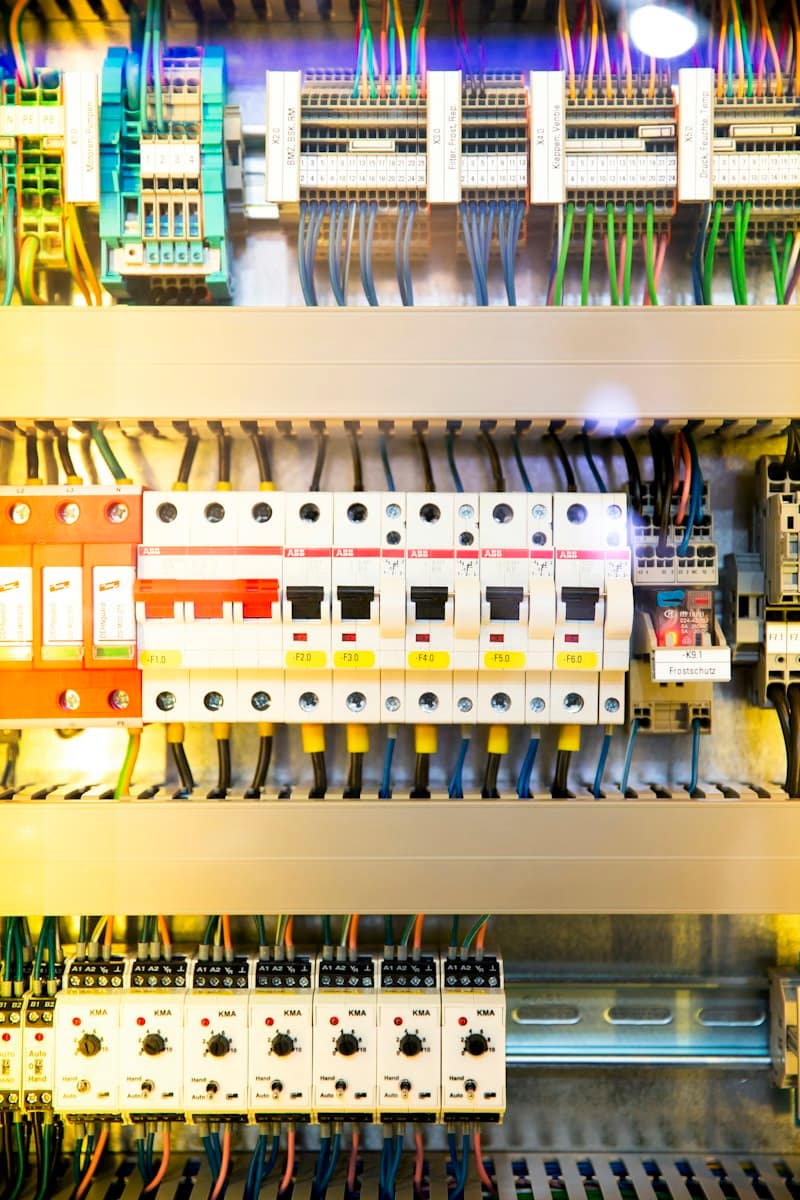
Electrical AMC is an annual maintenance contract that covers preventive and breakdown maintenance of your electrical systems. It includes scheduled panel and switchgear servicing, thermography, load audits, earthing checks and safety reports. Service levels and visit frequency are agreed per site in the contract, and every visit leaves a written record.
At a glance
- Our scope
- Panel and switchgear maintenance, thermography and load audits, breakdown response, records and safety reports
- Typical timeline
- Mobilisation in 1 to 2 weeks, then scheduled visits monthly, quarterly or yearly as agreed
- Key standards
- Indian Electricity Rules, IS 3043, manufacturer maintenance manuals
- What you receive
- Visit reports, thermography images, load audit, earth readings and a defect register
- Best suited for
- Factories, commercial buildings and institutions
- Site survey
- Baseline audit of panels, cables and earthing before the contract starts
Electrical AMC & Maintenance Overview
Electrical systems rarely fail without warning. A joint warms for months before it burns, an earth resistance rises over two monsoons, a breaker sticks because it has not operated in years. The warning is there, but only for someone who looks. An electrical AMC puts a trained person with the right instruments in front of the equipment on a fixed schedule.
The contract has two halves. Preventive maintenance covers cleaning, tightening, lubrication, testing and inspection of panels, switchgear, transformers, cables, earthing, UPS and DG changeover. Breakdown support covers the call-outs, with response targets agreed in the contract. Both halves generate records, which are what turn maintenance from a cost into evidence for insurers, auditors and your own management.
We begin with a baseline audit. This records what is installed, the condition of each panel, joint temperatures under load, earth resistance, insulation values and open defects. From it we build a maintenance plan with visit frequency per asset, depending on criticality and age. A main LT panel may be visited quarterly, while a lighting DB may be checked yearly.
Before you sign any electrical AMC, ask three questions. Which assets are listed by name and rating, and which are excluded? Who pays for spares such as contactors, fuses, lugs and capacitors, and is there a price list? What is the evidence after each visit, and who signs it? A contract that answers these clearly is usually a contract that will be delivered. One that stays vague will be argued over after the first breakdown.
Shruti IT Service maintains electrical systems for factories, commercial buildings and institutions across Maharashtra, Gujarat, Madhya Pradesh and Rajasthan, using teams mobilised from Nashik. We can take over systems built by others, and where we built the installation, the maintenance starts from our own commissioning records.
Ideal for: Factories, commercial buildings and institutions.
What Our Electrical AMC & Maintenance Includes
Our electrical AMC covers inspection, testing, repair and the records that prove the work was done.
Scheduled panel and switchgear maintenance
We isolate, clean, tighten, test and inspect panels, breakers, relays and busbars at agreed intervals, using checklists from manuals. Tip: plan shutdown windows at the start of the year, so tasks that need isolation do not slip.
Thermography and load audits
We scan joints and equipment under load with an infrared camera and log current by phase and power factor. Findings come with temperature rise and likely cause. Tip: scan during peak production, as joints may look normal at light load.
Breakdown response with SLAs
A technician attends faults under response terms written into your contract, isolates, diagnoses and restores supply where safe. A good SLA states response and restoration targets, escalation path and spares. Tip: list your critical feeders so priority is clear.
Maintenance records and safety reports
Each visit ends with a signed report, thermal images and an updated defect register, and yearly safety summaries. Tip: keep these in one folder, since insurers and inspectors ask for the last two or three years.
Earthing, UPS and DG changeover checks
We measure earth resistance, check UPS batteries and exercise the DG and ATS under load. Tip: ask for a DG on-load test at least quarterly, because a generator that has not run under load often fails when needed.
What happens when maintenance is reactive
Without a schedule, maintenance happens after a failure. A loose busbar joint heats until insulation melts, a fuse blows, a motor burns out. The repair cost is often higher than the inspection would have been, and the shutdown happens during production. Studies by insurers repeatedly find loose connections among the leading causes of electrical fires in industrial plants.
Another problem is blind spots. Nobody knows the current in each phase of the main feeder, the temperature of the busbar under peak load, or the resistance of the earth pits. Load imbalance runs unnoticed, one phase overheats and transformer losses rise. Thermography and a load audit show these in one visit.
The third problem is missing records. When an inspector, auditor or insurer asks for maintenance logs, many sites have nothing. When a new maintenance team arrives, they begin from zero. A maintained defect register and dated reports are cheap to produce and valuable to hold.
What You Gain
Fewer unplanned shutdowns
Tightening, cleaning and testing on a schedule remove the most common causes of electrical breakdown before they reach the production floor.
Hot spots found early
Thermography under load shows overheating joints, overloaded phases and failing components that are invisible to the eye, so repair is planned.
Safer plant
Earthing checks, protection tests and inspection of insulation and enclosures reduce shock and fire risk for operators and maintenance staff.
Lower energy loss
A load audit reveals imbalance, poor power factor and overloaded cables, and correcting them cuts losses and avoids utility penalties.
Records for audits and insurers
Dated visit reports, thermography images and defect registers give you evidence for inspections, insurance renewals and internal safety audits.
Predictable cost
A fixed contract for preventive visits and agreed breakdown terms makes maintenance budgets easier to plan than emergency call-outs.
How the Work Is Delivered
Electrical AMC runs as a cycle of audit, plan, visit, record and review. This is how we set it up.
- 1
Baseline audit
We list every panel, transformer, DG and UPS, inspect condition, take thermal images under load and measure earth resistance. Open defects are logged with a priority rating.
- 2
Maintenance plan and schedule
Each asset gets a visit frequency based on criticality and age, and tasks are written as checklists. Shutdown windows are agreed with you so that tasks needing isolation are planned.
- 3
Preventive maintenance visits
Technicians isolate and lock out, clean, tighten, test breakers and relays, check cable terminations and inspect enclosures. Work follows manufacturer manuals and our checklists.
- 4
Thermography and load audit
Under normal load we scan panels, joints and cables with an infrared camera and log current by phase. Hot spots and imbalance are flagged with temperature rise and likely cause.
- 5
Breakdown response
When a fault is reported, a technician is dispatched under the response terms in your contract. We isolate, diagnose, restore supply where safe and record cause and action taken.
- 6
Reporting and defect register
Each visit ends with a signed report, thermal images and updated defect register. Defects are ranked by risk so you can budget repairs and see closure over time.
- 7
Review and improvement
At intervals we review trends such as rising temperatures or earth values, spare consumption and repeat faults, and recommend replacements or upgrades before failure.
Tools and methods behind electrical maintenance
Infrared thermography measures surface temperature of joints, busbars, breakers and cable lugs while they carry load. A joint running 20 to 40 degrees above comparable joints in the same panel is a candidate for tightening or replacement, and what matters is the rise against similar parts at similar current, not the absolute number. Thermography needs at least 40 percent load to be meaningful, so we schedule scans near production peaks rather than at weekends.
Other tools include insulation resistance testers for cables and motors, earth testers for pits, clamp meters and power analysers for load audits, and relay test kits for protection. Breakers are exercised and, where fitted, trip units are tested. Transformer oil is sampled where required, and dry-type units are cleaned. Findings feed a defect register with priority, owner and target date, which makes maintenance traceable.
Indian Electricity Rules
Statutory rules require installations to be maintained in safe condition and inspected as applicable. We help you keep the records that show this.
Manufacturer maintenance manuals
Task lists and intervals for switchgear, transformers and UPS follow maker recommendations, adjusted for site dust, heat and duty.
IS 3043 earthing checks
Earth resistance is measured at each pit at least yearly and compared with the target and the previous value.
Thermography severity criteria
We classify hot spots by temperature rise over reference and load, and set action priority from monitoring to immediate repair.
Lockout and isolation practice
Work on live equipment follows permit and lockout rules, with testing for dead before touch and clear responsibility for isolation.
Worked example: AMC for a 1,000 kVA factory substation and LT network
A manufacturing plant has a 1,000 kVA transformer, an LT main panel, four MCCs, an APFC panel and twelve distribution boards. There has been no formal maintenance for three years, and the plant has had two unexplained trips during summer. The management wants lower risk and records for the insurer.
We begin with a baseline audit under load. The thermal scan shows one outgoing breaker joint running far hotter than its neighbours, and the load log shows phase currents that differ by almost 25 percent on one MCC. Earth readings at two pits are above target. We list these as defects, with priority and action.
The contract sets quarterly visits for the main LT panel and MCCs, half-yearly for the APFC and DBs, and yearly for earthing and the transformer. Each visit produces a report. After the first quarter, the hot joint is repaired, the load is rebalanced and two pits are treated, and the next scan confirms the improvement.
- Baseline audit with thermal images and a ranked defect register
- Visit calendar by asset criticality and age
- Defects closed and verified by a follow-up scan
- Dated reports ready for insurer and inspector requests
This is an illustrative scenario built from typical site conditions. Actual quantities, timelines and results depend on your site survey.
Electrical AMC & Maintenance Across Four States
We are based in Nashik and deliver across Maharashtra, Gujarat, Madhya Pradesh and Rajasthan. Each state has its own utilities, approvals and site conditions, and these are the points that matter most for this service.
Maharashtra
Maharashtra plants and buildings run mostly on MSEDCL supply, where voltage variation and outages are common. AMC work covers panel cleaning, tightening, thermography and breaker testing, and a review of power factor and demand records. We also keep a log of repeated trips and loose joints, so recurring faults are traced rather than just reset.
Gujarat
Gujarat factories connect through the GUVNL group DISCOMs or city licensees. Maintenance records should cover protection relay checks and power factor equipment, because poor power factor shows up directly on the bill. We also record demand and power factor trends each visit, which helps catch penalties before they arrive on a bill.
Madhya Pradesh
Madhya Pradesh sites draw power from the regional DISCOMs and often see voltage dips in industrial areas. Preventive checks on APFC panels, capacitors and earthing help avoid breakdowns, and we keep records ready for inspectorate visits. We also plan visits around shutdown windows agreed with your maintenance team, so tests do not stop production unexpectedly.
Rajasthan
In Rajasthan, panels and transformers work hard in summer heat and dust. AMC visits clean filters and bus bars, check for hot joints with thermography and review cooling, because many failures begin as loose or dusty connections in peak season.
Where This Work Is Most Often Needed
Why Teams Work With Us on This
Baseline first, contract second
We audit before pricing, so the AMC covers real assets and known defects, not a guess.
Technicians with installation experience
Our teams also build panels, cables, earthing and UPS systems, so they recognise how each fails.
Records you can show
Signed visit reports, thermal images and a defect register give you evidence for audits and insurance.
Planned response from Nashik
Our teams are mobilised from Nashik for faults and visits, with routes planned by site cluster and service levels agreed per site in the contract.
Guides and Projects Related to This Service
- ArticleSizing a Rooftop Solar Plant and Checking Its Payback: A Worked Example
- ArticleWhat to Ask Before You Sign an AMC: A Checklist for Buyers
- ArticleHow to Size a UPS and Battery Bank: A Worked Example for a Small Server Room
- ArticleVoltage Drop in CCTV Cable: Choosing the Right Size for 12 V Cameras
- ArticleIndustrial Electrical Infrastructure: Earthing, Panels & Safety Compliance
Frequently Asked Questions
01What does an electrical AMC include?
It usually includes scheduled preventive maintenance of panels, switchgear and transformers, thermography and load audits, earthing tests, breakdown support and written reports. The exact list is agreed per site. Check whether spares, consumables and labour for repairs are inside the contract or charged separately, because that changes the price comparison between vendors.
02How often should electrical panels be maintained?
Critical main panels and MCCs are commonly serviced quarterly or half-yearly, and lighting DBs yearly, with thermography at least yearly. Frequency depends on dust, heat, load and age. Dusty plants and hot panel rooms need more frequent cleaning and tightening. We set frequency per asset after the baseline audit.
03What is thermography and why does it matter?
Thermography uses an infrared camera to show surface temperature of live equipment. It reveals overheating joints, overloaded phases and failing components before they fail, without shutting anything down. The scan must be done under adequate load, and results are read as temperature rise compared with similar parts, not only as absolute numbers.
04How much does electrical AMC cost?
Price depends on the number and size of panels, transformers and DGs, visit frequency, thermography scope, response terms and whether spares are included. A firm quote needs a baseline survey. Be careful with very low offers, as they often cover only a visual check and exclude tightening, testing and reports.
05What should a good electrical SLA contain?
A good SLA lists covered assets, visit frequency, response and restoration targets by priority, working hours or 24/7 cover, escalation contacts, spares policy, exclusions and reporting. Targets are agreed per site and written in the contract. Ask how response is measured and what happens when the target is missed.
06Can you maintain an installation that someone else built?
Yes. We start with a baseline audit to record condition, drawings, earth values and open defects, and rebuild missing documents such as the SLD where possible. Some older equipment may lack spares or documentation, which we flag openly, along with recommendations for upgrade or replacement before it fails.