
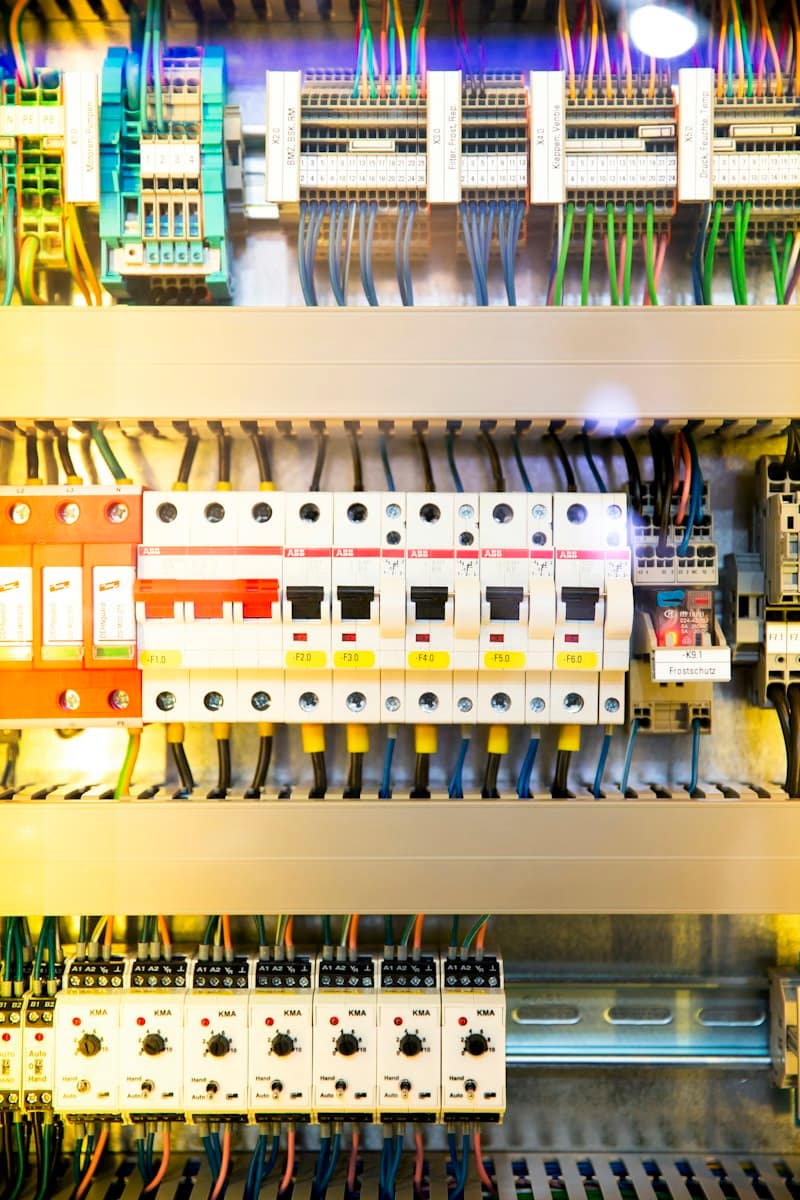
HT and LT electrical installation is the work of receiving high-tension supply (commonly 11 kV or 22 kV, as set by your DISCOM), stepping it down through a transformer and distributing low-tension power to panels and loads. It includes RMU or HT switchgear, transformer, LT distribution, single-line diagrams and support for MSEDCL and inspectorate approvals before energisation.
At a glance
- Our scope
- Transformer, RMU and HT switchgear installation, LT distribution, load calculation and SLDs
- Typical timeline
- 8 to 20 weeks after drawings are approved, mostly set by equipment lead time and utility approvals
- Key standards
- Indian Electricity Rules, IS 2026 for transformers, IS 3043 for earthing, IS 732 for wiring
- What you receive
- Approved SLD, test reports, protection settings, earthing records and as-built drawings
- Best suited for
- New plants, expansions and commercial buildings taking HT supply
- Site survey
- Load, route and substation location survey before quotation
HT & LT Electrical Installation Overview
HT and LT electrical installation sits at the front of every large facility. Before a single machine, light or server can run, someone has to receive power from the utility at 11 kV or 22 kV, step it down to 415 V and spread it through the building. That chain, from the metering point to the LT main panel and sub-distribution, is what this page covers.
For a plant head the practical questions are simple. How big should the transformer be? Do we need an RMU or a full HT breaker panel? Where should the substation sit? How will the load grow over the next five years? We answer these with a load calculation, a single-line diagram and a layout drawing, not with rules of thumb copied from the last job.
On site, the work moves through plinth and trench preparation, transformer and switchgear positioning, HT cable termination, LT busduct or cable connection, earthing of the neutral and body, and then testing. We coordinate with your state distribution company (MSEDCL in Maharashtra, a GUVNL group DISCOM in Gujarat, and so on), and with the Electrical Inspectorate, so that the energisation date is real and not a hopeful guess.
Shruti IT Service has handled electrical installation for factories, warehouses, commercial buildings and infrastructure sites since 2014, based in Nashik and serving clients across Maharashtra, Gujarat, Madhya Pradesh and Rajasthan. The same team that installs the substation can also supply LT panels, cabling, earthing and UPS, which keeps the interface problems out of your project.
Ideal for: New plants, expansions and commercial buildings.
What Our HT & LT Electrical Installation Includes
Our HT and LT electrical installation scope covers the equipment, drawings and documents needed to take supply from the utility point to your distribution boards.
Transformer, RMU and HT switchgear installation
We position, level and connect the transformer, ring main unit or HT breaker panel, and terminate HT cables with proper stress control. Oil level, tap position and protection are verified. Tip: ask for the manufacturer's routine test certificate before the transformer leaves the factory, since it is the only record of its factory tests.
LT distribution and sub-distribution
From the transformer secondary we run cable or busduct to the LT main panel, then feeders to sub-distribution boards and motor control centres. Each feeder is labelled and tested. Tip: keep at least 20 percent spare ways in the main panel, because adding a feeder to a full panel usually means a shutdown.
Load calculation and single-line diagrams
We prepare a load schedule with diversity and growth allowance, short-circuit levels and voltage drop checks, and draw the SLD that records ratings and protection. You approve it before equipment is ordered. Tip: keep the SLD revision numbered, and make sure site changes are marked on it so the as-built version is correct.
Support for statutory inspections and approvals
We prepare drawings, test reports and earthing records for the DISCOM and the state Electrical Inspectorate, attend the inspection with your team and rectify observations. The application and its signatures remain with the owner or licensed contractor. Tip: confirm early which party signs, because that decides who is on site for energisation.
Earthing and protection coordination
We design the neutral, body and equipment earthing for the substation and set protection so that downstream devices trip before upstream ones. Earth resistance is measured and recorded. Tip: ask for the protection coordination chart, since an uncoordinated plant loses an entire feeder for one local fault.
Why HT and LT installations run late or run hot
The most common delay is not the installation, it is the paperwork around it. Utility approval of the load, inspection of the substation and energisation clearance each take their own time. Owners often discover that the substation layout drawn by the architect does not meet clearance or oil containment requirements, and the redesign costs weeks.
The second problem is sizing. A transformer chosen on connected load alone is usually oversized, which increases no-load losses and capital cost. One chosen on today's demand with no allowance for growth is overloaded by the second expansion. Both come from skipping a proper load schedule with diversity and a realistic growth figure.
The third problem is workmanship at the joints. HT cable terminations, bolted busbar joints and earth connections are small items that cause large failures. A poorly made HT termination can fail months after energisation, and the repair means a shutdown that the plant cannot easily afford.
What You Gain
Right-sized supply
A load calculation with demand factor and growth allowance avoids both an oversized transformer you pay for and an undersized one you replace. You get a documented basis for the kVA rating.
Approvals planned early
We prepare the SLD, layout and load details in the format the utility and inspectorate expect, so the approval track runs in parallel with procurement instead of after it.
Safer substation layout
Clearances, oil containment, earthing of neutral and body, and safe isolation points are designed in. Your operators work in a substation where the safe action is also the obvious one.
Tested before energisation
Insulation resistance, transformer ratio and vector group checks, relay settings and interlock tests are completed and recorded before the first switch-on.
Lower losses
Choosing the right transformer rating, power factor correction and cable sizes reduces losses and keeps the electricity bill from carrying avoidable penalties.
Expansion ready
Spare feeder ways, space in the substation and a documented SLD make the next expansion a planned addition instead of a rebuild.
How the Work Is Delivered
HT and LT installation is staged so that every approval and every test sits at the right point. This is how we usually run it.
- 1
Survey and load study
We visit the plot or building, locate the utility incoming, and decide candidate positions for the substation. A load schedule lists machines, lighting, HVAC and ELV loads with running and starting currents, giving us a defensible maximum demand.
- 2
SLD, layout and BOQ
The single-line diagram shows incomer, RMU or breaker, transformer, LT main and feeders with ratings and protection. The substation layout shows clearances and cable entries. The BOQ lists each item with its specification for your approval.
- 3
Utility and inspectorate documentation
We assemble the technical file for the utility and the Electrical Inspectorate: drawings, load details, equipment test certificates and earthing design. The application is made by you or your licensed representative, and we answer technical queries.
- 4
Civil readiness and supply
Plinths, cable trenches, oil pit and earth pits are agreed with your civil team. Transformer, RMU or HT panel, LT main and accessories are ordered against the approved BOQ, and we track delivery.
- 5
Installation
Equipment is positioned and levelled, HT cables are terminated, LT connections are torqued and marked, and the neutral and body earthing is connected. Supervisors check each joint against a checklist with photographs.
- 6
Testing and energisation
We run insulation resistance, continuity, ratio, relay and interlock tests, then attend the inspector's visit. Energisation follows a written sequence, with load brought on in steps while currents and temperatures are watched.
- 7
Handover and AMC
You receive the as-built SLD, test reports, relay settings, operating instructions and a spare list. We agree a maintenance schedule for the transformer, switchgear and LT panel under an AMC contract.
How the HT to LT chain works
HT supply arrives at 11 kV or 22 kV and passes a metering unit, then an RMU or a vacuum circuit breaker panel with protection relays. The transformer, oil-filled or dry type, steps it down to 415 V three-phase. Oil-filled units cost less and suit outdoor plots. Dry type units suit indoor locations and buildings where oil is a fire concern. The choice also affects room ventilation and fire rating, so it is made with the building design.
On the LT side, the transformer feeds an LT main panel through cable or busduct, and from there power flows to sub-distribution and motor control centres. Protection is coordinated so that the device closest to a fault trips first. Short-circuit level at the main panel decides breaker ratings. Neutral earthing, body earthing and lightning earth are separate designs with a common reference strategy, and their resistance is measured before commissioning.
Indian Electricity Rules and CEA safety regulations
These set statutory requirements for HT and LT installations, including clearances, earthing and inspection. Compliance and approvals belong to the owner, and we prepare the technical file that supports them.
IS 2026 for power transformers
This standard covers rating, tests and construction of power transformers. We ask for the manufacturer's type and routine test certificates and record them in the handover file.
IS 3043 for earthing
Earthing design for the neutral, transformer body, HT equipment and LT system follows this code. Resistance targets and electrode layout are recorded and tested at commissioning.
IS 732 for wiring
Sub-distribution and final circuit practice is guided by this code, including conductor sizing, protective devices and installation methods.
IEC 61439 for LT assemblies
The LT main panel and distribution boards are specified against this series, with routine verification tests. It sets temperature rise, short-circuit withstand and creepage requirements.
Worked example: HT supply for a new 600 kVA industrial unit
A fabrication unit in an industrial estate has a connected load near 520 kW, with a demand factor of about 0.6 after allowing for machines that do not run together. That gives a maximum demand of roughly 310 kW. At a power factor of 0.95 this is about 330 kVA, so a 500 kVA transformer is a reasonable starting choice, with headroom for 25 to 30 percent growth. A 630 kVA unit would also be considered if a second line is already planned.
We prepare the SLD with an RMU on the incomer, a 500 kVA oil-filled transformer on an outdoor plinth, and an LT main panel with an incomer breaker, APFC section and six outgoing feeders. The layout shows oil pit, fencing, earth pits and cable trench. Documents go to the utility while the transformer and panel are ordered. Civil work for the plinth and trenches runs alongside.
After installation, we test insulation resistance of the HT cable and transformer windings, verify vector group and ratio, check relay trip tests, and measure earth resistance on each pit. The inspector visits with the owner, energisation is scheduled, and load is brought on in steps over the first day.
- Transformer rating justified by a written load calculation
- SLD, layout and test reports ready for utility and inspectorate review
- Earth resistance values recorded for every pit
- Spare feeder ways and space left for the planned second line
This is an illustrative scenario built from typical site conditions. Actual quantities, timelines and results depend on your site survey.
HT & LT Electrical Installation Across Four States
We are based in Nashik and deliver across Maharashtra, Gujarat, Madhya Pradesh and Rajasthan. Each state has its own utilities, approvals and site conditions, and these are the points that matter most for this service.
Maharashtra
New HT connections and load enhancement are processed by MSEDCL, and the Chief Electrical Inspector's office inspects HT substations before energisation. MIDC plots usually have an estate-side HT feeder nearby. Plan transformer plinths and oil pits so they stay clear of water during the monsoon.
Gujarat
HT supply comes from the relevant GUVNL group DISCOM, or from a licensee such as Torrent Power in its areas. GIDC plots often need a larger transformer for process loads. Coastal sites need corrosion-resistant fasteners and finishes on substation steelwork, and the inspectorate expects clear drawings.
Madhya Pradesh
East, Central and West regional DISCOMs handle connections, so the first step is confirming which one serves your plot. Industrial areas such as Pithampur and Mandideep see long cable runs from the feeder point. Summer heat affects transformer loading, so we check the ambient assumption in the sizing.
Rajasthan
JVVNL, AVVNL or JdVVNL supplies the plot, depending on the region. In RIICO estates the incoming feeder may be long and voltage regulation needs checking. Ambient temperatures above 45 degrees Celsius reduce transformer capacity, and dust on insulators and bushings calls for a cleaning interval in the maintenance plan.
Where This Work Is Most Often Needed
Why Teams Work With Us on This
Design and execution together
The engineers who size the load also supervise the installation, so site decisions follow the design intent and the as-built set matches the plant.
Paperwork that matches the approval route
Our SLD, layout and test files are arranged for the utility and the inspectorate, which shortens clarifications and avoids repeat submissions.
Mobilised from Nashik
Jointers, testing engineers and supervisors travel from our Nashik base for survey, installation and pre-energisation checks, and the visit plan is fixed in the schedule so rework is not left waiting.
Link to your other systems
Because we also install CCTV, networks and UPS, the substation, the server room feed and the surveillance power are planned together.
Need AMC for an existing system?
We maintain installations done by other vendors too, after a short audit of what is already on site.
Guides and Projects Related to This Service
- ArticleSizing a Rooftop Solar Plant and Checking Its Payback: A Worked Example
- ArticleWhat to Ask Before You Sign an AMC: A Checklist for Buyers
- ArticleHow to Size a UPS and Battery Bank: A Worked Example for a Small Server Room
- ArticleVoltage Drop in CCTV Cable: Choosing the Right Size for 12 V Cameras
- ArticleIndustrial Electrical Infrastructure: Earthing, Panels & Safety Compliance
Frequently Asked Questions
01What is the difference between HT and LT supply?
HT, or high tension, is supply at 11 kV or above, while LT, or low tension, is up to 1 kV and in plants usually 415 V three-phase. Large consumers take HT from the utility and step it down with their own transformer. Smaller loads take LT directly. The choice depends on contract demand and the utility's rules for your connection.
02How do I choose the transformer rating for my plant?
Start with a load schedule, apply a demand factor, convert kW to kVA at the expected power factor, then add growth. For example, 310 kW at 0.95 is about 330 kVA, so a 500 kVA unit gives margin. Avoid sizing on connected load alone, because that leads to a large unit running lightly loaded with higher no-load losses.
03How long does HT installation take?
Expect roughly 8 to 20 weeks from approved drawings to energisation, depending on transformer and switchgear lead time, civil readiness and utility inspection scheduling. Small LT-only upgrades are much faster. We give a schedule that shows approvals as separate lines, because those are the items we cannot control and the ones that most often shift the date.
04Who applies for DISCOM and Electrical Inspectorate approval?
The consumer is responsible, and certain applications must be signed by a licensed electrical contractor or supervisor. We prepare the drawings, load details, test certificates and earthing records and attend inspections. Please confirm the signatory arrangement in writing at the start, so there is no delay when the application needs a signature.
05Should I choose an oil-filled or dry-type transformer?
Oil-filled suits outdoor locations and costs less per kVA, while dry type suits indoor rooms, basements and buildings where oil fire risk is a concern. Dry type needs good ventilation and costs more. If the transformer sits inside a multi-storey building, fire rules and insurer preference often decide the choice, so settle it before the substation layout is frozen.
06What documents should I ask for at handover?
Ask for the final SLD, substation layout, transformer and switchgear test certificates, insulation resistance and earth resistance reports, relay settings, utility and inspectorate approval copies, and operating instructions. Warranty terms should be listed with start dates. These documents are what your maintenance team and any future contractor will rely on.