
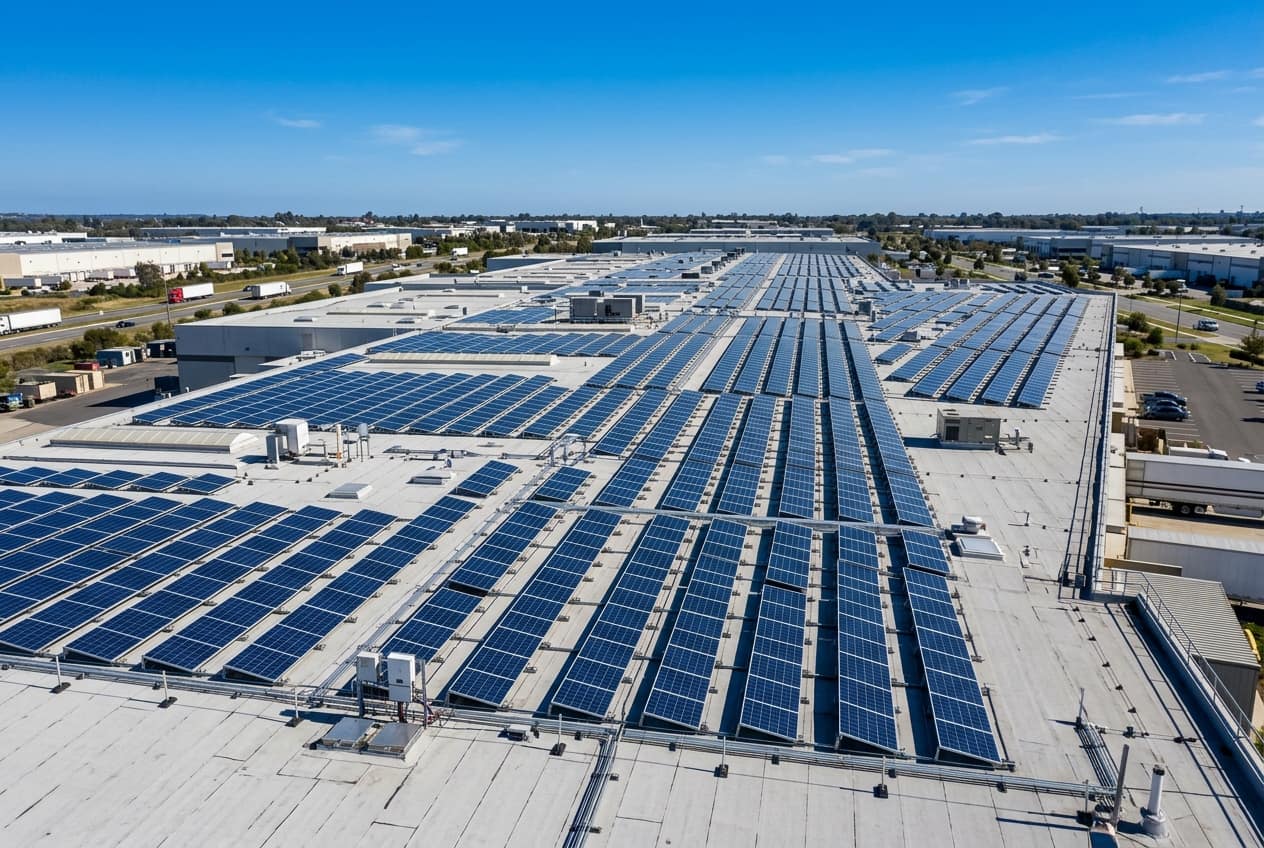
A good solar quotation shows its working. It names the plant size in kilowatts, the yearly generation it expects, the tariff it assumes and the cost, and you can follow the arithmetic from one to the next. This guide shows that arithmetic with a 100 kilowatt example. Every price and tariff in it is an illustration. Replace them with the figures from your own bills and your own quotation.
Key Engineering Takeaways
- Start from twelve months of bills, not from the roof area.
- Yearly generation is plant size multiplied by the yield per kilowatt, and yield depends on location, tilt, shading and losses.
- Savings equal generation multiplied by the energy charge you actually avoid, not the average bill rate.
- Payback is cost divided by yearly savings, and it changes with tariff, usage, tax treatment and maintenance.
Step 1: read your bills
Collect twelve months of electricity bills. Note the units used each month, the energy charge per unit, any demand charge, and whether the tariff changes by time of day. Daytime load is the number that matters most, because solar generates only while the sun is up.
A plant that supplies a share of your daytime load saves money on every unit it produces. A plant much larger than your daytime load exports the surplus, and what you earn for exported units depends on the state rules and your distribution company.
Step 2: check the roof
As a planning range, modern modules need roughly 7 to 12 square metres per kilowatt of capacity, depending on module power, tilt and the spacing needed to avoid shading. Metal sheet roofs usually allow modules to sit close to the roof. Flat concrete roofs use tilted frames with gaps between rows.
The survey must also check the roof structure and its remaining life, shadows from parapets, tanks and neighbouring buildings, wind loading, safe access for cleaning, and the route for cables to the main panel. A roof that needs replacing in five years is a poor place for a plant that should run for twenty five.
Step 3: estimate yearly generation
Yearly generation in kilowatt hours equals plant size in kilowatts multiplied by the yield in kilowatt hours per kilowatt per year. As a planning range, many sites in western and central India see roughly 1,300 to 1,600, after losses from heat, dust, wiring and the inverter. Your own figure should come from a shading and generation simulation for the roof.
Example: a 100 kilowatt plant with an assumed yield of 1,450 produces 100 x 1,450 = 145,000 kWh a year, which is about 12,100 kWh a month. If the factory uses 40,000 kWh a month, the plant supplies roughly 30 percent of it.
Step 4: estimate the saving and the payback
Suppose the energy charge you avoid is 7 rupees per unit. This is an assumption for the example. Yearly saving is 145,000 x 7 = 10,15,000 rupees.
Suppose the installed cost is 40 lakh rupees, which is 40,000 rupees per kilowatt, also an assumption. Simple payback is 40,00,000 / 10,15,000, which is about 3.9 years. Now be fair to the plant: allow for yearly maintenance, say 1 percent of cost or 40,000 rupees, and the net saving falls to 9,75,000 rupees and payback to about 4.1 years.
Module output falls slightly each year, and the module datasheet states the yearly decline. Inverters usually need replacing once in the life of the plant. A reasonable estimate includes both.
Things that change the answer
- Tax treatment such as accelerated depreciation: rules and rates change, so confirm the current position with your tax adviser before building it into a payback figure.
- Net metering or other rules for the surplus: these differ by state and distribution company, so check the current process before you size above your daytime load.
- Shading and soiling: dust can cut output, and a cleaning schedule with monitoring keeps the plant near its design output.
- Safety design: earthing, lightning protection, surge protection and proper cable routing protect both the plant and the building.
Conclusion & Next Steps
Good sizing comes from your bills and your roof, and a good quotation lets you check its arithmetic. If you would like a plant sized for your site, our engineers will survey the roof, simulate generation and give you the working along with the quotation.
Need a site survey or project quote?
Our engineers provide comprehensive BOQs, system designs, and turn-key execution across Maharashtra and neighboring states.
Related services
Want this done at your site? These pages explain the scope, the process and the standards we work to.