
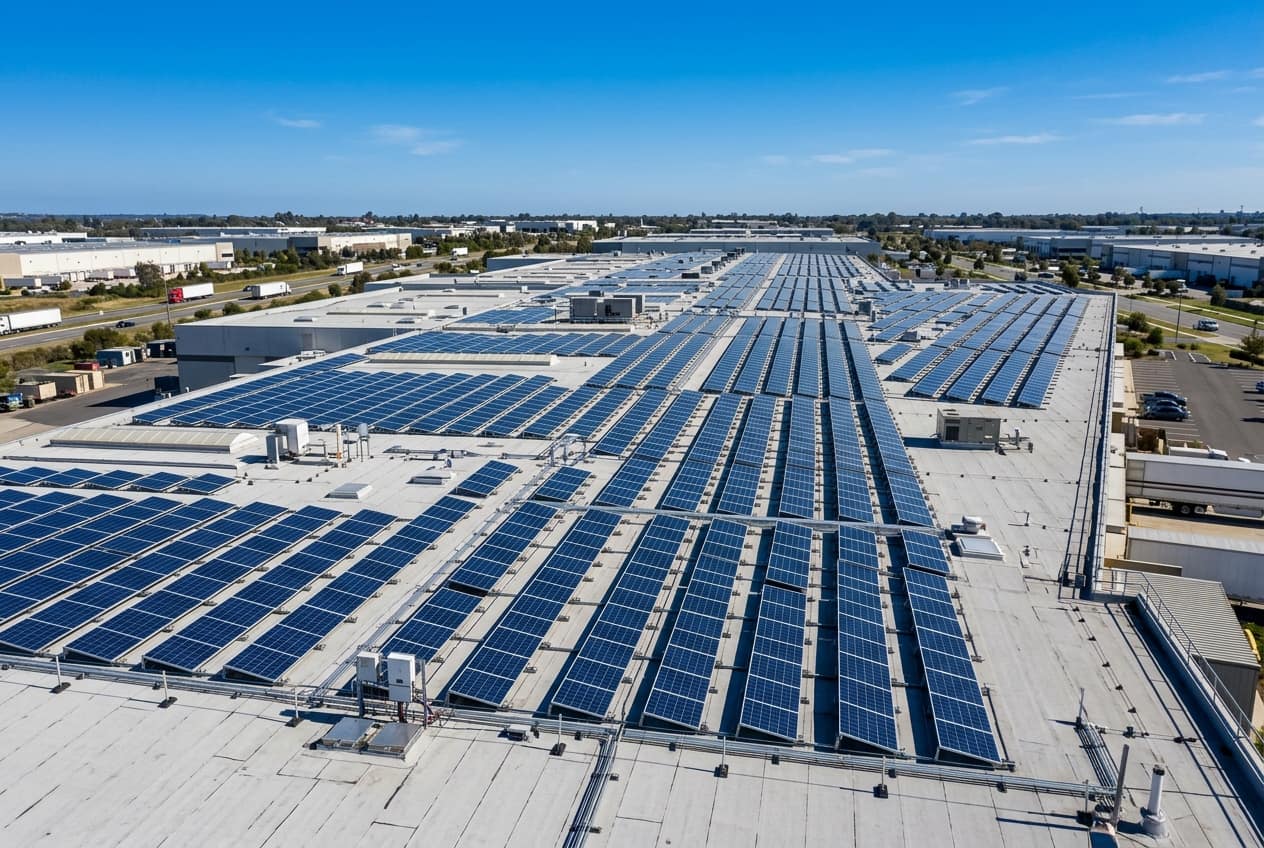
Off-grid and hybrid solar systems combine PV modules, a battery bank and a hybrid inverter to supply power where the grid is absent or unreliable. Off-grid systems run fully on solar and storage, while hybrid systems also use the grid or a diesel generator. Sizing starts from daily energy use in kWh, then adds battery autonomy, depth of discharge and inverter surge capacity.
At a glance
- Typical timeline
- 6 to 12 weeks from load study to commissioning, longer for large battery banks or remote logistics.
- Sizing basis
- Daily kWh, peak kW, surge current and days of autonomy.
- Key standards
- IEC 62109, IEC 62548, IS 3043 and battery manufacturer safety limits.
- What you receive
- Load study, sizing sheet, drawings, test records, operating manual and monitoring access.
- Best suited for
- Remote facilities, farms, telecom sites and operations that cannot tolerate power failure.
- Our scope
- Load assessment, battery sizing, hybrid inverters, DG-solar integration, remote monitoring and AMC.
Off-Grid & Hybrid Solar Systems Overview
An off-grid or hybrid solar system is a small power station dedicated to your site. Solar modules charge a battery bank during the day. An inverter converts stored energy to AC power for your loads at night and during cloudy spells. In a hybrid arrangement the system also connects to a second source, the grid or a diesel generator, which tops up the batteries or carries the load when solar and storage fall short.
The reason to choose this system is rarely energy savings alone. It is usually reliability, or access. A farm pumping station, a telecom shelter, a mining camp, a cold room in a village or a data closet in a plant with frequent outages all need power on a schedule that the grid does not meet. In these cases the right question is not what the system costs per kWp but what an hour of downtime costs you, and what a litre of diesel costs delivered to the site.
A correct design depends on honest data. We ask for load lists with running and starting currents, hours of use, and which loads are critical. Motors, compressors and pumps can draw five to seven times their running current at start, and the inverter must handle that surge. Battery capacity then depends on how many hours or days you want to run without sun, how deep you are willing to discharge, and what temperature the batteries live in.
Shruti IT Service designs and installs hybrid and off-grid systems for sites across Maharashtra, Gujarat, Madhya Pradesh and Rajasthan, mobilising teams from our Nashik base, from compact systems of a few kW to multi-hundred kWh installations. Where your project also needs surveillance poles or street lights, we can use the same design approach. For on-grid savings without storage, see our rooftop solar page instead.
Ideal for: Remote facilities, farms, telecom sites and backup-critical operations.
What Our Off-Grid & Hybrid Solar Systems Includes
Our off-grid and hybrid scope covers the four packages below. Each one produces documents you can review, so decisions on battery type, autonomy and generator use are made with data.
Load assessment and battery sizing
We list loads, log consumption where possible, define critical and non-critical circuits and calculate battery capacity for your autonomy target. You receive a sizing sheet with daily kWh, peak kW and depth of discharge assumptions. Tip: be honest about future loads, because adding a compressor later can outgrow the inverter.
Hybrid inverters and battery banks
We select, supply and install hybrid inverters, battery banks, charge controllers, protection and enclosures, with correct cable sizing and ventilation. You receive installation drawings, battery commissioning records and operating limits. Tip: ask for the battery warranty in cycles and throughput, not just years.
DG-solar hybrid integration
We connect the generator through suitable changeover or synchronising control so solar and battery carry daytime load and the DG runs near its efficient load band. You get tested start and stop logic and a fuel saving estimate. Tip: set minimum DG run time so it does not cycle on and off.
Remote monitoring
We set up monitoring of battery state of charge, array output, load, generator hours and alarms through a portal or app. You get alert thresholds agreed with your team. Tip: choose a communication path that survives power loss, such as a cellular modem on the battery supply.
Why off-grid and hybrid systems fail in the field
The most frequent cause of failure is an undersized or poorly defined load. A system sized from a nameplate list ignores that a water pump runs only when the tank is low, that a welding set draws in bursts, and that a refrigerator compressor cycles. Without a measured or carefully estimated profile, the battery either drains too deep every night, which shortens its life, or sits half empty because the array is far too large for the stored energy to matter.
Battery choice and operating conditions are the second cause. Lead acid batteries discharged beyond about 50 percent daily wear out in a fraction of their rated cycles, and flooded types need watering that nobody does at remote sites. Lithium iron phosphate batteries tolerate deeper cycling but need a good battery management system, correct charge voltages and temperature protection. In a closed room at 45 degrees in summer, any battery ages faster, so ventilation and placement matter.
The third cause is integration with a diesel generator. A DG that starts and stops without logic, or that runs lightly loaded at 20 percent for long periods, wastes fuel and gets carbon deposits. Hybrid control that lets solar carry the daytime load and starts the DG only when the battery reaches a set state of charge cuts both fuel use and maintenance. Poor integration also causes synchronisation trips and inverters that refuse to accept generator power.
What You Gain
Power where there is no grid
Remote pumping stations, farms, camps and communication sites get dependable electricity without the cost and delay of extending an HT or LT line, which can run to several lakhs per kilometre depending on terrain.
Lower diesel dependence
In a DG-solar hybrid, solar carries daytime load and the battery covers the night, so the generator runs only when needed and at a better load factor. Fuel savings depend on load pattern and diesel price, and we show the calculation.
Protection for critical loads
Hybrid inverters switch to battery in a fraction of a second when the grid fails, so servers, cold chains, instruments and controls keep running. This suits sites where outages cause product loss or data corruption.
Quieter, cleaner operation
Solar and storage run without engine noise, exhaust or fuel handling. That matters for hospitals, farms near homes, research stations and sites with environmental rules on generator hours.
Modular expansion
Batteries, inverters and modules can be added in stages as loads grow, if the design reserves space, busbar capacity and communication ports. You buy what you need now without locking out later growth.
Remote visibility
Monitoring shows battery state of charge, array output, load, generator hours and alarms on a phone or portal. You see a problem before the site goes dark, and fewer fault visits are needed.
How the Work Is Delivered
Off-grid and hybrid projects succeed or fail on the load study and battery design. Our process spends most of its early effort there, and then moves to careful installation and commissioning.
- 1
Load study and objectives
We list every load with power, running hours, starting current and priority, and decide with you what must run during an outage and what can wait. Where possible we log actual consumption over a week. The output is a daily energy figure and a peak demand figure.
- 2
System sizing and design
We calculate array size, battery capacity, inverter rating and charge controller current from the load figures, the worst-month irradiation and the autonomy you want. You receive the sizing sheet, so every assumption can be checked and changed.
- 3
Battery chemistry and layout decision
We compare lithium iron phosphate and lead acid options for your duty cycle, temperature, budget and maintenance capacity. We also design the battery room or enclosure, covering ventilation, spacing, fire safety, isolation and cable routing.
- 4
Supply and factory checks
We order modules, inverters, batteries, controllers and protection gear, and we check serial numbers, ratings, firmware versions and battery state of charge on arrival. Batteries stored too long arrive flat and are checked and conditioned before installation.
- 5
Installation and wiring
Modules and structure are mounted, DC and AC cables are routed with correct protection, and battery banks are wired with matched cable lengths so cells share current evenly. Earthing, DC isolators, surge protection and labelling are completed as per the drawings.
- 6
Testing and commissioning
We test insulation, polarity, string voltage, inverter modes, charge profiles, transfer time on grid loss and DG start and stop logic. A load test with real or dummy loads confirms the inverter handles surge, and results go into the commissioning record.
- 7
Training, monitoring and AMC
We train your operators on safe isolation, alarm meaning and what not to plug in. Monitoring is activated with alert thresholds, and an AMC schedules inspections, battery checks, terminal tightening and firmware updates.
Inverters, batteries and generator integration
A hybrid inverter combines a charger, an inverter and a solar charge controller, usually with an MPPT stage that tracks the array's best operating point. Off-grid designs often add a battery inverter with a separate DC-coupled charge controller, or an AC-coupled arrangement in which a standard PV inverter feeds an AC bus and the battery inverter regulates its output. Which topology fits depends on whether you are retrofitting an existing plant or building new. Battery voltages of 48 V suit small systems, while higher DC voltages reduce current and cable size for larger banks.
Sizing follows a simple chain. Suppose a site uses 40 kWh a day and needs one day of autonomy. With lithium iron phosphate batteries at 90 percent usable depth and 90 percent round-trip efficiency, the nominal capacity needed is about 40 divided by 0.9 divided by 0.9, or roughly 49 kWh. A worst-month peak sun figure of 4.5 hours and a system performance factor of 0.75 would call for about 12 kWp of modules. For a DG hybrid, generator size is set by the largest starting load plus battery charging power, and the controller is configured to run the DG near 60 to 80 percent load, where fuel use per unit is lowest.
IEC 62109 for converters
Safety requirements for power converters in PV systems, which cover insulation, protection and fault behaviour. We select inverters with test reports against this standard and the grid-interface settings that apply.
IEC 62548 for array design
Design rules for PV arrays covering cable ratings, overcurrent protection and disconnection. Off-grid systems often run at higher DC voltages, so isolation and arc risk are considered during design.
Battery safety and BMS limits
Each battery type has voltage, current and temperature limits set by its manufacturer. We configure charge parameters accordingly, and we require a battery management system with cell-level protection for lithium types.
IS 3043 for earthing
Standalone systems still need earthing for equipment and surge protection. We design earth pits or electrodes with measured resistance and bond the array frame, inverter, battery rack and load panel.
Generator and electrical wiring practice
DG integration follows IS 732 wiring practice and the generator maker's synchronising or changeover requirements. Any change to existing electrical installations should be inspected by a licensed electrical person.
Worked example: a remote pumping and cold storage site
Consider a farm-produce collection centre in a rural part of Nashik district. The grid supply fails for several hours most days, and a diesel generator fills the gap at a high running cost. The loads are a 5 kW cold room compressor, lighting, a small office and a 3 kW water pump. After logging for a week, the daily consumption comes to around 45 kWh, with a peak of 9 kW and a compressor start surge that the inverter must carry.
A hybrid design would place about 14 kWp of modules on a ground structure, a 15 kW hybrid inverter and a lithium iron phosphate battery of around 50 kWh. The DG is retained as a backup, controlled by the inverter so that it starts only if battery charge falls below a preset level during a long cloudy spell. The pump is scheduled to run at midday when solar output is high, and the compressor setpoint is adjusted to pre-cool during daylight hours.
The practical result is that diesel use falls to occasional backup, the cold room holds temperature through outages, and the owner sees consumption on a phone dashboard. Actual savings would vary with outage pattern, diesel price and load discipline. A site in monsoon weeks will see lower solar output, so the autonomy setting and generator logic need to cover those weeks, not just the sunniest months.
- A load profile based on measurement, used to size the array, battery and inverter.
- A clear autonomy statement: how many hours the site can run without sun, grid or generator.
- Generator start and stop logic that cuts fuel use and engine hours.
- Remote alerts for low battery, inverter faults and tripped breakers.
This is an illustrative scenario built from typical site conditions. Actual quantities, timelines and results depend on your site survey.
Off-Grid & Hybrid Solar Systems Across Four States
We are based in Nashik and deliver across Maharashtra, Gujarat, Madhya Pradesh and Rajasthan. Each state has its own utilities, approvals and site conditions, and these are the points that matter most for this service.
Maharashtra
Maharashtra has farms, telecom sites and hill locations with long outages, including rural parts of Nashik, Khandesh and Marathwada. A hybrid design must cover weeks of monsoon cloud with enough battery or generator logic. Supply to farm feeders is often limited to fixed hours, so we match pump schedules to the solar day.
Gujarat
Gujarat sites include salt pans, ports and farming clusters in Kutch and Saurashtra. Salt-laden humid air corrodes battery terminals, enclosures and busbars, so we use sealed, ventilated enclosures with coated hardware and schedule terminal inspections. Where a GUVNL group DISCOM supply is weak, a grid-hybrid inverter keeps critical loads running.
Madhya Pradesh
Madhya Pradesh has remote forest, mining and farm locations where the grid is distant or unreliable. Hot summers push battery rooms past safe temperatures, and the monsoon cuts charging for weeks. We size for the worst month, ventilate the battery space and set generator start logic for long cloudy spells. Fuel delivery distance often decides the economics.
Rajasthan
Desert farms, telecom towers and pumping sites in Rajasthan have excellent sun but extreme heat. Batteries age faster above about 35 degrees, so shaded, ventilated enclosures and temperature-compensated charging matter. Fine dust clogs inverter fans, so we specify filtered airflow and plan cleaning. Long fuel hauls favour solar-heavy designs with the generator as backup.
Where This Work Is Most Often Needed
Why Teams Work With Us on This
Sizing from your load, not a catalogue
We study your actual loads, surge currents and outage pattern before we propose battery or array capacity, and we hand you the sizing sheet so you can see exactly how each number was reached.
Honest advice on battery type
We explain where lithium iron phosphate makes sense and where lead acid is still the practical choice, including temperature limits and the maintenance your site team can realistically provide.
Integration with your electrical systems
Because we also carry out electrical panels, UPS and earthing work, we can integrate the solar system with your existing distribution, DG and critical loads in one coordinated design.
Regional support and AMC
Our team is based in Nashik, and battery check visits are planned by route and site cluster across the states we serve. AMC terms, including service levels, are set per site in the contract.
Need AMC for an existing system?
We maintain installations done by other vendors too, after a short audit of what is already on site.
Guides and Projects Related to This Service
Frequently Asked Questions
01What is the difference between an off-grid and a hybrid solar system?
An off-grid system runs only on solar and batteries, with no grid connection, while a hybrid system also connects to the grid or a generator. Off-grid suits sites without any supply. Hybrid suits sites with an unreliable grid or a diesel generator, where solar and storage reduce cost and add backup.
02How do I calculate battery size for a solar system?
Divide your critical daily energy use in kWh by usable depth of discharge and by round-trip efficiency, then multiply by days of autonomy. For example, 40 kWh a day with 90 percent depth and 90 percent efficiency needs about 49 kWh for one day. We also check peak power and temperature effects before finalising.
03Is lithium or lead acid better for off-grid solar?
Lithium iron phosphate is usually better for daily cycling because it allows deeper discharge, needs no watering and lasts more cycles, though it costs more upfront. Lead acid can suit low-cycle backup or tight budgets. The choice depends on cycles per year, ambient temperature and who will maintain the batteries.
04How much does an off-grid solar system cost?
Cost is driven mainly by battery capacity, inverter size, array size and site logistics. Batteries often form the largest share of the budget, so reducing unnecessary load saves more than trimming modules. We give a firm figure after a load study, with line items you can compare across bidders.
05Can solar and a diesel generator work together?
Yes, with proper controls. A hybrid inverter or controller lets solar carry daytime loads, the battery cover night, and the generator start only when battery charge drops to a set level. This reduces fuel use and engine hours. The generator must be compatible and its size matched to charging and surge loads.
06How long do batteries in a solar system last?
Life depends on chemistry, depth of discharge, temperature and charge settings. Lithium iron phosphate batteries are commonly rated for several thousand cycles at stated depth, and lead acid for far fewer under daily deep cycling. Read the warranty terms on cycles and throughput, and keep batteries in a ventilated, shaded space.