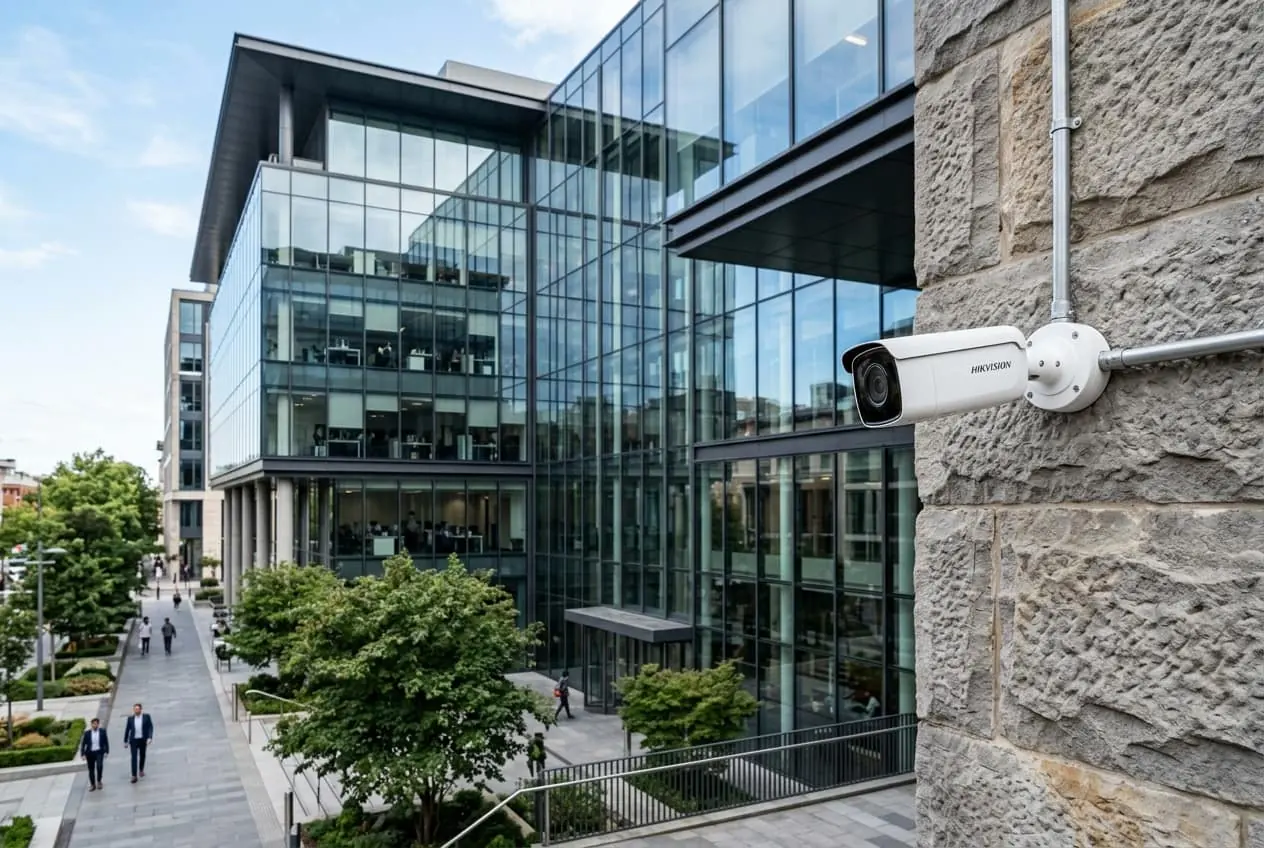

Ahilyanagar, still searched for as Ahmednagar by many people, is Maharashtra's largest district by area. Its buyers are sugar mills and agro processors around Shrirampur and Kopargaon, plants in the Nagapur and Supa industrial areas, institutions at Rahuri, and hotels and trusts in Shirdi. The distances are long, the work is seasonal, and the dust is real. This guide covers how to plan CCTV and fire alarm projects for these sites, including a worked example for the standby battery of a fire alarm, which is where many rural installations are under-sized.
Key Engineering Takeaways
- Sugar and agro units run in seasons, so plan work for the off season or short shutdowns.
- Long distances between blocks and gates favour fiber links and protected power.
- Cane trash, crop dust and moisture call for the right detector type and enclosure rating.
- Size the fire alarm standby battery with arithmetic, because grid supply in rural belts can fail for hours.
- In Shirdi, plan for crowds, entry control and fire evacuation in hotels and trust buildings.
- Group visits by route (Sangamner, Shirdi, Kopargaon) to keep travel and cost down.
How does the season shape the project?
A sugar mill is busiest during crushing and quiet afterwards. Agro and dairy units follow harvest and demand. Plan installation for the quiet period, agree testing dates with plant management, and avoid scheduling commissioning for the first week of the season, when everyone is busy and nobody has time to witness tests.
Order equipment early. Lead times for panels, detectors and fiber can be several weeks, and a project that misses the off season may have to wait a year.
What do the district's different sites need?
Sugar mills have a weighbridge and cane yard, boilers, a process house, godowns and an office, often spread over a large campus. The priority is the gate and weighbridge, because that is where money changes hands and disputes arise. Camera coverage of the weighbridge, with a record linked to each weighment, settles many arguments.
Plants in Nagapur and Supa industrial areas look more like other MIDC units: gates, stores and production halls, with contractor labour. Rahuri and similar institutions have large campuses and hostels, where entry control and fire detection in residential blocks matter most. Sangamner sits on the Nashik Pune highway and has commercial and dairy units that benefit from the same planning as a roadside business.
Long distances, dust and crop residue
Mills and agro campuses are spread out, with weighbridges, stores, boilers and offices far apart. Copper runs lose signal and power over distance, so fiber between blocks and local power for remote cameras are usually the safer choice. The campus fiber backbone page describes how such a network is laid out.
Cane trash and crop dust clog filters and ignite easily, so detector choice and housekeeping matter. A fire alarm designed for an office is not enough for a sugar store or a bagasse yard. Heat detectors, beam detectors and aspirating systems each suit different spaces, and the smoke and heat detector page explains the choice.
Worked example: sizing the fire alarm standby battery
Grid supply in rural belts can drop for hours, and a fire alarm that goes dead with the grid is no alarm at all. The battery must carry the panel through a long standby period and still power the sounders if a fire starts at the end of it.
Take an example panel that draws 0.5 A in standby and 2 A when in alarm, with all sounders sounding. As a labelled design assumption, plan for 24 hours of standby followed by 30 minutes of alarm. The standby charge is 0.5 x 24 = 12 Ah. The alarm charge is 2 x 0.5 = 1 Ah. The total is 13 Ah.
Batteries lose capacity as they age, so add an ageing margin, commonly 25 percent: 13 x 1.25 is about 16.3 Ah. The next standard size above that, for example 18 Ah, would be chosen. The real standby and alarm periods come from the standard that applies to your building and the fire authority, so confirm them before you finalise the battery. The point is the method: write the load, the duration and the margin down, and ask your supplier for the same.
Shirdi: crowds, hotels and trusts
Shirdi has a very large flow of visitors. Hotels and trust buildings need entry control, camera coverage of queues and common areas, and a fire alarm and public address system that supports evacuation. Plan for peak days, not average days: a system sized for a quiet Tuesday will struggle on a festival weekend.
Evacuation is the central question. Voice evacuation systems give clear instructions in several languages, and they link to the fire alarm so that a message plays when a zone goes into alarm. Test routes and assembly points with the management team, not only the equipment.
Approvals and utilities
Power is supplied by MSEDCL, industrial estates have their own rules, and fire requirements for larger buildings are reviewed by the Ahilyanagar Municipal Corporation fire brigade or the authority for the site. Confirm each for your plot, because rules change. We prepare the drawings and test records, and the owner remains the applicant.
How we serve the district from Nashik
Shruti IT Service reaches Ahilyanagar district by road from Nashik through Sangamner. We group visits by route, for example Sangamner, Shirdi and Kopargaon on one trip, to limit travel and cost. We do not claim a local office in Ahilyanagar. Visit frequency and response targets are agreed in the contract, so you know what to expect.
Conclusion & Next Steps
Ahilyanagar projects work when they are timed to the season, built for distance and dust, and sized for outages and crowds. If you manage a mill, an agro unit, a plant in Nagapur or Supa, or a hotel or trust in Shirdi, call or WhatsApp us for a free site survey and a written, fixed quote.
Need a site survey or project quote?
Our engineers provide comprehensive BOQs, system designs, and turn-key execution across Maharashtra and neighboring states.
Related services
Want this done at your site? These pages explain the scope, the process and the standards we work to.