
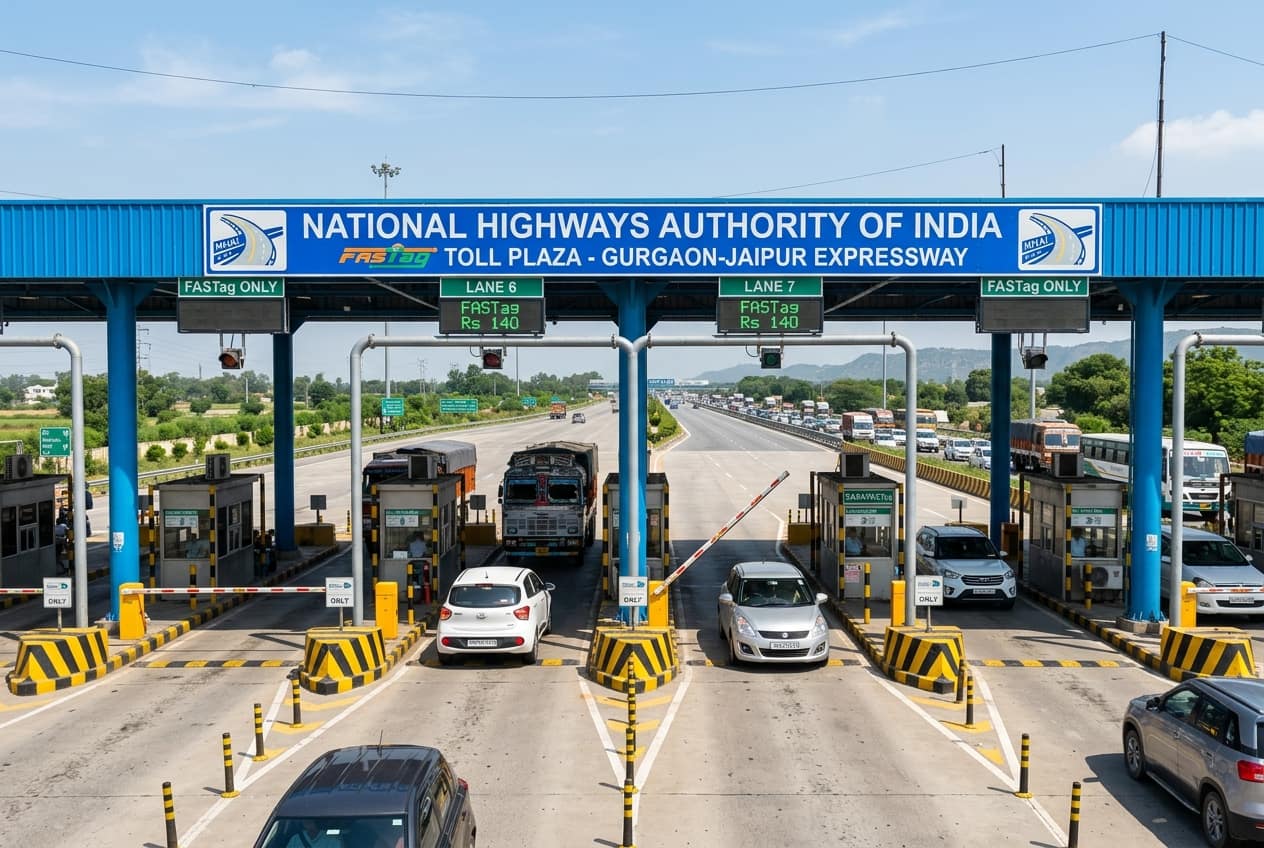
A public address (PA) system delivers speech and music from microphones, recorded messages or software to loudspeakers placed in defined zones. Voice evacuation is a PA system tied to the fire alarm, with supervised circuits and battery backup. Shruti IT Service designs, installs, tests and maintains PA, voice alarm, outdoor and intercom systems from our base in Nashik, for sites in Maharashtra, Gujarat, Madhya Pradesh and Rajasthan.
At a glance
- Our scope
- IP PA, voice evacuation, paging and music, outdoor PA and IP intercom.
- Typical timeline
- Two to four weeks for a single building, longer for multi-building campuses, depending on site readiness.
- Key standards
- EN 54-16 and EN 54-24 for voice alarm equipment, IS 2189 and NBC 2016 Part 4 for fire interface.
- What you receive
- Zone drawings, speaker schedule, amplifier and battery calculations, intelligibility readings, as-built records.
- Best suited for
- Factories, hospitals, campuses, malls, toll plazas and corporate parks.
- Site survey
- Noise readings and zone walk before any equipment is selected.
Public Address (PA) Systems Overview
Public address systems look simple from outside: a microphone, an amplifier, some speakers. On a live site they are among the most judged systems in the building, because everyone hears them and everyone notices when they fail. A shift announcement that cannot be understood near the press shop, a lift call that nobody answers, a fire message that is garbled in a stairwell: each of these is a design problem, not an equipment problem. That is why we treat public address systems as an acoustic and network engineering task first.
Our PA systems category covers five connected services. IP-based PA carries audio over your network so that many buildings and sites behave as one system. Voice evacuation turns that audio into a supervised emergency channel linked to the fire alarm. Paging and background music handle the daily work in offices, schools and shops. Outdoor and campus PA covers yards, plazas and open ground where noise and distance change the rules. Talkback and IP intercom gives two-way contact between gates, booths, lifts and control rooms.
Most clients need more than one of these. A factory may want outdoor horns on the yard, a voice alarm in the admin block and intercoms at three gates. A hospital wants quiet paging by ward, a voice evacuation system that follows the fire plan and lift intercoms that reach a staffed desk. Buying these as separate jobs from separate vendors usually ends with three audio networks, three sets of drawings and nobody who owns the whole result. We design them together and hand over one set of documents.
We have worked from our base in Nashik since 2014 on ELV, IT, electrical and infrastructure projects for industrial, government and enterprise buyers. Because the same team installs CCTV, access control, fire alarm and cabling, we know where the PA cable tray is shared, where the fire panel relay lands and which switch carries the audio VLAN. This page explains how the five services fit together, how to sequence a multi-phase project and the buying decisions that matter most.
Public Address (PA) Systems Services We Deliver
IP-Based PA Systems
A PA system that runs on your network, with IP speakers or networked amplifiers, zone and schedule control from one screen, and announcements that can reach several buildings or sites. Best for campuses, logistics parks and enterprises that want central control without running separate audio cable to every building.
Voice Evacuation Systems
An emergency voice alarm that works with the fire alarm panel, with fire-rated speakers, supervised lines, pre-recorded and live messages and battery backup. It guides people out calmly and in the right order instead of sounding one bell everywhere. Built for high-rise buildings, hospitals, malls, hotels and plants.
Paging & Background Music Systems
The everyday audio layer for workplaces and public spaces: desk paging, ceiling and wall speakers, zoned background music with separate volume control, and bell or timetable automation. Suited to offices, schools, retail stores, hotels and restaurants where clear speech and comfortable sound matter every day.
Outdoor & Campus-Wide PA
High-power horn and column speakers for yards, plazas, ports, stadiums and townships, planned from coverage and noise measurements instead of guesswork. Includes weatherproof cabling, enclosures and long-distance audio over fibre or IP. Built to stay intelligible through wind, rain, heat and plant noise.
Talkback & IP Intercom Systems
Two-way voice contact between gates, toll booths, parking, lifts, help points and control rooms, with master stations that show who is calling. Video intercom can be added where a face matters. Suited to industrial gates, hospitals, high-rise buildings and any place where a person needs to reach a person quickly.
Why PA projects disappoint after handover
The most common failure is speech that is loud but not understandable. Hard surfaces, long reverberation and high ambient noise destroy intelligibility, and adding more volume makes it worse. A warehouse with a 12 m ceiling and bare steel sheeting can have a speaker every 6 m and still produce mush, because the reflected sound arrives late and blurs each syllable. Intelligibility depends on speaker type, spacing, aiming and zone layout, and it has to be measured on site, not assumed from a catalogue.
The second failure is a system that works until the day it is needed. Emergency audio with unsupervised wiring can have a broken speaker line for months without anyone knowing. A battery that was never load tested may carry the standby load but collapse when the amplifiers draw full alarm current. Fire alarm integration that was wired but never tested end to end can leave a relay in the wrong state. Voice evacuation exists for a rare event, so every defect hides until that event.
The third failure is a split of responsibility. The electrical contractor leaves a conduit, the fire contractor leaves a relay, the network team provides a port and the audio vendor assumes all three were done correctly. When the first test fails, each party points at another. Our approach is one named engineer who owns the audio from microphone to speaker, including the fire interface and the network side, and who signs the test sheet.
What You Gain
Speech people can understand
We design speaker type, spacing and aiming from the room acoustics and measured noise, then check the result with test signals on site. You get readings per zone, not a promise that it will sound fine.
One audio system for many buildings
IP audio lets the main gate, the plant, the hostel block and a remote warehouse sit in the same system. One operator can speak to a single zone, a group or everyone, with the same console.
Emergency audio that is supervised
Voice alarm lines are monitored for open and short circuits, amplifiers have standby units and batteries are sized to carry both standby and alarm load. A fault shows on a panel instead of staying hidden.
Fewer hands in a crisis
Pre-recorded messages, staged evacuation and event triggers from fire, access or CCTV systems mean a control room operator does not have to compose the right words while under stress.
Lower running cost over the years
Standard network cabling, modular amplifiers and software control reduce rework when you move a wall or add a building. Documented zones make later changes quick and cheap.
A single point of contact
PA, intercom, fire alarm, CCTV, cabling and electrical work are all in our scope, so interface issues are solved inside one team and one handover pack.
How the Work Is Delivered
Whatever the size of the job, we follow the same sequence so that nothing important is left to the last week. Multi-building projects repeat it per phase.
- 1
Survey and noise mapping
We walk every zone, record ambient noise, note ceiling heights, finishes, cable routes and fire panel locations, and ask who will operate the system. For outdoor areas we take readings at peak shift and at night.
- 2
Zone plan and design
We define zones against your fire plan and operational needs, select speakers and amplifiers, calculate power and battery, plan the network and produce drawings and a bill of quantities.
- 3
Approvals and coordination
We align the design with your fire consultant, electrical contractor and IT team, confirm panel relay points, switch ports, VLANs and power availability, and freeze the zone list before ordering.
- 4
Supply and staging
Equipment is received, checked against the schedule and configured on a bench where possible. Zone names, addresses and message libraries are prepared before anything goes to site.
- 5
Installation
Cabling, speakers, amplifiers, consoles and enclosures are installed with labelled cables and tidy racks. Fire-rated cable and supports are used where the design calls for them.
- 6
Testing and commissioning
We test every speaker, every zone, supervision faults, fire panel triggers, battery runtime and intelligibility. Results are recorded on signed sheets that you can show to an auditor.
- 7
Training, handover and AMC
Operators are trained on live paging, scheduling and emergency routines. You receive as-built drawings, configuration backups and test records, and can place the system under an AMC.
How the technology fits together
Traditional PA uses a central amplifier and 70 V or 100 V constant-voltage lines to many speakers, each with a small transformer tap. It is simple, proven and still a good choice inside one building. IP-based PA moves the audio onto the network, using either networked amplifiers or speakers with built-in amplification powered over Ethernet. The sums differ: a 100 V line system is sized by total speaker watts with about 20 percent headroom, while a PoE system is sized by switch power budget and network bandwidth.
Voice evacuation adds supervision and priority. The controller monitors lines, amplifiers and microphones, takes commands from the fire alarm panel, and overrides everything else, including music and normal paging. Outdoor systems use horn or column speakers whose coverage is shaped by aiming angle and mounting height. Intercoms are usually SIP-based devices on the same network. We keep emergency audio on its own VLAN or physical path, so that a network fault in the office does not take down the alarm.
EN 54-16 and EN 54-24
These are the European product standards for voice alarm control equipment and for fire alarm loudspeakers. We use them as the benchmark for equipment selection when the project requires certified voice alarm components.
IS 2189 and NBC 2016 Part 4
IS 2189 governs fire detection and alarm system installation in India, and NBC 2016 Part 4 covers fire and life safety provisions. They shape where voice evacuation is expected and how it interfaces with the fire alarm.
IEC 60268-16 speech transmission index
This standard defines how speech intelligibility is measured. We use an STI target agreed with you for each zone type, with a higher target for emergency zones than for background music areas.
IEC 60849 sound systems for emergency purposes
This sets out functional expectations for emergency sound systems, including supervision and priority over normal programme material. We apply it as design guidance together with your fire consultant's requirements.
IS 732 and good wiring practice
Power wiring for amplifiers and racks follows IS 732 and project specifications, with separate earthing for audio racks and clean segregation between low-voltage audio and mains cables.
Worked example: a manufacturing campus with three buildings and two gates
Take a typical plant in an industrial estate such as a MIDC, GIDC or RIICO area: a production building of about 9,000 square metres, an admin block of three floors and a warehouse, with two vehicle gates. The client wants shift announcements in production, a voice alarm that follows the fire plan, background music in the canteen and two-way contact at both gates. The survey finds production noise between 82 and 90 dB(A) and a highly reflective warehouse roof.
We split the design into four layers. Production and warehouse get horn and column speakers with higher power and tight aiming, so that announcements sit about 10 dB above the measured noise. The admin block gets ceiling speakers on 100 V lines with voice alarm components, linked to the addressable fire panel. The canteen gets zoned music. The gates get IP intercoms that call a master station in security and ring a second desk if unanswered. All audio rides one managed network with a dedicated VLAN, and the voice alarm controller keeps its own batteries.
Commissioning takes about one week after cabling. We test each zone, run a fire panel trigger and confirm the evacuation message plays in the right sequence. Typical hand-over records include a speaker schedule with locations, amplifier load sheets, battery runtime test and a message library. The client's operators learn to page one zone, a group or all zones from the security desk.
- Shift and safety announcements can be understood in the noisiest production bays.
- Fire alarm activation plays the right message to the right zones without operator action.
- Gate staff and the control room talk to visitors and drivers without leaving their desks.
- Any fault in a speaker line or amplifier is shown on the controller instead of being found during an emergency.
This is an illustrative scenario built from typical site conditions. Actual quantities, timelines and results depend on your site survey.
Public Address (PA) Systems Across Four States
We are based in Nashik and deliver across Maharashtra, Gujarat, Madhya Pradesh and Rajasthan. Each state has its own utilities, approvals and site conditions, and these are the points that matter most for this service.
Maharashtra
Plants in MIDC estates, hospitals and campuses across the state mostly sit on MSEDCL supply, so we plan amplifier racks with UPS cover for short outages. Fire NOC and life safety checks follow the state fire prevention act, so we align voice alarm zones with your fire consultant early.
Gujarat
GIDC estates, chemical and process plants and port-side yards dominate. Coastal air in Kutch, Saurashtra and South Gujarat corrodes exposed fittings, so we specify marine-grade speaker housings and sealed terminations. Power comes from the GUVNL group DISCOMs or private licensees in some cities, and fire rules follow the Gujarat act.
Madhya Pradesh
Industrial areas such as Pithampur and Mandideep, large campuses and hospitals are typical. Summers are hot and the monsoon is strong, so cabinets need ventilation and sealed glands. Supply comes from the East, Central or West regional DISCOM. Confirm the local fire authority requirement for voice alarm before design is frozen.
Rajasthan
RIICO industrial areas, mines, cement plants and highway projects face extreme summer heat and fine desert dust. We derate amplifiers for temperature, use filtered, dust-sealed enclosures and plan wide spacing of outdoor horns across open ground. Supply comes from JVVNL, AVVNL or JdVVNL. Confirm the local fire authority requirement.
Where This Work Is Most Often Needed
Why Teams Work With Us on This
One team for audio, fire and network
We install the fire alarm interface, the network side and the audio itself, so integration faults are solved inside one team instead of being passed between vendors.
Measured, not assumed, performance
We bring a noise meter and test signals to site and record readings by zone. Our test sheets show what you were promised and what was achieved.
Nashik-based site engineers
Teams are mobilised from our Nashik base for survey, installation and commissioning, and AMC visits are planned by route and site cluster. Support terms are agreed per site in the contract.
Documentation you can audit
You receive zone drawings, speaker schedules, battery calculations, configuration backups and signed test records, which help during fire audits and later modifications.
Public Address (PA) Systems Across Our Four States
We are based in Nashik and deliver across Maharashtra, Gujarat, Madhya Pradesh and Rajasthan. Each local page covers the power utility, climate, approvals and site types that change how this work is designed in that place.
Major cities in Maharashtra
Frequently Asked Questions
01What is the difference between a PA system and a voice evacuation system?
A PA system is for everyday announcements, while a voice evacuation system is a certified emergency audio system tied to the fire alarm. Voice evacuation has supervised speaker lines, standby amplifiers, battery backup and priority over all other audio. Many sites use both, sometimes sharing speakers, but the emergency function must always override the everyday one.
02How much does a PA system cost?
Cost depends on the number of zones, speaker count, ceiling height, noise level and whether the system must meet voice alarm requirements. A small office paging system and a campus-wide voice evacuation system are very different jobs. After a survey we give a bill of quantities with every speaker, amplifier and cable item, so you can compare quotes on the same basis.
03Should we choose IP-based or traditional analogue PA?
Choose analogue for a single building with simple needs and IP for multiple buildings, remote sites or integration with other systems. Analogue is simple and cheap to maintain. IP gives central control, scheduling and easier expansion, but needs a well-managed network. We often combine them, with analogue speaker lines inside buildings and IP between them.
04Does a voice evacuation system need to connect to the fire alarm panel?
Yes, in practice it should. The fire alarm panel decides when an emergency exists and which zones are affected, and the voice controller plays the matching messages. Without that link, an operator must trigger messages manually, which is slow and error-prone. Your fire consultant and local fire authority define the exact requirements for your building class.
05How long does installation take?
A single building typically takes two to four weeks from survey to commissioning, and multi-building campuses take longer. The main variables are cable route readiness, ceiling completion, fire panel availability and network readiness. Testing and intelligibility checks need a quiet window, so we plan them with your operations team.
06What documents should I ask for at handover?
Ask for zone drawings, a speaker and amplifier schedule, battery and power calculations, configuration backups, supervision fault test results, fire panel trigger tests and intelligibility readings. Also ask for operator training records and a clear list of what is covered under AMC. These documents make future changes and fire audits much easier.