
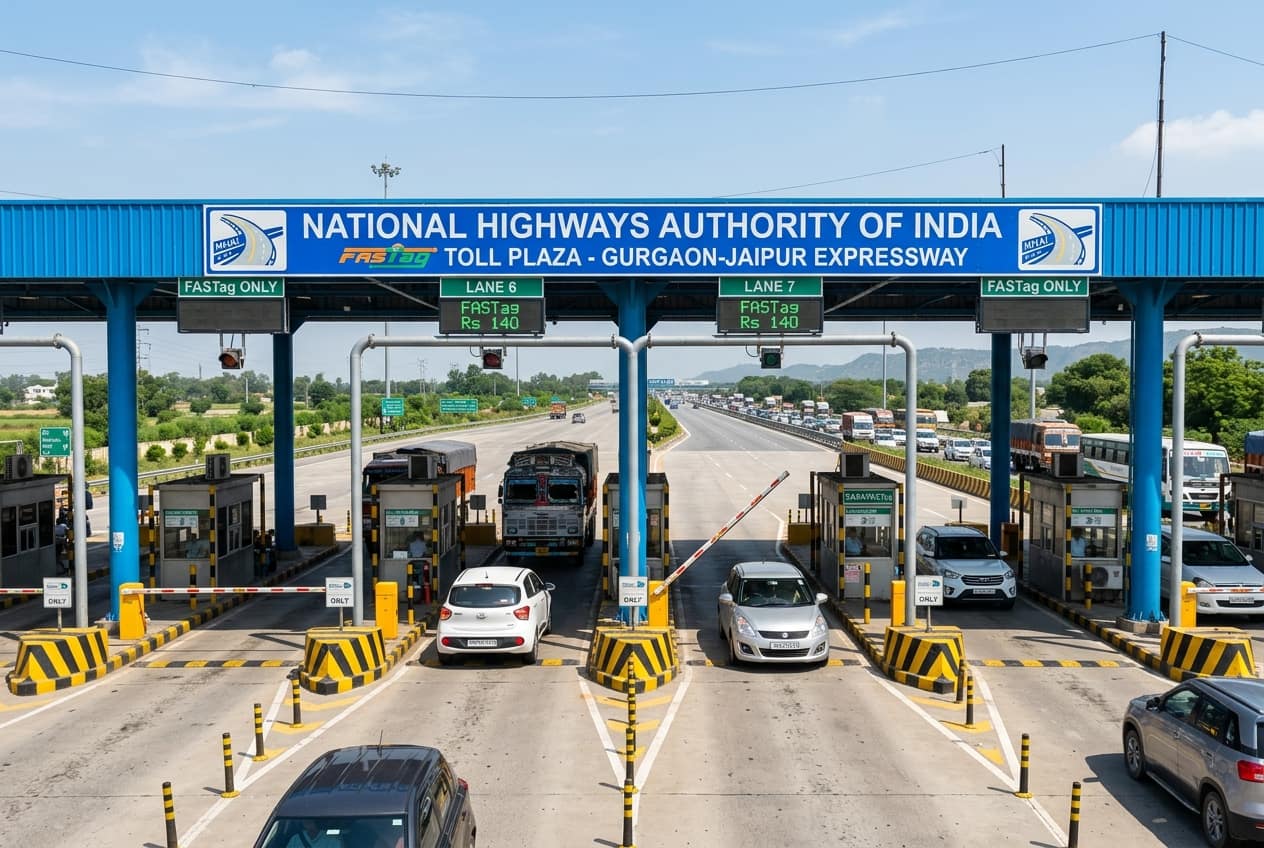
Outdoor and campus-wide PA uses weatherproof horn and column speakers, driven by high-power amplifiers, to cover yards, plazas, ports, stadiums and townships. It needs coverage planning, noise measurement, sealed cabling and often fibre or IP links over long distances. Shruti IT Service designs, installs and tests outdoor PA systems for industrial and public sites, mobilising teams from Nashik across Maharashtra, Gujarat, Madhya Pradesh and Rajasthan.
At a glance
- Our scope
- Horn and column speakers, weatherproof cabling, enclosures, long-distance audio and coverage planning.
- Typical timeline
- Three to eight weeks, depending on pole works, trenching and site size.
- Key standards
- IP65 or IP66 ingress rating, IS 3043 earthing, IS/IEC 62305 lightning guidance.
- What you receive
- Coverage plan, pole and speaker schedule, amplifier loads, earthing records, test readings.
- Best suited for
- Factories, stadiums, toll plazas, ports, railway premises and townships.
- Site survey
- Noise readings at peak activity and route survey for poles and cables.
Outdoor & Campus-Wide PA Overview
Outdoor sound behaves differently from indoor sound. There are no walls to contain it, wind carries it away, heat and humidity change how far it travels and background noise from trucks, machines and traffic can be far louder than in any office. An outdoor PA system has to produce speech that stays understandable across open areas and at the same time avoid annoying neighbours beyond the site boundary.
The usual building blocks are horn speakers for long throw, column speakers for controlled directional coverage, and amplifiers sized for the total power with spare. Cable has to survive sun, rain, rodents and sometimes vehicle movement. Enclosures must keep out dust and water. Power for amplifiers is often in a remote kiosk or a pole-mounted box, with earthing and surge protection to cope with monsoon lightning.
Large sites add another challenge: distance. A township or port can have speaker locations several kilometres from the control point. Long analogue runs lose signal and pick up interference, so many projects use single-mode fibre or IP links to carry audio to local amplifiers near the speakers. That also lets operators page by zone from one console.
We start with the site, not with a speaker model. We measure noise at the hours that matter, walk the routes for poles and cable, identify where speech must be understood and where it should not spill. Only then do we choose speaker type, power and mounting height. The result is a coverage plan you can review, not a list of horns on poles.
Ideal for: Factories, stadiums, toll plazas, ports, railway premises and townships.
What Our Outdoor & Campus-Wide PA Includes
Our outdoor PA scope covers the speaker field, the cable and enclosures that protect it and the links that carry audio over long distances.
Horn and column speaker installation
We install horn speakers for long throw and column speakers for directional coverage, on poles, walls or gantries with corrosion-resistant brackets. Each speaker is aimed and labelled. Tip: agree access arrangements for high speakers at design stage, so maintenance does not need a crane.
Weatherproof cabling and enclosures
We use outdoor-rated cable, sealed joints, drip loops and IP-rated enclosures with surge protection and earthing. Cable routes are marked and documented. Tip: ask for photographs of buried joints before backfilling, since they cannot be checked later.
Long-distance audio over fibre or IP
We carry audio to remote amplifiers over single-mode fibre or IP links, with supervision and zone control. Link loss and latency are checked. Tip: confirm who owns the fibre and who restores it after damage, since a cut link silences a whole zone.
Acoustic coverage planning
We prepare a coverage plan from measured noise, distances and speaker data, and later verify it with readings on site. Tip: review the plan against future construction on the site, because new sheds and stacks of containers change reflections and shadow areas.
Walk tests and seasonal maintenance
We run periodic tests of every speaker, inspect seals and enclosures and verify earth connections before monsoon. A written record follows each visit. Tip: schedule the first inspection soon after the first heavy rain, when weak joints show themselves.
Why outdoor PA systems fall short
The most frequent failure is simple loudness without clarity. A horn can be very loud near the pole, yet announcements become unintelligible at 80 metres because echoes from buildings and sheds blur the speech. Sound level falls by about 6 dB with each doubling of distance in open air, so doubling the reach demands four times the power, and the real answer is often more speakers at lower power with careful aiming. Overdriven horns also distort, which makes speech harder to understand, not easier.
The second failure is the environment. Cable joints that are not sealed let water into the line, and the speaker fails after the first monsoon. Poles without proper earthing take lightning surges that destroy amplifiers. Speakers aimed at a building face produce reflections and complaints. Maintenance is the third issue: speakers mounted high on poles are hard to inspect, so faults are discovered only when an emergency announcement fails. Supervision and access planning are as important as speaker choice.
What You Gain
Speech that carries and stays clear
Speaker choice, aiming and spacing are based on measured noise and distance, so announcements remain understandable at the edges of the coverage area.
Built for the weather
IP-rated speakers, sealed joints and enclosures with drip loops are chosen for monsoon rain, dust, coastal salt air and summer heat, depending on the state and site.
Control from one console
Zones across yards, gates and buildings can be paged from the control room. Long-distance audio over fibre or IP links keeps the signal clean.
Less sound spill beyond the boundary
Directional speakers and aiming away from neighbours limit complaints, which matters for plants in mixed-use areas and townships.
Safer working yards
Clear instructions reach drivers, crane operators and ground staff in noisy areas, helping with vehicle movement control and emergency instructions.
Faults found early
Line and amplifier supervision, plus scheduled walk tests, reveal damaged speakers before the day they are needed.
How the Work Is Delivered
Outdoor projects depend on getting the survey, civil works and earthing right, so our process spends more time on site before equipment is ordered.
- 1
Noise and coverage survey
We measure ambient noise at peak and quiet hours, mark coverage targets on a site plan and note reflective surfaces, boundary lines and obstructions.
- 2
Route and pole survey
We walk cable routes, check existing poles, trenches and trays, locate power points for amplifiers and identify where fibre or IP links are available.
- 3
Coverage design and calculation
We choose horn or column speakers, mounting height, aiming and spacing, then calculate amplifier power, line losses and the number of zones. A coverage plan and bill of quantities are issued.
- 4
Civil, earthing and protection plan
We plan pole foundations, junction boxes, earthing pits and surge protection with your electrical team, referring to the site's earthing system and lightning protection.
- 5
Supply and installation
Speakers, brackets, enclosures and cables are installed with sealed terminations, labelled cables and safe access. Amplifiers go into ventilated, weatherproof cabinets.
- 6
Aiming, testing and commissioning
We aim speakers using test signals, walk the area with a level meter, record readings at planned points and fine tune tap settings and equalisation.
- 7
Handover, walk tests and AMC
You receive coverage readings, pole and speaker schedules and earthing records. Under AMC we run periodic walk tests and inspect weatherproofing before each monsoon.
Speakers, power and links for large open sites
Horn speakers have high efficiency and long throw, often rated for sound pressure levels above 100 dB at 1 metre for 1 W on paper, but real coverage depends on aiming and environment. Column speakers give a narrow vertical pattern that suits long, straight areas like plaza lanes and platforms. We choose between them after reading the survey. Speakers are connected through 100 V lines with taps, and the line length, cable size and voltage drop are calculated so that the farthest speaker still gets the intended power.
For long distances, we place local amplifiers near the speakers and feed them with audio over single-mode fibre or IP, since single-mode fibre can carry signals for kilometres with low loss. Network-based audio allows zone control and supervision from the control room. Lightning is a real risk in monsoon months across the region, so we add surge protection on power and signal lines and tie metal enclosures into the earthing system, following IS 3043 and IS/IEC 62305 guidance where the site has a lightning protection design.
IP65 and IP66 ingress protection
Outdoor speakers and enclosures need dust-tight and water-resistant ratings. IP66 withstands powerful water jets, which suits exposed poles and monsoon wind-driven rain.
IS 3043 earthing practice
Earthing of poles, cabinets and amplifiers follows IS 3043, with measured earth resistance recorded at handover. Good earthing limits hum and reduces surge damage.
IS/IEC 62305 lightning protection guidance
Where a lightning protection system exists, we coordinate bonding and surge protection with it. Audio lines that leave the building need protection at both ends.
Sound level and spill limits
Local rules and your site conditions may limit sound levels at the boundary. We design for the level you need in the working area and aim speakers away from sensitive neighbours.
Voltage drop limits on long lines
We limit power loss on long constant-voltage lines, often to about 10 percent, which keeps far speakers at the intended level and avoids oversized amplifiers.
Worked example: outdoor PA for a port-side yard and a 40-acre township
Consider two sites with different demands. First, a container yard near a port with trucks, cranes and noise levels around 85 dB(A) during the day. Second, a township with internal roads, a clubhouse and a central ground. The yard needs commands to drivers and crane teams, and the township needs announcements for events and emergencies.
In the yard, we use high-efficiency horns on poles at about 8 to 10 metres, aimed along the lanes with overlap, to achieve speech levels about 10 dB above noise at working positions. Amplifiers sit in small weatherproof cabinets at the pole clusters, fed by fibre from the control room. In the township, we use column speakers along the main road and clubhouse, with the central ground covered by four horns aimed inward, away from the nearest homes.
During testing, we walk the area with a level meter at planned points, adjust aiming where echoes appear and record readings. We also disconnect a speaker line to confirm that supervision flags a fault. Handover records include the coverage plan, pole schedule, amplifier loads, earth resistance readings and a pre-monsoon inspection checklist.
- Announcements can be understood at working positions even during peak yard noise.
- Zones can be paged individually, which avoids disturbing the whole township.
- Speaker faults appear on the control console rather than being found by chance.
- A pre-monsoon checklist supports routine maintenance of seals and earthing.
This is an illustrative scenario built from typical site conditions. Actual quantities, timelines and results depend on your site survey.
Outdoor & Campus-Wide PA Across Four States
We are based in Nashik and deliver across Maharashtra, Gujarat, Madhya Pradesh and Rajasthan. Each state has its own utilities, approvals and site conditions, and these are the points that matter most for this service.
Maharashtra
MIDC estates, Samruddhi Mahamarg facilities and large townships are common. Monsoon downpours and lightning drive the design, so we add surge protection, sealed joints and earth pits measured before and after the rains. Supply to pole cabinets usually comes from MSEDCL, so we confirm connection points early.
Gujarat
Port yards, GIDC estates and refinery-linked sites in Kutch, Saurashtra and South Gujarat sit in salt-laden humid air that corrodes ordinary brackets and horn drivers. We specify marine-grade or coated hardware, stainless fixings and sealed cable glands, and plan inspection of every pole after the monsoon.
Madhya Pradesh
Industrial areas such as Pithampur, mining and power sites, and large campuses need long cable routes and strong monsoon protection, with hot dry summers in between. Regional DISCOM supply can vary between sites, so we place amplifiers near backed-up power. Horns are aimed to limit spill into nearby villages.
Rajasthan
RIICO areas, cement plants, mines and highway works are open, dusty and very hot in summer. Dust fouls horn drivers and amplifier fans, so we use dust-sealed units, shade cabinets and clean filters on AMC visits. Wind carries sound away, so we plan more overlap and lower mounting for long straight stretches.
Where This Work Is Most Often Needed
Why Teams Work With Us on This
Survey with measurements
We bring a level meter and test signals to site, and give you readings, so the system is verified against numbers instead of opinions.
Civil, electrical and audio in one scope
We also do poles, cabling, earthing and power, so responsibilities do not fall between contractors.
Fibre and network skills
Our fibre and network teams handle long-distance links, which helps on township, port and plant projects.
Monsoon-ready maintenance
AMC visits include seal checks and earth tests before each monsoon, with written records for your files.
Frequently Asked Questions
01How far can an outdoor PA speaker reach?
It depends on speaker type, power, aiming and background noise, so there is no single figure. A horn can be heard far away in a quiet field, yet speech may be unclear beyond 60 to 100 metres in a noisy yard. We plan coverage from measured noise and verify it with readings on site.
02What is the difference between horn and column speakers?
Horns throw sound far in a fairly wide cone, while column speakers give a narrow vertical beam that covers long strips evenly. Horns suit open yards and long distances, and columns suit corridors, platforms and lanes. Often both are used on the same site, chosen per area after the survey.
03How do you protect outdoor PA from rain and lightning?
We use IP65 or IP66 rated speakers, sealed joints, drip loops and weatherproof enclosures, and we ground metal parts through the site earthing. Surge protection is added on power and signal lines. Lightning risk cannot be removed completely, but these steps greatly lower the chance of failure.
04Can the PA run over fibre across a large campus?
Yes, and it is often the best way to cover large sites. Audio is carried over single-mode fibre or IP to amplifiers placed near the speakers, which avoids long analogue runs and interference. We check link loss and latency, and agree what happens if a link is cut.
05How much does an outdoor PA system cost?
Cost depends on speaker count, pole and civil work, cable length, amplifier power, fibre links and protection. Civil and cable work can exceed equipment cost on large sites. After survey we provide a bill of quantities with poles, cable and earthing items separated, so you can compare offers fairly.
06Will the PA disturb neighbours outside our site?
It can if speakers are poorly aimed or oversized, but good design limits spill. We use directional speakers, aim away from boundaries and set maximum levels per zone. Local noise rules and neighbour sensitivity are the site owner's responsibility, so tell us about them early and we will design to your limits.