
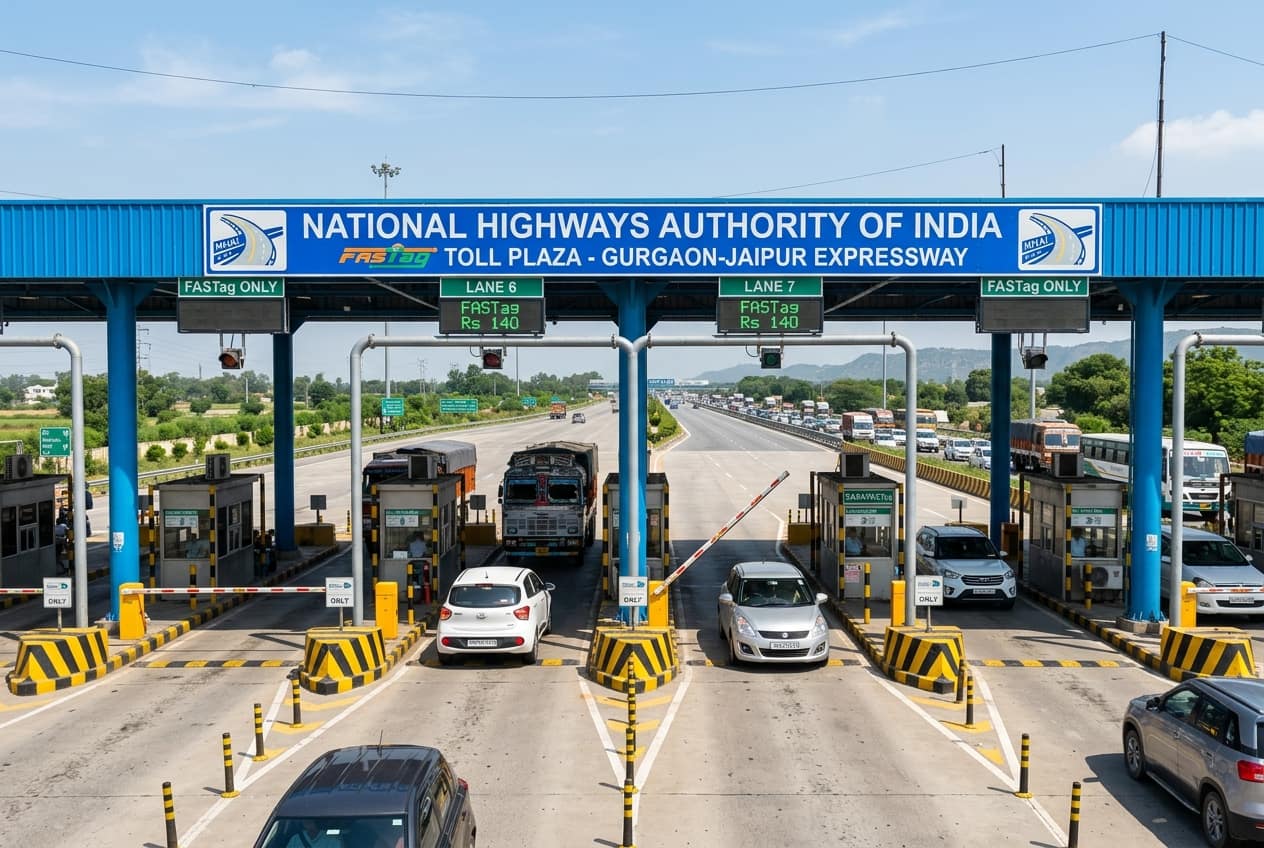
A talkback or IP intercom system gives two-way voice, and optionally video, between substations such as gates, toll booths, parking exits and lifts and a master station in a control room. Calls travel over the network using SIP and are logged. Shruti IT Service designs, installs and maintains IP intercoms for industrial, commercial and public sites, mobilising teams from Nashik across Maharashtra, Gujarat, Madhya Pradesh and Rajasthan.
At a glance
- Our scope
- Gate and help-point intercoms, master stations, lift intercoms and video integration.
- Typical timeline
- Two to five weeks, depending on cable routes, power and network readiness.
- Key standards
- SIP call signalling, IEEE 802.3af PoE, IK and IP ratings for outdoor stations.
- What you receive
- Call routing plan, station schedule, IP plan, configuration backup and test records.
- Best suited for
- Industrial gates, parking, toll booths, hospitals and high-rise buildings.
- Site survey
- Station locations, noise, mounting height, network and power check.
Talkback & IP Intercom Systems Overview
An intercom is the shortest path between a person who needs help and a person who can give it. A driver at a plant gate who cannot reach the guard, a visitor at a locked door, a patient stuck in a lift, a toll booth operator with a dispute: each needs voice contact now, not a phone number to look up. IP intercoms provide that contact over your existing network, with call routing, logs and optional video.
A system has substations and master stations. Substations are the units at gates, booths, lifts and help points, rugged and weatherproof where outdoors. Master stations are desk units or software clients in the control room, security cabin or reception. A call from any substation rings a chosen master, can roll over to another if unanswered and can be recorded or logged for later review. Door release relays, camera pop-ups and gate control can be linked to the call.
Unlike a normal telephone, an intercom is built around its location. The unit must be audible in a noisy bay, usable by a person in a vehicle, readable by someone with poor eyesight and protected against rain, dust and vandalism. Lift intercoms have their own requirement: they must reach a staffed point reliably and work when mains power is off.
We design intercoms with the people on both ends in mind. We ask who answers, what happens when nobody does and what the caller should see or hear. The answers define call routing, backup masters and integration with access control and CCTV, which are usually the real value of the system.
Ideal for: Industrial gates, parking, toll booths, hospitals and high-rise buildings.
What Our Talkback & IP Intercom Systems Includes
Our intercom scope covers the stations, the master desks, the call routing and the links to doors, lifts and cameras.
Gate and help-point intercoms
We install weatherproof, vandal-resistant substations at gates, parking exits, booths and help points, at heights suited to vehicles and pedestrians. Each unit is tested for audio clarity at its site. Tip: place a unit where a driver can reach it without leaving the vehicle, or it will not be used.
Control-room master stations
We set up master stations or software clients with call queues, directories and rollover to backups. Operators see which unit is calling and can transfer calls. Tip: define who answers in every shift and write it into your standard operating procedure.
Lift and emergency intercoms
We fit intercoms in lift cars and refuge areas with a supply that survives mains failure and a call path to a staffed point. We test with the lift contractor. Tip: test the lift call monthly, since a silent unit is only discovered when someone is trapped.
Video intercom integration
We add camera-equipped stations and connect them to master stations and, where needed, your VMS or access control, so a call can show video and release a door. Tip: agree video retention and access rules early, because they affect storage and data protection duties.
Network, power and logging
We plan PoE, VLANs, backup power and call logging, and hand over configuration backups. Tip: keep the intercom VLAN on switches with battery backup, so a short power cut does not silence your gates.
Why intercom systems are ignored or fail
Intercoms get ignored when they are poorly placed or poorly answered. A gate unit mounted too high for a driver in a truck, or too far from the lane, is never used. A master station in a cabin that is unattended at night rings in an empty room. Calls that go to one desk with no fallback are missed. In many plants the intercom is the weakest link in the security chain, simply because nobody decided who must answer.
Technical faults follow. Outdoor units fail from water ingress when cable glands are not sealed. Echo and feedback make speech unintelligible when speaker and microphone gain are not tuned. Lift intercoms lose power during outages because they were wired to the same supply as the lift. Network issues, such as a switch without PoE capacity or a missing VLAN, break calls silently. Good design plans for all of this before the first unit is mounted.
What You Gain
Fast contact at every critical point
Gates, booths, parking exits and lifts reach a staffed master station with a single button press, without searching for a phone number.
Calls that are never lost
Call routing rolls over from one master to another, or to a mobile client, if the first does not answer within a set time.
Video where it helps
Video intercoms let an operator see who is calling and compare against CCTV, which helps for visitors, drivers and delivery staff.
Door and gate control from the desk
A relay on the substation can release a door or lift a barrier after the operator verifies the caller, reducing walking and delay.
Records of every call
Call logs and optional recordings help resolve disputes, review response times and satisfy audit questions.
Safer lifts and help points
Lift and emergency intercoms give trapped passengers a voice link to a staffed point and reduce panic in a breakdown.
How the Work Is Delivered
Intercom projects are about people and call paths, so we begin with who answers and what happens next, and then design the equipment.
- 1
Call-path and site survey
We list every point needing contact, who answers, shift patterns and fallback options. We check mounting positions, noise, power, cable routes and network ports at each location.
- 2
System design
We choose substations by environment, select master stations or software clients, define call routing and decide where video and relays are needed. We prepare an IP plan and station schedule.
- 3
Network and power planning
We check PoE budgets, VLANs and QoS, plan local power for stations that need it and decide on backup supply for lift and emergency units.
- 4
Supply and pre-configuration
Stations are addressed, named and configured with call groups and relays before delivery. Master stations are loaded with directories and routing rules.
- 5
Installation
Substations are mounted at correct height with sealed glands, master stations are installed in the control room and cable is labelled at both ends. Lift units are fitted with the lift contractor.
- 6
Testing and commissioning
We test audio quality, call routing, rollover, relays, video, power failure behaviour and call logs. Lift calls are tested from inside the car with the lift contractor present.
- 7
Training, handover and AMC
Operators learn to answer, transfer and review calls. We provide configuration backups and test sheets, with optional AMC for periodic call tests and firmware care.
How IP intercoms carry voice and video
Most IP intercoms use SIP, the same call signalling used in IP telephony, so a call from a substation can ring a master station, a desk phone or a mobile app. Substations are powered by PoE, with IEEE 802.3af supplying up to about 12.95 W at the device, enough for a speaker, camera and relay. Outdoor units need an IP rating for rain and dust, and an IK rating for impact where vandalism is likely. Audio quality depends on proper gain setting and echo cancellation, which we tune on site.
Video intercoms add a camera, often with wide-angle lens and infrared for night. The video stream can be sent to the master station and, where required, to the VMS, which helps match a call to recorded footage. Network design is the same as for cameras: managed switches, VLAN separation and enough uplink for the video streams. Lift intercoms need a supply that stays on during a mains outage, usually a battery or UPS feed, and a call path that does not depend on a single office network switch.
SIP call signalling
Open SIP support lets intercoms work with IP telephones, softphones and other systems. We check compatibility before ordering, because proprietary features may not work across brands.
IEEE 802.3af PoE
A single data cable powers and connects the substation. We total power per switch and keep spare capacity, since heaters and video increase draw in cold or night conditions.
IP and IK ratings for outdoor units
IP66 resists dust and water jets, and IK ratings describe impact resistance. We choose both to suit gates, parking and booths exposed to rain and rough use.
Lift emergency communication
Lift intercoms must connect trapped passengers to a staffed point, and work on backup power. We coordinate with the lift contractor and follow the lift specification for your building.
Digital Personal Data Protection Act 2023
Where intercoms record audio or video of people, the client must handle that data lawfully. We help configure retention and access, and we describe what is recorded in the handover notes.
Worked example: intercoms for a plant with three gates, a parking deck and a hospital block
Take an industrial estate unit with three gates, a two-level parking deck, and a small hospital block for staff on the same campus. The client wants drivers to call security at each gate, parking users to reach a control desk at the exits, and lifts in the hospital block to connect to a staffed nurse station. The security cabin is manned around the clock, the nurse station during hospital hours.
We choose weatherproof video intercoms at the gates, mounted at truck-window height on one lane and car height on another. Parking exits get audio-only help points. Each lift gets an intercom on a battery-backed supply. The security cabin has a master station and a software client on the supervisor's desk. Calls from gates ring the cabin first, then the supervisor after 20 seconds. Lift calls ring the nurse station, then roll over to the security cabin at night.
Testing includes a mains cut to confirm that lift intercoms still connect, a rollover test at each gate and a check that relays release the gate only after the operator confirms. Typical hand-over records include a station schedule, call routing table, configuration backups and test sheets signed by security and the lift contractor.
- Drivers and visitors reach a staffed desk within seconds from any gate.
- Unanswered calls roll over to a second person instead of being lost.
- Lift calls connect to a staffed point even during a power cut.
- Call logs show who called, when and who answered.
This is an illustrative scenario built from typical site conditions. Actual quantities, timelines and results depend on your site survey.
Talkback & IP Intercom Systems Across Four States
We are based in Nashik and deliver across Maharashtra, Gujarat, Madhya Pradesh and Rajasthan. Each state has its own utilities, approvals and site conditions, and these are the points that matter most for this service.
Maharashtra
Toll booths on the Mumbai, Nashik and Samruddhi corridors and plant gates in MIDC estates need booth and lane intercoms that reach a plaza control room. Lifts fall under the state electrical inspectorate, so we coordinate intercom tests with the lift contractor before the inspection.
Gujarat
Port, chemical and process plants have long perimeters and many gates, so gate intercoms with video and master rollover matter. Salt air near the coast attacks stainless fittings and cable glands, so we specify marine-grade housings and check seals at each AMC visit.
Madhya Pradesh
Toll plazas on the Delhi to Mumbai Expressway and national highways, plus hospitals and campuses in Indore and Bhopal, are typical sites. Booth units must handle monsoon splash and summer heat, so we choose wide-temperature, IP66 stations and power them from backed-up PoE switches.
Rajasthan
Highway plazas, mines and cement plants have long approach roads, very hot summers and fine dust that clogs microphones and buttons. We choose sealed, wide-temperature stations with dust-proof grilles, add sun shields on lane units and plan a cleaning check on every AMC visit.
Where This Work Is Most Often Needed
Why Teams Work With Us on This
Integration with access control and CCTV
We install the cameras, barriers and access systems that intercoms connect to, so relays, video pop-ups and logs are designed and tested together.
Call-path thinking, not just hardware
We help you define who answers, who is backup and what happens at night, because those decisions decide whether the intercom is used.
Lift contractor coordination
We work with lift contractors to fit and test intercoms in cars, including power failure behaviour.
Nashik-based support
Our team is mobilised from Nashik for site visits, firmware care and AMC, planned by route and site cluster under terms agreed per site.
Frequently Asked Questions
01What is an IP intercom system?
It is a two-way voice, and often video, communication system that runs over your computer network instead of dedicated analogue wiring. Substations at gates, lifts and booths call master stations in a control room using SIP. Calls can be routed, logged and linked to doors, cameras and barriers.
02How is an IP intercom different from a PA system?
An intercom is two-way and usually one point to one point, while a PA system is mostly one-way and one point to many. An intercom lets someone at a gate talk back to security. A PA lets security speak to an area. Many sites use both, and they can be linked.
03Can an intercom open a gate or door?
Yes, through a relay on the station or an integration with your access control or barrier controller. The usual practice is for an operator to verify the caller by voice and video, and then release the door or barrier. We test that the release works only when intended and that it fails safely on power loss.
04What happens if nobody answers the call?
The call can roll over to another master station, a second desk or a mobile client after a set time. We design this chain with you and test it during commissioning. Without a rollover plan, a missed call is simply lost, which is a common weakness in poorly planned systems.
05How do lift intercoms work during a power cut?
They need their own backup supply, typically a battery or UPS, so that passengers can still call for help. The call path must also stay alive, which means the network switch and the master station need backup power too. We coordinate with your lift contractor and test the entire chain with mains off.
06How long does it take to install?
A typical site takes two to five weeks, depending on the number of stations, cable routes, power and network readiness. Lift intercoms depend on the lift contractor's schedule, and outdoor gates may need civil work for mounting. We phase work to keep gates operational and test each station before moving on.