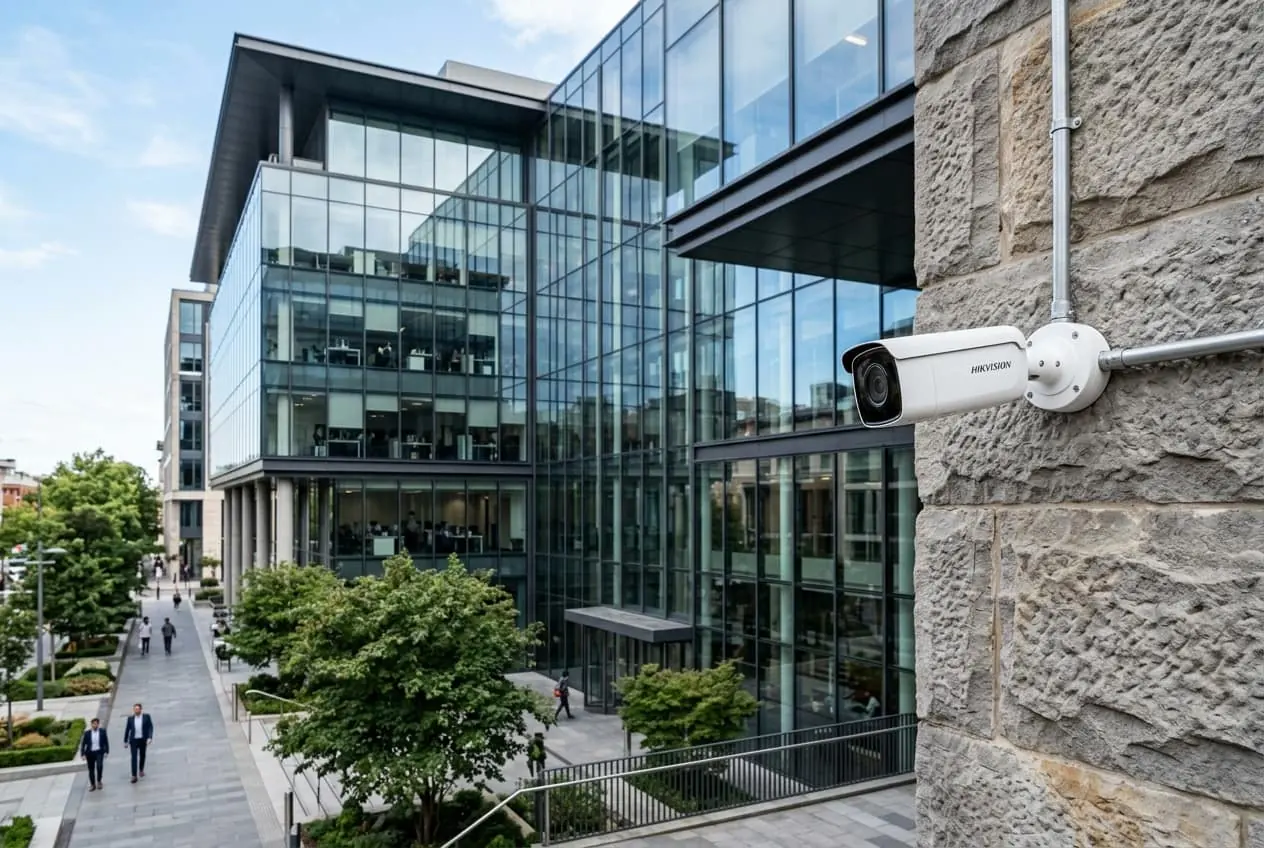

Pune has two very different kinds of customer for security and safety systems. In Chakan, Ranjangaon and Talegaon, plant managers run shifts, heavy vehicles and contractor labour, and they judge a system by uptime. In Hinjewadi, Kharadi and Magarpatta, facility teams manage glass towers full of tenants, and they judge a system by how well it fits fit-out schedules, tenant rules and audits. The equipment can look similar, but the planning is not. This guide sets out what to plan for each, which approvals to check, and how a first site survey should run.
Key Engineering Takeaways
- Plants need gate, yard and vehicle control first. IT parks need floor access, visitor flow and fire safety first.
- Always confirm which fire authority covers the site, because the city corporation, the Pimpri Chinchwad body and the regional development authority can each cover different belts.
- Plan for the monsoon and construction dust along the expressway and MIDC corridors, not only for the heat.
- Survey before price. Cable routes, shutdown windows and power points move the cost more than the equipment does.
- Ask for as built drawings, test records and a maintenance plan at handover, whoever you choose.
What do plants in Chakan, Ranjangaon and Talegaon need first?
Automotive and engineering plants in these belts run long shifts, receive trucks all day and employ many contractor workers. The first problem is usually the gate. Who entered, in which vehicle, at what time, and who is still inside when the shift ends? Gate cameras with number plate capture, a boom barrier and a contractor pass system answer those questions, and they produce a record that an auditor or a customer can read.
Yards and loading bays come second. They are large, open and dusty, with long distances between poles. That favours fewer, better placed cameras, fiber or protected links between buildings, and recording in a cooled room instead of in the field. Machining and paint shops add a fire problem: oil mist, solvents and metal dust change which detectors are suitable, so the detector type should be chosen for the process, not copied from an office design.
Power matters more than people expect. A recorder that restarts on every dip, or a camera that dies when a welding line starts, is a power problem. Plan clean supply, surge protection and a UPS sized for the recording and network load. The UPS sizing guide shows the arithmetic.
What do IT parks in Hinjewadi, Kharadi and Magarpatta need first?
In a multi tenant tower the building owner controls the lobby, lifts, parking and common areas, and each tenant controls its own floor. Access control therefore has two layers. The owner needs a system that issues credentials to many companies and removes them quickly. Each tenant needs its own readers, rules and reports. Plan the boundary between the two in writing before anything is installed.
Visitors are the second issue. A visitor management system that pre-registers guests, prints a pass and notifies the host keeps the lobby moving and leaves a trail. Parking is the third: barriers, number plate capture and a clear policy for tenant and visitor vehicles.
Fire safety in high-rise space is more demanding. Addressable fire alarm panels show the exact location of a detector, which saves minutes in a large floor plate. The addressable or conventional guide explains when each fits. Fit-out work by tenants also changes ceilings and partitions, so the survey should check detector coverage after changes, not only at handover.
- Agree who may add readers, cameras and detectors on a tenant floor, and who approves it.
- Keep a master list of credentials so that leavers are removed on the day, not weeks later.
- Test the fire alarm link to lift recall and door release before the building is occupied.
Which approvals and authorities should you check in Pune?
Larger buildings usually need a fire NOC before occupation, and the authority that issues it depends on where the site is. Inside the city limits it is normally the Pune Municipal Corporation fire brigade. The industrial towns of Pimpri Chinchwad and the outer belt can fall under other bodies, including the regional development authority's fire service. Confirm the authority for your exact plot before you design, not after.
Electrical work on high tension supply needs the electrical inspectorate's approval, and supply connections go through the state power distribution company. Industrial plots in an MIDC estate have their own estate rules for construction and services. We prepare the drawings, load calculations and test records that these offices ask for, but the owner or occupier remains the applicant. Rules change, so treat this section as a starting checklist and confirm each item with the authority.
How do Pune's monsoon and dust affect equipment?
Pune is milder than much of the target region, but two things still wear equipment out. The monsoon brings water into basements, cable trenches and outdoor enclosures. Dust from construction along the expressway and around MIDC estates blocks filters, dirties lenses and shortens fan life.
Design for both. Choose outdoor equipment with a suitable ingress protection rating, seal and drain enclosures, raise cable entries above likely water levels, and avoid mounting recorders in damp basements. Then add the part most projects forget: a schedule. Clean lenses and filters, check seals before the monsoon, and test batteries on a fixed plan. That is what an annual maintenance contract should cover.
How should a first site survey in Pune run?
A good survey takes a few hours and produces a short list of facts. Walk the perimeter, gates, panel rooms, risers and server areas with someone who knows the building. Note cable routes and distances, power points, existing equipment, shutdown windows and who can approve work.
From that, the design team prepares a camera and device schedule, a bill of quantities, a power and network plan, and a storage calculation. The CCTV storage guide shows how recorder size is worked out, and the PoE budget guide shows how to check a switch. You then compare quotations on the same scope, which is the only fair way to compare them.
- Photographs of every gate, riser and panel room.
- The number of floors, blocks and gates, with approximate distances between them.
- The retention period you need, and who may view or export footage.
- Any tenant, audit or insurance rules that the system must meet.
- The days and hours when work is allowed.
How do we work with Pune clients from Nashik?
Shruti IT Service is based in Sinnar, Nashik. We serve Pune sites by road along the Nashik Pune highway, and we plan survey, installation and maintenance visits together by route and site cluster, so a Chakan, Ranjangaon or Hinjewadi site is not treated as a one off trip. We do not claim a local office or a resident team in Pune. Response and visit frequency are agreed in the contract for each site, so you know what to expect before you sign.
Conclusion & Next Steps
A Pune project goes well when the plan matches the site. Plants need control of gates, yards, vehicles and power. IT parks need clean tenant boundaries, visitor flow and fire safety that survives fit-out changes. In both, confirm the fire authority early, design for monsoon and dust, and insist on drawings, test records and a maintenance plan at handover. If you are planning a site in Chakan, Ranjangaon, Talegaon, Hinjewadi, Kharadi or Magarpatta, send us the site details by call or WhatsApp and we will arrange a free site survey and a written, fixed quote.
Need a site survey or project quote?
Our engineers provide comprehensive BOQs, system designs, and turn-key execution across Maharashtra and neighboring states.
Related services
Want this done at your site? These pages explain the scope, the process and the standards we work to.