
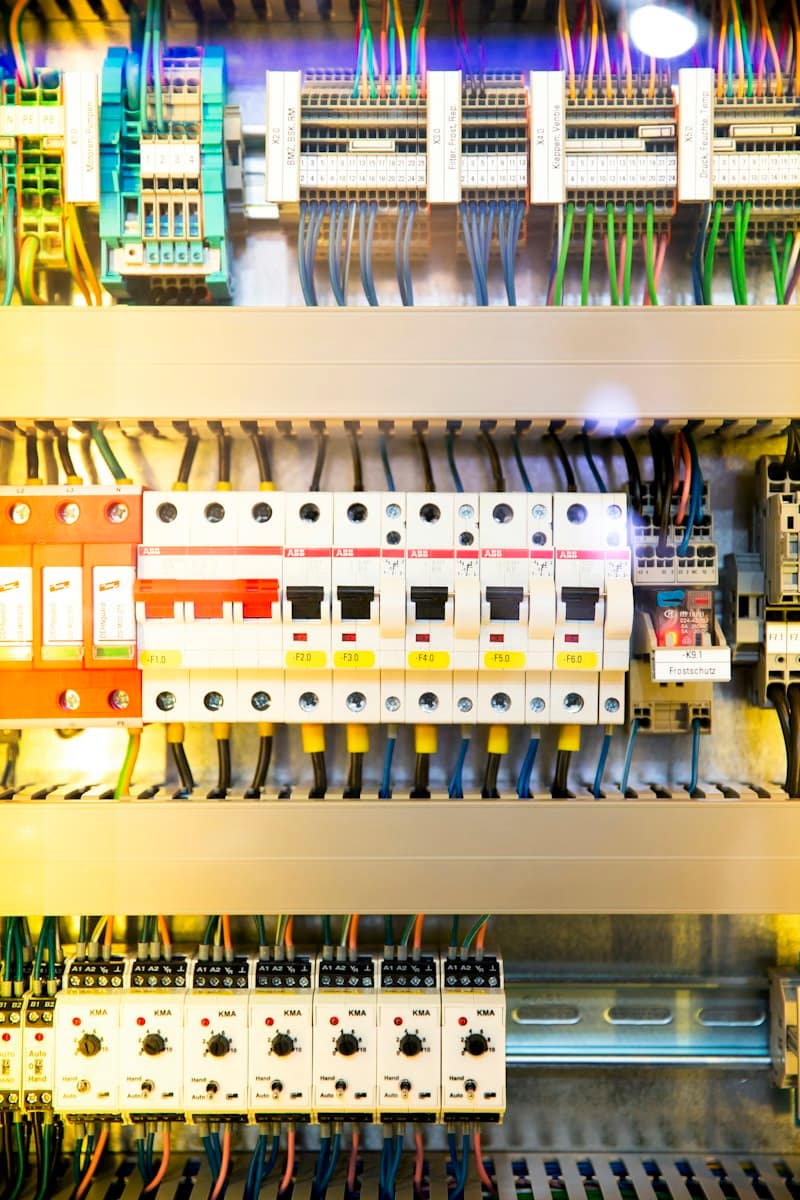
A conventional fire alarm system wires detectors, call points and sounders into zones, and the control panel shows which zone is in alarm. It is cost-effective for small factories, shops, offices and warehouses where zone-level location is enough. Shruti IT Service designs the zones, installs the panel and field devices, and tests the full system against IS 2189.
At a glance
- Typical timeline
- Typically 1 to 3 weeks for a small premises, depending on site readiness.
- Key standards
- IS 2189 for design and testing, NBC 2016 Part 4 for occupancy requirements.
- What you receive
- Zone plan, device list, wiring diagram, test certificate and operating instructions.
- Best suited for
- Small factories, shops, offices, godowns and single-floor warehouses.
- Our scope
- Panel, zone wiring, detectors, call points, sounders, commissioning and AMC.
- Site survey
- A walk-through with a marked-up plan to fix zone boundaries and device positions.
Conventional Fire Alarm Systems Overview
A conventional fire alarm system is the plain, proven way to protect a small building. Detectors and manual call points are wired in groups called zones, each zone returns to one input on the control panel, and when something in a zone operates, the panel lights that zone and sounds the alarm. It does not tell you which detector in the zone operated, but for a building where a zone is a single room, a bay or a half floor, that is often all the information needed.
Shruti IT Service installs conventional fire alarm systems for small factories, workshops, shops, offices and warehouses from our base in Nashik, delivering across Maharashtra, Gujarat, Madhya Pradesh and Rajasthan. The attraction is value: a conventional panel and its detectors cost less than an equivalent addressable setup, the technology is familiar to every electrician, and maintenance does not depend on proprietary software. For a building of one or two floors with a modest number of rooms, this is frequently the right engineering and commercial choice.
Conventional does not mean careless. A good zone plan follows the building: one zone should not span floors, should not cross fire compartments and should be small enough that a fire marshal can search it in a minute or two. End-of-line devices, cable choice, sounder coverage and battery size all need correct design. We aim for an installation that is boring to live with, free of false alarms, easy to test and clearly labelled so anyone can find a device and understand a fault.
If your building is large, multi-floor or full of separate rooms, read our page on addressable fire alarm systems before deciding. If you only need to add detectors in a few areas of an existing building, our smoke and heat detector installation page may be closer to your need. This page explains how we design and deliver conventional systems and what to expect from any contractor.
Ideal for: Small factories, shops, offices and warehouses.
What Our Conventional Fire Alarm Systems Includes
For conventional systems our scope is compact and fully documented, from panel to AMC.
Conventional panel and zone wiring
We install the panel at an accessible, supervised location, wire each zone as a continuous circuit with end-of-line devices and label every circuit at both ends. You receive a wiring diagram and a zone chart. Tip: mount the panel where staff pass daily, not in a locked store.
Smoke, heat and multi-sensor detectors
We choose the detector type for each area: optical smoke for offices and storage, heat for kitchens, dusty and fume-heavy spaces, multi-sensor where conditions vary. Each detector is labelled with its zone. Tip: never mix detector families on a zone unless the panel maker confirms compatibility.
Manual call points, hooters and strobes
Call points go at exits and along escape routes, with sounders and strobes sized to be heard over machinery and in closed rooms. We measure sound levels at the worst locations. Tip: add strobes wherever workers wear ear protection, because a hooter alone may not be heard.
Testing and commissioning
We test every device, simulate faults on every zone, run the system on battery and complete a record sheet signed by both parties. You get a certificate and a device list. Tip: keep the record sheet with the panel, since it is the first document an inspector asks to see.
Where small-premises fire alarm systems usually fall short
Small sites often get the cheapest possible system, and the shortfalls show up months later. A shop owner buys a panel and a handful of detectors from a hardware vendor, and an electrician fixes them to the ceiling with ordinary wire. There is no zone plan, no labelling and no test record. When a detector develops a fault, nobody knows where it is, because the panel shows one zone for the entire premises. The system works on the day of installation and quietly decays.
Another common issue is wrong detector choice. A small bakery gets smoke detectors above the ovens and trips every morning. A workshop with welding and grinding gets sensitive optical detectors in the dust and the staff silence the panel permanently. A godown with a corrugated metal roof and stored goods up to the roof level gets detectors mounted at the roof, where heat from the sun on the roof in summer and stratified smoke make the readings unreliable. Selecting the right detector for the area matters more than the panel brand.
A third issue is incomplete circuits. Conventional zones depend on an end-of-line device to let the panel check the circuit for breaks. If it is missing, or if detectors are wired in a spur instead of a continuous loop, a broken wire can leave half the zone unprotected without any fault showing. Properly done, an open circuit, short circuit or removed detector produces a fault at the panel the moment it happens.
What You Gain
Lower upfront cost
Conventional panels and detectors are less expensive per point than addressable equivalents. For a small premises with a few dozen detection points, you get compliant protection without paying for features you will not use.
Simple to operate
Staff learn the panel in minutes: zone lights, silence, reset. There is no software to maintain and no menu to remember, which suits sites where there is no dedicated facility team.
Easy to maintain
Any trained technician can service a conventional system, and detectors from compatible families can be swapped without programming. That keeps AMC costs down and avoids dependence on one vendor.
Dependable zone monitoring
The panel supervises every zone for open and short circuits and for removed detectors. A broken wire shows as a fault instead of sitting unnoticed until the day it matters.
Reliable audible warning
We design sounder placement so alarm tones are clearly audible over machinery and in closed rooms, and we add strobes where noise or hearing protection makes sound alone unreliable.
Upgrade path if you grow
Zone expansion cards and additional zones allow reasonable growth. If the premises outgrows conventional, we can plan the move to an addressable panel in stages and reuse suitable cabling.
How the Work Is Delivered
Small projects still follow a structured sequence. The difference is speed: survey, design and quotation are quick, and installation is usually done with minimum disturbance to daily work.
- 1
Survey and marking
We walk the premises, mark room use, ceiling type and height, and note dust, steam, heat or vehicle fumes. We agree zone boundaries on a plan with you, and note where the panel, sounders and call points should sit.
- 2
Zone design and BOQ
We divide the premises into zones that follow rooms, floors and fire compartments, select detector types per area, size sounder circuits and battery, and prepare a BOQ with quantities, cable and accessories.
- 3
Supply
We supply an approved panel with enough zones for present needs plus a spare, detectors suited to each area, call points, sounders, strobes, fire-rated cable and labels. Compatibility of detector and panel is confirmed before ordering.
- 4
Installation
Cable is run in conduit or on trays, with continuous zone wiring and end-of-line devices fitted. Detectors are fixed to bases, call points are mounted at exits, and every device receives a label that matches the zone plan.
- 5
Testing and commissioning
We test each detector with smoke or heat equipment, check each call point, confirm sounder levels, simulate open and short circuit faults on every zone, and test mains failure and battery changeover. Results go on a record sheet.
- 6
Handover and training
We hand over the zone plan, device list, wiring diagram and certificate, and train your staff to silence, reset and report. We also explain what the fault light means and whom to call.
- 7
AMC and periodic testing
Under AMC we test a portion of devices in every visit so that all detectors are covered across a year, replace batteries on schedule and keep a logbook with dates and findings.
How a conventional system works and what to specify
A conventional panel supplies a small standing current to each zone circuit. Detectors in the zone draw a little more current when they sense a fire, which the panel reads as an alarm. A resistor or end-of-line unit at the end of the circuit lets the panel distinguish a healthy circuit from an open one. Manual call points close a contact that also triggers alarm. Sounder circuits are separate and are monitored too. Zone count is fixed by the panel hardware, commonly in steps such as 2, 4, 8, 16 or more, so we choose a size with at least one or two spare zones.
Zone size follows IS 2189 principles. A zone should generally cover a single floor and a limited floor area, with a common figure being around 2,000 square metres per zone as an upper bound, though many sites work better with much smaller zones. Detector types that share a zone must be compatible with the panel. We use heat detectors in kitchens, generator rooms and dusty areas, optical smoke detectors in offices and storage areas, and call points on every exit route. Sounders must reach an adequate level in every occupied area, and the standby battery must carry the system through mains failure and then a period of alarm.
IS 2189
Governs zoning, detector spacing, call point placement, cable and testing for automatic fire detection systems. We use it as the design baseline for conventional systems and for the commissioning checks.
NBC 2016 Part 4
Sets out which occupancies require fire detection and alarm and how manual call points should be distributed along escape routes. We cross-check your occupancy class before fixing the scope.
One zone, one floor
A zone should not span floors or fire compartments, so that the panel points to a searchable area. Keep zones small enough for a marshal to check quickly, especially in sleeping or high-risk areas.
End-of-line supervision
Every zone and sounder circuit should be wired as a continuous circuit with an end-of-line device so open and short faults are reported by the panel. Ask your installer to demonstrate this during commissioning.
Battery sizing
Standby batteries should carry the load through a defined mains-off period followed by alarm, commonly 24 hours standby plus 30 minutes of alarm, subject to the code edition used. We show the calculation in the design pack.
Worked example: conventional alarm for a small engineering workshop and office
Picture a single-storey workshop of around 800 square metres with a front office, a small stores area, a machining bay with coolant mist, and a welding corner. The owner wants a compliant alarm with minimal running cost. We would divide the premises into four zones: office, stores, machining bay and welding corner with an adjacent loading area. Each zone sits within one fire compartment and is small enough to search in a minute.
The office and stores would get optical smoke detectors. The machining bay, with oil mist, and the welding corner, with fumes and sparks, would get heat detectors to avoid nuisance trips. A manual call point goes at each exit and at the loading door, and sounders are placed to give a clearly audible alarm over the machines, with a strobe in the machining bay where hearing protection is common. A six-zone panel leaves two zones spare for a later mezzanine.
Commissioning would involve testing every detector, simulating open circuit and short circuit on each zone, measuring sounder levels at the loudest machine position, and running the panel on battery for a short period to confirm the change-over. The owner receives a zone plan fixed next to the panel, a device list and an AMC schedule that tests a share of detectors every quarter.
- Four labelled zones that each map to a real part of the premises
- Heat detectors in fumes and mist areas to avoid nuisance alarms
- Two spare zones for later expansion
- Fault simulation results recorded for every zone
This is an illustrative scenario built from typical site conditions. Actual quantities, timelines and results depend on your site survey.
Conventional Fire Alarm Systems Across Four States
We are based in Nashik and deliver across Maharashtra, Gujarat, Madhya Pradesh and Rajasthan. Each state has its own utilities, approvals and site conditions, and these are the points that matter most for this service.
Maharashtra
Small units in MIDC estates, godowns and shops are the usual conventional sites in Maharashtra. Panels need a stable supply from MSEDCL or a generator changeover, and monsoon damp is a common cause of zone faults, so junction boxes should be sealed. Owners remain responsible for periodic certification under the state fire law.
Gujarat
GIDC workshops, small chemical and engineering units, and shops across Gujarat suit conventional zones. In coastal areas, salty air corrodes terminals, so we use sealed boxes and coated connectors. Supply comes from the regional DISCOM, so battery sizing should allow for local outage patterns. Check the state fire law for your occupancy.
Madhya Pradesh
Small factories in Pithampur and Mandideep areas, godowns and offices in Madhya Pradesh often run conventional panels. Hot summers raise ceiling temperatures, so heat detector class matters, and monsoon needs sealed cable entries. Confirm the local fire authority requirement for your building size before purchase.
Rajasthan
RIICO units, stone and cement-related workshops and shops face intense heat and fine dust in Rajasthan. Dust fouls optical heads quickly, so we favour heat detectors in dirty bays and plan more frequent cleaning. Zone count should leave spare capacity since units grow. Confirm the local fire authority requirement.
Where This Work Is Most Often Needed
Why Teams Work With Us on This
Right-sized, not over-sold
We tell you plainly when conventional is enough and when it is not. You do not pay for addressable features a small premises will never use, and you are not left with a system you will outgrow in a year.
Clean, labelled installation
Every zone, cable end and detector is labelled to match the zone plan, so your own electrician can trace and fix a fault later without us. We think of the next person who opens the ceiling.
Electrical and fire alarm together
We also carry out industrial and commercial wiring, so panel power supply, earthing and cable routing are coordinated in one package instead of left between two contractors.
AMC from the team that commissioned
Engineers mobilised from our Nashik base commission your zones, and the periodic tests are planned by route and site cluster, keeping records continuous and making sure every detector is checked over the year.
Need AMC for an existing system?
We maintain installations done by other vendors too, after a short audit of what is already on site.
Guides and Projects Related to This Service
Frequently Asked Questions
01When is a conventional fire alarm system enough?
A conventional system is enough when your building is small, has one or two floors, and zone-level location is acceptable. Shops, small workshops, offices and godowns fit this description. If you have many rooms, several floors or sensitive areas such as wards or server rooms, or if you need integration with lifts and HVAC, an addressable system is more suitable. We check this at survey instead of assuming.
02How many detectors can be on one zone?
It depends on the panel and the code, but the limit is set by both circuit current and zone area. IS 2189 principles keep zones to a single floor and a limited area, commonly under about 2,000 square metres. In practice we keep zones much smaller so that a marshal can find the source quickly. Ask your vendor for the zone design, not only the detector count.
03How much does a conventional fire alarm system cost?
The price depends on the number of zones and detectors, cable length, ceiling type, detector classes and whether sounders and strobes are needed in noisy areas. Cable and labour often matter as much as equipment for small sites. We give a firm quotation after a survey with a BOQ, so you can compare vendors on identical quantities and see what is included.
04Can I upgrade a conventional system to addressable later?
Yes, though it usually means replacing the panel and detectors, because the two systems use different signalling. Existing cable may sometimes be reused if it is of a suitable type and in good condition, which saves labour. We assess the installed cable, conduit and device positions and tell you whether staged replacement or full replacement is more economical.
05Why does my panel show a fault when no detector has operated?
A fault usually means a circuit problem: an open circuit, a short, a removed detector, a low battery or a mains failure. Check the fault indicator on the panel, which tells you whether it is a zone, sounder, power or battery fault. Persistent faults need a technician, since forcing a reset can hide a real defect. Our AMC covers diagnosis and repair.
06What should the panel and zone chart look like at handover?
You should receive a panel with every zone labelled, a printed zone plan fixed beside it, and a device list that matches the labels on site. The wiring diagram, end-of-line positions and battery calculation should be in the file. If you cannot trace a device from the panel to the ceiling using these documents, the handover is incomplete.